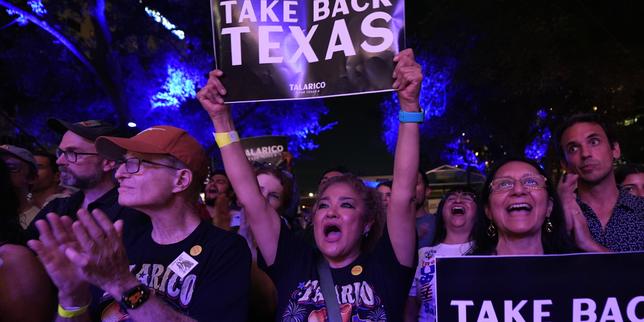
Bettors are getting nervous about Austin. Across major forecasting platforms like Polymarket and Kalshi, the Texas governor race has tightened noticeably, even though Greg Abbott remains the clear favorite on the board. If you're watching the political odds in Texas right now, you might think a massive upset is brewing. Hold your horses.
Prediction markets don't measure votes. They measure money, sentiment, and liquidity. When a contract price shifts by five or ten cents over a weekend, casual observers panic or celebrate depending on their political persuasion. Yet anyone who has actually traded political event contracts knows that short-term price swings in state-level races often reflect thin order books rather than a sudden collapse in incumbent support.
Why the Texas Governor Race Tightened on Forecasting Platforms
Political betting markets react to headlines faster than traditional polling ever could. When a new poll drops showing a closer-than-expected margin, or when a Democratic challenger announces a massive fundraising haul, traders immediately reprice risk. That's exactly what pushed the implied probability for a Democratic win upward while shaving a few points off Greg Abbott's commanding lead.
Liquidity matters here. Presidential elections attract hundreds of millions of dollars in volume, which makes those markets brutally efficient. State gubernatorial races, even in a massive state like Texas, operate with a fraction of that capital. A few whales buying "Yes" shares on an upset can move the needle enough to generate breathless news coverage about a tightening race.
I've watched this exact cycle play out in midterm cycles for over a decade. Traders see a slight dip in incumbent approval ratings, or they react to national political headwinds affecting the party in power. They buy the underdog contract not because they expect the underdog to win in November, but because they expect the contract price to rise from 18 cents to 28 cents so they can sell for a quick profit.
The Difference Between Trading Momentum and Election Outcomes
You have to separate the trader from the voter. A trader on Kalshi or PredictIt is looking for mispriced risk. If Abbott is trading at 82 cents, there's very little upside left for a buyer who has to lock up capital until election night. You risk 82 cents to make 18 cents. Many experienced political bettors simply won't touch a heavy favorite at those prices, even if they believe his true odds of winning are closer to 90 percent.
Instead, smart money looks at the other side. Buying the challenger at 18 cents offers massive asymmetric upside. If a single debate goes poorly for the incumbent, or if a major economic story dominates Texas news cycles for two weeks, that 18-cent share jumps to 30 cents. The trader cashes out, locks in a 66 percent return, and never waits around to see who actually wins the state.
Greg Abbott Still Holds the Structural Advantage
Step away from the blinking green and red numbers on your screen and look at the fundamentals on the ground. Texas hasn't elected a Democrat to statewide office since 1994. That isn't just a trivia fact; it's a reflection of deep structural advantages that don't vanish because a prediction market contract moves six points in October.
Abbott brings three massive weapons to every campaign cycle:
- Unmatched fundraising infrastructure: Over multiple terms, he has built one of the most aggressive donor networks in American state politics, routinely sitting on tens of millions of dollars in cash on hand before the general election sprint even begins.
- Incumbency and name recognition: Every voter in Texas knows who Greg Abbott is, which forces any challenger to spend millions just to introduce themselves to suburban and rural voters across 20 media markets.
- Statewide partisan lean: Despite rapid demographic shifts in the Dallas-Fort Worth, Houston, and Austin metro areas, rural Texas still turns out at high rates and votes overwhelmingly Republican.
Challengers always generate huge enthusiasm in Texas. We saw it with Beto O'Rourke in 2018 and again in 2022. National media outlets love a "Texas is turning purple" storyline because it drives clicks and cable news ratings. Prediction markets temporarily absorb that media energy, pushing prices toward a toss-up narrative before reality sets back in during the final stretch of early voting.
How Prediction Markets Handle State-Level Polling
Traditional pollsters struggle in Texas. The state's massive geographic footprint, rapidly growing Hispanic population, and unique early voting patterns make weighting samples a nightmare. When a university poll or a partisan survey drops with a surprising result, prediction markets have to digest it immediately.
Let's be honest about how messy that digestion process is. Most retail traders don't read the crosstabs of a Texas poll. They don't check whether the pollster oversampled college-educated voters in Travis County or used a registered voter screen instead of a likely voter screen. They just see the headline number, panic-sell Abbott shares, and create a temporary price dip.
Over the next 48 hours, sharper analysts dig into the methodology. They notice the sample flaws, realize the race hasn't fundamentally changed, and slowly buy up the discounted Abbott shares. The price stabilizes, still slightly tighter than before, leaving behind a trail of headlines claiming the race is suddenly competitive.
What Actually Moves the Needle in Texas Politics
If you want to know whether the Texas governor race is genuinely slipping away from Abbott, stop staring at daily price charts and watch three real-world indicators instead:
- Suburban turnout in Collin, Denton, and Williamson counties: These fast-growing counties outside Dallas and Austin are the true battlegrounds. If Democrats aren't running up massive margins here, they have no mathematical path to victory statewide.
- South Texas county margins: Republicans made historic gains along the Rio Grande Valley in recent cycles. If Abbott holds or expands those numbers, the race is effectively over before polls close in West Texas.
- Late-cycle ad spending: Watch where the national party committees put their money in the final three weeks. National donors are ruthless with their cash. If the Democratic Governors Association isn't dumping eight figures into Houston and Dallas television markets late in the game, they know the internal numbers don't support an upset.
The Trap of Treating Betting Odds as Gospel
Prediction markets are phenomenal forecasting tools, usually beating pundits and individual polls over the long run. Still, they aren't infallible. In 2022, several Senate and gubernatorial markets swung wildly in the final weeks based on flawed narrative momentum rather than hard data, burning traders who mistook market noise for ground truth.
When you see headlines saying the Texas governor race is tightening, remember who is setting those prices. It's a mix of political junkies, crypto traders, sharp data modelers, and partisan gamblers putting real money on the line. When the dust settles, markets almost always converge toward the structural reality of the electorate.
Check the order book depth before you trust any sudden spike in political odds. Look at the actual trading volume behind a price move, compare it against high-quality polling averages, and pay attention to where campaign cash is flowing on the ground in Texas. Until those fundamentals break against him, Abbott's position as the favorite remains intact.