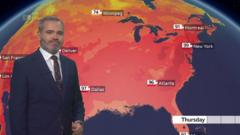
Every summer, the media plays the exact same track on repeat. A high-pressure system parks itself over the eastern half of the United States, temperatures climb into the mid-90s, and the headlines start screaming about an unprecedented existential threat. We are told to brace for impact, hoard bottled water, and look at the thermometer with sheer terror.
It is a lazy, seasonal ritual. And it completely misses the point.
The danger of a modern heatwave does not actually come from the sun. It comes from our fundamentally misunderstood relationship with energy infrastructure, a widespread ignorance of how human bodies actually shed heat, and an environmental policy framework that treats the symptoms of peak demand while actively worsening the disease.
We do not have a weather problem. We have a resilience problem. By treating every predictable July spike as a black swan event, we fail to prepare for the structural fragility that actually kills people.
The Air Conditioning Paradox
The standard advisory during a heat warning is simple: stay inside and crank the AC. It sounds like common sense. In reality, this collective knee-jerk reaction creates a dangerous feedback loop that electrical engineers have been warning about for decades.
When millions of compressors kick on simultaneously across the PJM Interconnection—the grid operator managing electricity for 65 million people across the eastern US—the system faces what is known as peak coincident demand. The grid is not built for average use; it is built for these exact worst-case fifteen-minute windows. To survive them, utilities are forced to fire up "peaker plants." These are older, highly inefficient, oil- or gas-fired turbines that sit idle 95% of the year. They take time to spin up, cost a fortune to operate, and dump massive amounts of localized pollution directly into the air.
Here is the dirty secret the utility sector rarely states out loud: the absolute safest day for the grid is a hot day with a steady breeze. The moment that breeze drops, solar efficiency degrades due to high ambient cell temperatures—yes, solar panels actually lose efficiency when they get too hot—and the grid starts redlining.
If everyone drops their thermostats to 68 degrees Fahrenheit (20 degrees Celsius) during a 100-degree afternoon, the risk of a cascading substation failure skyrockets. When a transformer blows, it does not just cut power to a neighborhood; it cuts power to the very medical equipment and cooling systems keeping vulnerable populations alive.
The obsession with maximum mechanical cooling has effectively atrophied our natural ability to handle seasonal shifts. We have built a society that treats a 78-degree indoor environment as a human rights violation, utterly forgetting that air conditioning only became a staple of American residential life in the post-WWII boom.
The Deadly Flaw in Wet-Bulb Calculations
When local news channels report on a heatwave, they almost always lead with the "Heat Index." This metric attempts to combine air temperature and relative humidity to describe how hot it feels. It is a useful tool for a backyard barbecue, but it is dangerously inadequate for actual emergency management.
We need to talk about wet-bulb temperature.
For the uninitiated, a wet-bulb temperature is measured by wrapping a wet cloth around the bulb of a thermometer and blowing air over it. It measures the lowest temperature that can be achieved by evaporative cooling. Because the human body cools itself primarily through the evaporation of sweat, the wet-bulb temperature represents the absolute physical limit of human adaptation.
If the wet-bulb temperature hits 95 degrees Fahrenheit (35 degrees Celsius) at 100% humidity, a perfectly healthy human being sitting in the shade next to a fan will die of heatstroke within six hours. It does not matter how much water you drink. The air is too saturated to accept your sweat. Your core temperature will rise inexorably until your organs fail.
During typical eastern US heatwaves, standard temperatures might hit 100 degrees, but because the humidity drops slightly during the peak afternoon hours, the wet-bulb temperature usually hovers in the safe, albeit miserable, mid-80s.
The real danger is not the afternoon peak. It is the night.
Urban heat islands—characterized by vast expanses of asphalt, concrete, and brick—absorb solar radiation all day. At night, they radiate that heat back into the local environment, preventing temperatures from dropping. When the nighttime low fails to drop below 80 degrees, and the humidity climbs to 90%, the wet-bulb temperature edges into the danger zone.
This is when mortality rates spike. The human body requires a nocturnal cooling period to shed the thermal load accumulated during the day. When that recovery period is denied, cardiovascular strain compounds. Yet, our public warnings remain hyper-focused on the high-noon sun, prompting people to exert themselves early in the morning or late in the evening when the humidity is actually at its most oppressive.
Stop Treating Everyone Like They are At Equal Risk
The blanket warnings issued by the National Weather Service are designed for mass consumption, which means they are functionally useless for individual risk assessment. They foster a generic sense of anxiety while failing to target the populations actually facing mortality.
If you are a healthy 30-year-old working an office job with a functional vehicle, a heatwave is an inconvenience. It is a high electric bill and a sweaty commute. Treating this demographic with the same urgency as a fixed-income senior citizen living on the third floor of a brick apartment building with a box fan is a catastrophic misallocation of psychological and physical resources.
True vulnerability is a intersection of biology and socioeconomic architecture:
- Antipsychotics and Antidepressants: Common medications like haloperidol or even standard SSRIs interfere with the hypothalamus, the brain's thermostat, or inhibit the body's ability to sweat. Millions of people take these drugs daily without ever being told by their doctors that a hot day could kill them.
- The Elderly Cardiovascular System: Aging reduces skin blood flow and sweat gland output. When the body gets hot, the heart has to pump exponentially faster to move blood to the skin for cooling. Most heatwave victims do not die of "heatstroke"; they die of heart attacks caused by the sheer physical exertion of trying to stay cool.
- Insulation Inequality: A modern, well-insulated home can ride out a twelve-hour power outage during a heatwave without the interior temperature rising more than a few degrees. A poorly insulated, flat-roofed tenement building becomes a literal kiln within three hours of an outage.
The Failed Logic of Public Cooling Centers
The default bureaucratic response to a major heat event is to open public cooling centers—usually libraries, gymnasiums, or senior centers. It looks great on a press release. It demonstrates that local government is "doing something."
In practice, they are a logistical failure.
I have spent years analyzing urban emergency responses, and the data is clear: the people who need cooling centers the most are the least likely to use them. If an elderly person is afraid to leave their apartment because of neighborhood crime, or if they lack access to reliable public transit, they are not going to trek six blocks through 98-degree heat to sit on a folding chair in a gymnasium.
Furthermore, many low-income individuals refuse to leave their homes because they cannot bring their pets, or because they are terrified that their few possessions will be stolen while they are away.
Instead of burning capital on underutilized physical centers, cities should be deploying targeted, hyper-local interventions. This means distributing small, temporary generators to high-risk individuals, subsidizing utility bills during peak months so people are not afraid to turn on their existing units, and upgrading building codes to mandate reflective roofing materials.
The Actionable Protocol for Surviving the Real Threat
If you want to survive a severe thermal event without relying on a fragile grid, you need to abandon the mainstream advice and focus on thermodynamic realities.
First, forget the air temperature. Buy a cheap hygrometer to monitor indoor humidity. If your indoor temperature is 85 degrees but the humidity is under 40%, you can easily stay cool with a basic fan and a damp t-shirt. The airflow will accelerate evaporation, dropping your skin temperature dramatically. However, if the indoor humidity crosses 70%, fans stop working effectively. At that point, blowing hot, humid air over your body actually accelerates heating, acting like a convection oven.
Second, if the power goes out, do not open the windows during the day thinking a breeze will help. You are just inviting ambient thermal energy inside. Seal the house tight, drop the shades, and retreat to the lowest floor. Concrete basements retain the thermal signature of the earth, which stays remarkably constant year-round.
Third, utilize conduction over convection. Air is a terrible conductor of heat; water is an excellent one. If you feel your pulse racing or your skin getting dry and flushed, do not sit in front of an AC unit. Submerge your hands and feet in cold water, or apply ice packs directly to your femoral, axillary, and carotid arteries—your groin, armpits, and neck. This cools the blood moving through your core immediately, bypassing the need for sweat evaporation entirely.
The climate is not going to suddenly cool down next year, and the American electrical grid is not going to magically become twice as resilient overnight. Stop sweating the sensationalized headlines. Understand the mechanics of thermodynamic transfer, identify your actual personal risk profile, and prepare for the structural failures that occur when an entire population tries to hide from summer behind a glass screen.

.jpg)

