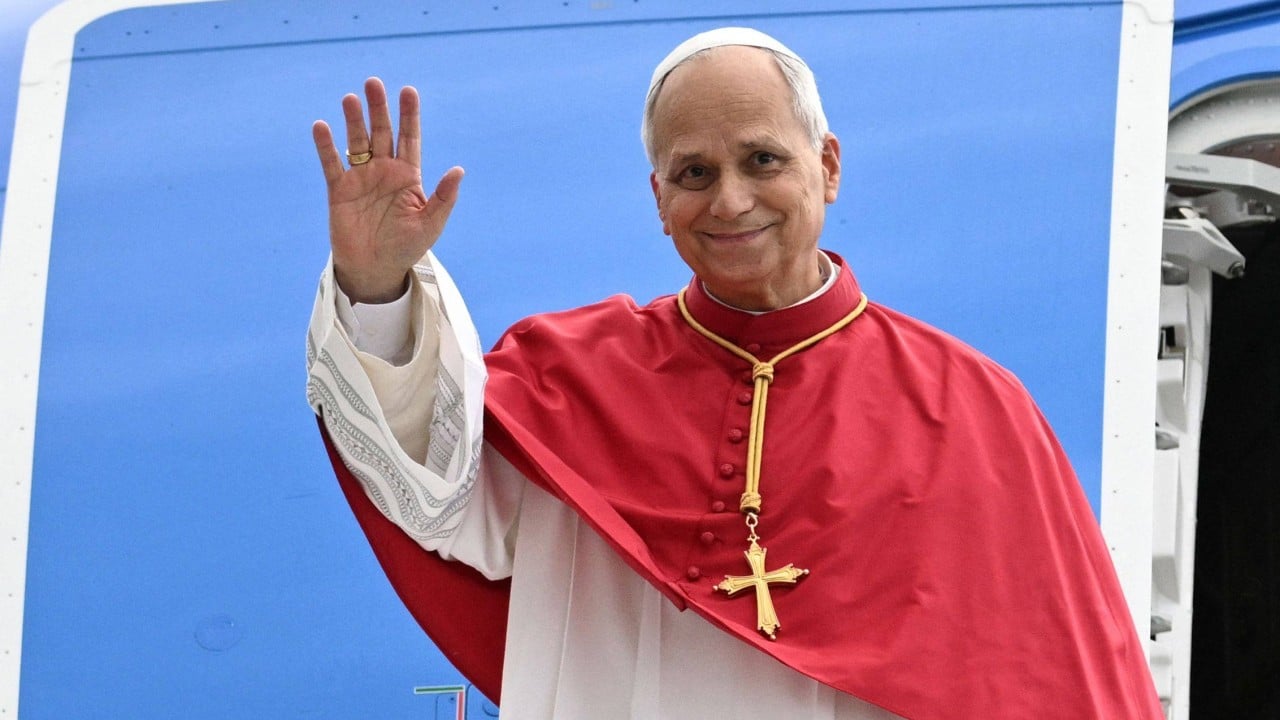
Pope Leo landed in Uruguay to launch a demanding South American tour just weeks after undergoing lung surgery, a calculated diplomatic gamble designed to stabilize Vatican influence across a rapidly secularizing continent. While surface-level coverage frames the visit as an inspiring display of personal grit, the real story lies inside the Roman Curia's urgent geopolitical calculus. The Holy See is bleeding demographic ground in Latin America, and the pontiff's medical team cleared a high-stakes travel itinerary only because delaying the trip risked permanent institutional retreat in the Southern Cone.
The Medical Reality Behind the Vatican Travel Clearance
Flying across the Atlantic shortly after thoracic intervention defies standard postoperative protocols. Pulmonary recovery demands strict management of cabin pressure, systemic inflammation, and physical exhaustion. Yet the papal household pushed ahead with the Montevideo arrival, relying on a heavily modified, tightly choreographed schedule that trades spontaneous crowd interactions for controlled diplomatic appearances. You might also find this similar article insightful: What Really Happened After That Cuban Diplomat Clashed With Mike Waltz at the U.N..
Doctors specializing in thoracic recovery generally advise patients to avoid long-haul commercial or pressurized flights for at least six to eight weeks following lung resection or major pulmonary procedures. At cruising altitude, cabin pressurization typically simulates an elevation of 6,000 to 8,000 feet, reducing partial pressure of oxygen and forcing compromised lung tissue to work harder. For an elderly head of state, that physiological tax compounds rapidly when paired with jet lag, humid coastal weather along the Río de la Plata, and the vocal strain of public addresses.
To mitigate these hazards, Vatican logistics planners quietly overhauled the standard papal travel blueprint. A mobile intensive care unit accompanies the motorcade at every stop, staffed by personal physicians and respiratory specialists rather than relying solely on local hospital infrastructure. Public outdoor Masses—traditionally the centerpiece of any apostolic journey—have been compressed or shifted indoors to shield the pontiff from temperature drops and airborne irritants. As extensively documented in recent reports by NBC News, the results are notable.
Even with those safeguards, the physical toll remains visible. Observers tracking the arrival in Montevideo noted shorter walking distances on the tarmac, elevated boarding ramps to eliminate steep stairs, and extended rest blocks baked into the afternoon itinerary. The Vatican press office insists the pontiff is fully fit, a standard institutional line designed to project continuity and quell rumors of early resignation or Curial power struggles. History shows that popes rarely admit vulnerability while actively governing; doing so immediately turns every bishop and cardinal in Rome into a campaign manager for the next conclave.
Why Uruguay Was Chosen as the High-Stakes Opening Stop
Starting a South American tour in Uruguay is not a geographic accident. It is a deliberate strategic statement aimed at the most secular nation in the Western Hemisphere.
While neighboring Brazil, Argentina, and Paraguay still retain deep cultural Catholicism—even as Pentecostal churches erode their numbers—Uruguay spent the twentieth century aggressively dismantling religious influence in public life. The country removed religious holidays from its official calendar decades ago, renaming Christmas as Family Day and Holy Week as Tourism Week. Church and state separated formally in 1917, and today, fewer than half of Uruguayans identify as Catholic, with a massive plurality claiming no religious affiliation at all.
For a pope recovering from lung surgery, beginning the itinerary in a nation with low religious observance carries two distinct advantages. First, the crowd sizes are manageable. Unlike Bogotá or Rio de Janeiro, where millions routinely flood city avenues and force marathon five-hour motorcades, Montevideo offers a calmer, politically sophisticated environment where high-level statecraft takes precedence over stadium rallies.
Second, Uruguay serves as a testing ground for how the Catholic Church survives when it no longer holds cultural hegemony. Vatican strategists view Montevideo not as a lost cause, but as a preview of what the rest of Latin America could look like within two generations. By engaging Uruguayan political leaders, academics, and civil society groups first, Pope Leo is signaling that the Church intends to operate as a persuasive moral voice in pluralistic democracies rather than relying on historical privilege.
The Geopolitical Battle for South America
The broader South American tour unfolds against a backdrop of intense ideological polarization and shifting diplomatic alliances across the region. Over the past decade, Latin American politics has swung violently between populist left-wing governments and hard-right libertarian or nationalist movements. In almost every capital, both factions try to claim religious legitimacy while simultaneously clashing with Vatican social teaching.
Consider the economic pressures battering the Southern Cone. Inflation, sovereign debt restructuring, and fierce debates over natural resource extraction—particularly lithium, copper, and agricultural exports—have fractured social cohesion. When a pope steps onto South American soil, every word regarding labor rights, environmental stewardship, or poverty alleviation lands like a grenade inside domestic political battles.
The Vatican's Secretariat of State understands that silence equals irrelevance. Pentecostal and neo-Pentecostal movements have spent thirty years building grassroots networks in working-class neighborhoods across Brazil, Chile, and Argentina, offering immediate community support and prosperity-oriented theology that resonates with economically desperate families. Meanwhile, secular progressive movements in major urban centers have successfully championed legislation on abortion, euthanasia, and same-sex marriage—policies directly opposed by traditional Catholic doctrine, yet increasingly popular among younger voters.
By appearing in person despite recent surgery, Pope Leo is attempting to arrest a dual hemorrhage: losing working-class believers to evangelical congregations while losing educated urban youth to total secularism. A video message from Rome cannot accomplish that. In Latin American political culture, physical presence equals commitment. Showing up frail or visibly recovering actually amplifies the symbolic weight of the gesture, framing the papacy as a sacrificial office willing to endure physical hardship to stand with peripheral nations.
How Papal Travel Has Evolved Under Medical Pressure
This is hardly the first time a pontiff has treated an international itinerary as a battleground against physical decline. Veteran Vatican watchers recognize the playbook immediately.
During the final decade of John Paul II's papacy, Parkinson's disease and orthopedic surgeries progressively stripped away his mobility and vocal clarity. Yet his advisors continued scheduling grueling international trips, arguing that his visible suffering preached a more potent sermon than any prepared text. Later, Pope Benedict XVI took the opposite route, concluding that the modern papacy required physical vigor to meet global travel demands, ultimately leading to his historic 2013 resignation. Pope Francis subsequently navigated a middle path, conducting major international trips from a wheelchair following knee operations and intestinal surgery, refusing to let hospitalization dictate the Church's diplomatic calendar.
Pope Leo's South American tour follows that exact institutional logic, though with a sharper focus on diplomatic efficiency. Look at how modern papal trips have compressed over the last twenty years:
- Elimination of ceremonial filler: Endless airport welcoming speeches and redundant courtesy calls with minor officials are ruthlessly cut to preserve vocal stamina.
- Centralized hub diplomacy: Instead of hopping between six provincial cities in four days, the pontiff stays in one or two capital hubs, forcing regional bishops and heads of state to travel to him.
- Pre-recorded fallback protocols: Vatican communications teams now prepare contingency video addresses for every major event, ensuring that if a medical flare-up forces a sudden cancellation, the theological and diplomatic message still reaches the public on schedule.
Critics inside the Roman Curia occasionally question whether these physically taxing journeys yield measurable results. They point out that papal visits rarely produce permanent spikes in Sunday Mass attendance or seminary enrollments. Once the motorcades depart and the television cameras pack up, local dioceses still face the same structural deficits: aging priests, shrinking budgets, and deep public skepticism following decades of clerical abuse scandals.
The Unspoken Institutional Risks of the Tour
Beneath the diplomatic pageantry lies a profound vulnerability that the Vatican refuses to discuss publicly. The Catholic Church across South America is still reckoning with profound institutional distrust stemming from systemic mishandling of clerical sexual abuse cases—most notably in Chile, Argentina, and Peru—alongside financial mismanagement at the diocesan level.
When a pope arrives in the region, survivors' advocacy groups and investigative journalists inevitably demand concrete canonical accountability rather than ceremonial blessings. Navigating those demands requires sharp political instincts and sustained stamina. A fatigued leader operating on reduced lung capacity faces a heightened risk of unscripted missteps during airborne press conferences or impromptu meetings with local clergy.
Furthermore, South American governments frequently try to weaponize papal visits for domestic political gain. Presidents facing plummeting approval ratings or legislative gridlock eagerly stage photo opportunities with the pontiff to project moral authority and national unity. Vatican diplomats must constantly walk a razor's edge—accepting state hospitality and advancing humanitarian initiatives without appearing to endorse specific administrations or economic policies.
If Pope Leo's health falters mid-trip, the geopolitical fallout would ripple far beyond Montevideo. An emergency medical evacuation from South America would shatter the carefully curated image of stability in Rome, triggering immediate speculation about governance paralysis inside the Vatican. Conversely, if he completes the itinerary without incident, he cements his authority over the Curia and proves that his administration can project soft power across the Global South regardless of physical constraints.
The stakes of this journey have very little to do with personal endurance and everything to do with institutional survival. Every handshake on the tarmac in Uruguay represents a calculated bet that physical presence can still buy the Vatican time in a continent rapidly moving on without it.