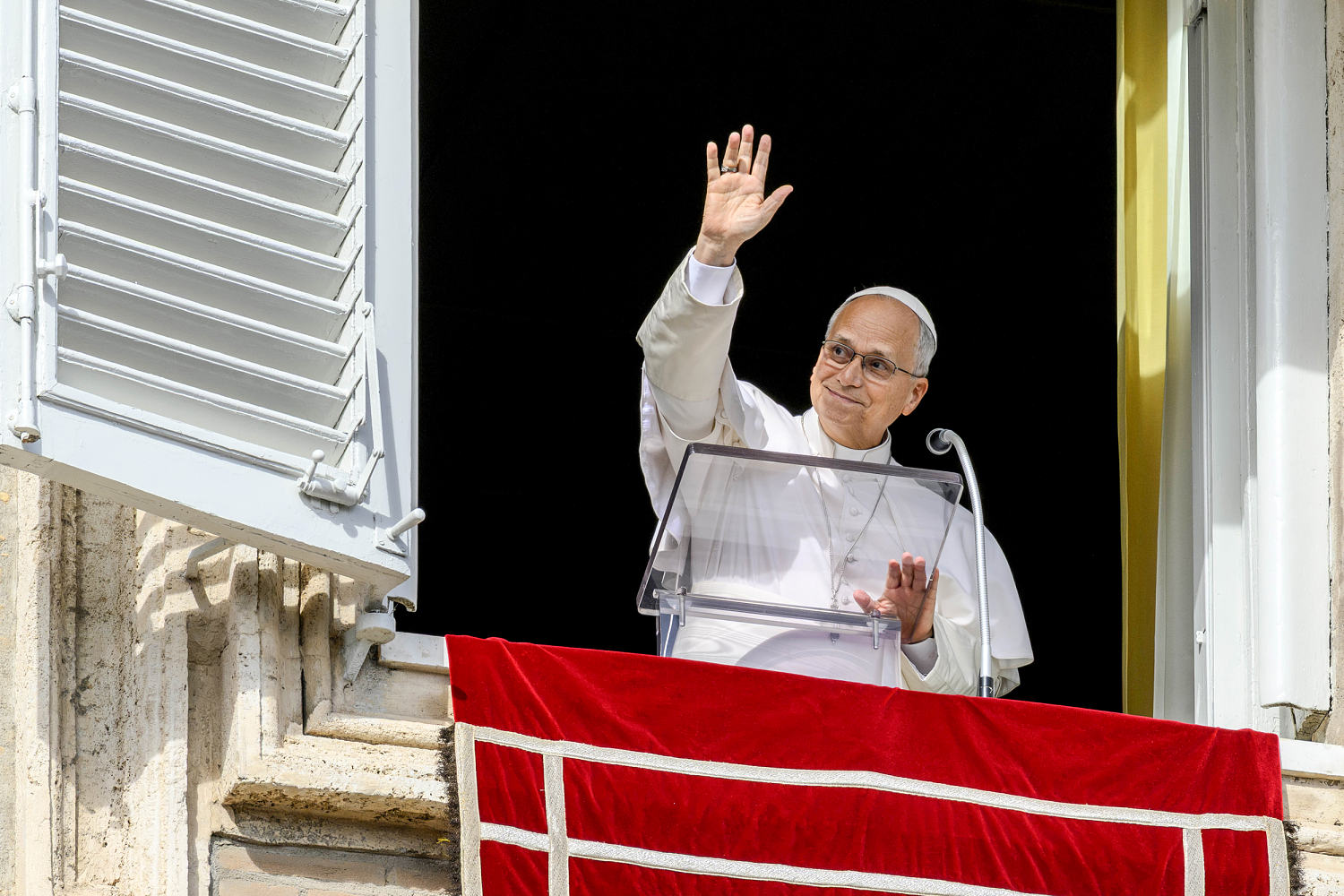
When an American cardinal ascends to the Chair of Saint Peter, he does not automatically surrender his United States passport or his constitutional right to cast a ballot back home. That is the blunt legal reality behind reports that Pope Leo XIV, born Robert Francis Prevost in Chicago, requested an absentee ballot in Illinois to vote in the midterm elections. While the image of the Bishop of Rome filling out a suburban Cook County or Will County mail-in form seems almost surreal, it rests on a quiet collision of American federal election law, Vatican diplomatic status, and centuries-old canon law.
The mechanics are straightforward. Under the Uniformed and Overseas Citizens Absentee Voting Act, any U.S. citizen residing outside the country retains the right to vote in federal elections using their last state of residence. For a Chicago-born pontiff who spent decades dividing his ministry between the Midwest, Peru, and the Roman Curia, Illinois remains his legal voting domicile. Requesting a ballot does not violate Vatican City sovereignty, nor does it trigger automatic loss of American citizenship under the Immigration and Nationality Act. Yet the political, diplomatic, and theological ripples of a sitting pope participating in an American partisan election cycle are anything but routine.
The Legal Architecture Behind a Papal Ballot
Most Americans assume that becoming the head of a foreign sovereign state—specifically the Vatican City State—immediately strips a person of their U.S. nationality. The law says otherwise. Under 8 U.S.C. § 1481, losing American citizenship requires both the commission of a potentially expatriating act and the specific, voluntary intention to relinquish nationality. Serving as a head of state or holding high office in a foreign government can trigger a State Department review, yet modern administrative practice presumes that U.S. citizens intend to retain their citizenship unless they formally renounce it before a consular officer.
Papal sovereignty complicates this further because the Holy See occupies a unique space in international law. The Lateran Treaty of 1929 established Vatican City as an independent territorial state to guarantee the spiritual independence of the papacy. Vatican citizenship, however, is strictly functional and temporary. Unlike birthright or naturalized citizenship in secular nations, Vatican nationality is granted solely to cardinals residing in Rome, Vatican diplomats, and officials whose duties require it. When their service ends, their Vatican citizenship expires, and they revert exclusively to their original nationality.
Even for the pope himself, the Lateran Pacts treat Vatican citizenship as an instrument of office rather than an erasure of origin. Previous pontiffs retained deep ties to their homelands—John Paul II remained fiercely connected to Poland, Benedict XVI to Bavaria, and Francis to Argentina. None of them faced the specific legal intersection of an American midterm election, because none of them held a U.S. social security number or fell under the jurisdiction of the Internal Revenue Service and the Federal Voting Assistance Program.
How Illinois Election Law Processes an Overseas Sovereign
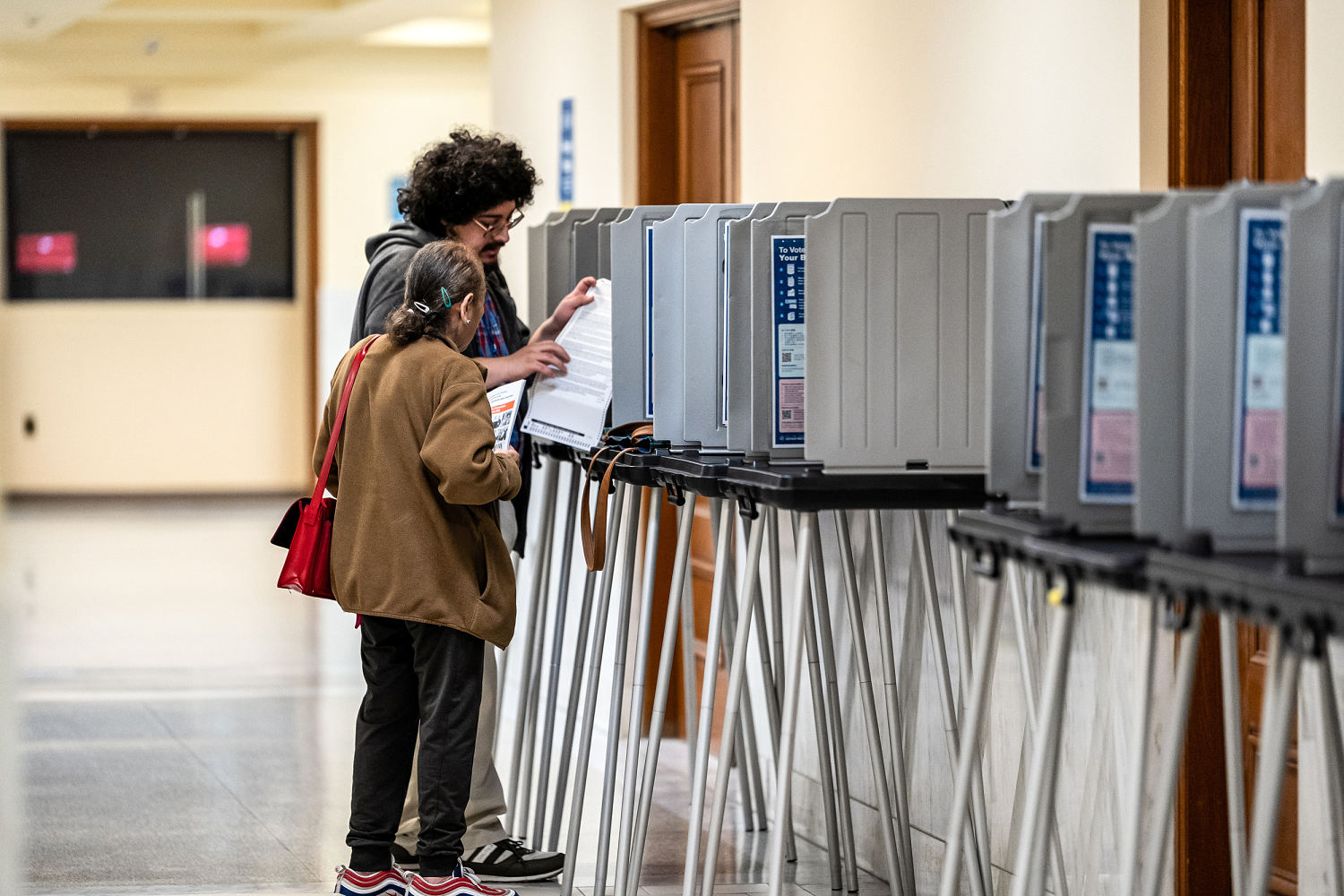
In Illinois, overseas voter registration is governed by the Illinois Election Code alongside federal UOCAVA mandates. An applicant submits a Federal Post Card Application, verifying their identity, their last residential address in the state, and their current mailing address abroad. County clerks do not screen applicants based on ecclesiastical rank or diplomatic immunity. If the registration matches an existing voter file—or establishes valid last-residence eligibility—the clerk is legally required to issue the ballot.
There is a critical statutory nuance that often gets lost in headline coverage. Under federal law, overseas voters who no longer maintain a physical residence in Illinois and have no definite plans to return are entitled to a federal-only ballot. That ballot includes candidates for the U.S. Senate and the U.S. House of Representatives, while excluding state-level races like governor, state legislature, and local judicial retention. If the voter still maintains a legal domicile or intends to return, they receive a full ballot. For a pope elected for life—barring an unprecedented resignation like Benedict XVI's in 2013—the federal-only restriction is the precise legal mechanism that governs his participation.
The Unspoken Diplomatic Tension Between Washington and the Holy See
A ballot cast from the Apostolic Palace is never just a private civic act. For nearly two centuries, the United States and the Holy See maintained an uneasy, arms-length relationship rooted in American anti-Catholic suspicion and constitutional anxieties over the separation of church and state. Formal diplomatic relations were not established until 1984, when President Ronald Reagan and Pope John Paul II exchanged ambassadors. Even then, the relationship relied on a strict mutual understanding: the Holy See operates as a moral and diplomatic actor on the global stage, standing above domestic partisan politics within individual nations.
When a sitting pope requests an Illinois absentee ballot, that boundary blurs. Midterm elections in the United States are fiercely polarized referendums on sitting administrations, congressional control, and hot-button cultural policies ranging from immigration enforcement to reproductive rights and religious liberty. Even though a secret ballot conceals the specific candidates chosen, the act of requesting and casting it signals direct participation in the domestic political machinery of a single superpower.
Diplomatic historians point out that the Vatican Secretariat of State has spent decades calibrating its neutrality. During the Cold War, the Holy See avoided formal alignment with NATO while opposing Soviet atheism. During the Iraq War in 2003, John Paul II dispatched personal envoys to Washington to urge restraint without endorsing American political factions. An American pope voting in an Illinois congressional race introduces an asymmetry that foreign ministries in Beijing, Moscow, and Brussels will scrutinize closely. If the Bishop of Rome is an active voter in the American electorate, critics abroad can argue that the papacy is no longer wholly detached from U.S. domestic influence.
The IRS and Diplomatic Immunity Paradox
Voting is only half of the administrative entanglement that comes with retaining U.S. citizenship at the highest level of the Catholic Church. The United States is one of the very few nations on earth that taxes its citizens on worldwide income regardless of where they live. While a pope does not draw a conventional corporate salary—his living expenses, housing, and travel are covered directly by the Holy See—U.S. tax law still requires annual Form 1040 filings and Report of Foreign Bank and Financial Accounts (FBAR) disclosures if an American citizen holds signature authority over foreign financial accounts exceeding $10,000.
Think about what that means in practice. The pope holds supreme legislative, executive, and judicial authority over Vatican City State, including ultimate oversight of the Institute for the Works of Religion (commonly known as the Vatican Bank) and the Administration of the Patrimony of the Apostolic See. Legal scholars have debated for years whether an American pontiff would require special Treasury Department waivers or diplomatic exemptions to prevent routine financial compliance laws from colliding with the sovereign immunity of the Holy See. Requesting an absentee ballot confirms active engagement with U.S. civic status, keeping those quiet administrative questions firmly on the table.
Canon Law and Catholic Teaching on Clerical Voting
Inside the Catholic Church, the question of whether clergy—and especially the pope—should vote in secular elections has a complex history. The 1983 Code of Canon Law strictly forbids Catholic priests and bishops from assuming public offices that entail a share in the exercise of civil power (Canon 285 §3). They cannot run for Congress, serve as mayors, or hold cabinet posts without explicit papal dispensation.
Voting, however, is treated differently. Under Catholic social teaching, exercising the franchise is viewed as a civic duty rather than a partisan seizure of power. In fact, during the mid-twentieth century, Pope Pius XII and Italian bishops actively urged Catholic clergy and religious orders to vote in Italian elections to prevent the Italian Communist Party from winning parliamentary majorities. Across the United States today, parish priests, diocesan bishops, and American cardinals routinely vote in local, state, and federal elections.
Yet the papacy occupies a category entirely its own. In Catholic ecclesiology, the pope is the visible principle and foundation of unity for the universal Church—a flock of over 1.3 billion people spanning every political system on the planet. Throughout modern history, popes living in Rome have largely abstained from voting in Italian national elections, even when they held Italian citizenship prior to their election. By stepping back from the ballot box, they preserved the visible neutrality of the papacy above local partisan divisions.
When an American pope chooses to exercise his right to vote in Illinois, he breaks from that long-standing Roman custom. Supporters argue it demonstrates healthy civic responsibility and proves that becoming pope does not erase a person's roots or basic democratic duties. Skeptics within the Curia worry it sets a precedent that could drag the papacy into the gravitational pull of American culture wars, where every election cycle is framed by partisan media as an existential moral battle.
Why Illinois Matters in the Political Calculus
The specific geography of an Illinois ballot adds another layer of intrigue. Illinois is not a sleepy electoral backwater; it is a major Democratic stronghold with fiercely contested suburban congressional districts around Chicago—precisely the collar counties and metropolitan neighborhoods tied to Prevost's upbringing and Augustinian roots. Depending on the specific precinct of last residence, a federal ballot in northern Illinois could involve high-profile House races that determine control of the chamber, alongside statewide U.S. Senate contests.
In hyper-polarized midterm cycles, single-digit margins in suburban Chicago districts routinely draw tens of millions of dollars in outside spending. Nobody suggests that a single absentee ballot from Vatican City will swing a congressional seat. The significance lies in symbolism and precedent. Every four years, and every two years in the midterms, American Catholic voters are courted aggressively by both major parties as a decisive swing demographic. Knowing that the pope himself is participating in the exact same election cycle alters the psychological backdrop for millions of faithful voters in the pews.
Privacy Protections and the Secret Ballot
Could anyone ever find out how the pope voted? Under Illinois law, the answer is an unequivocal no. Once an overseas absentee ballot arrives at the local election authority's office, election judges verify the signature on the outer certification envelope against the voter's registration record. Once verified, the outer envelope is opened, and the inner privacy sleeve containing the ballot is separated and mixed with thousands of other ballots before tabulation.
What is public record in Illinois, however, is voter history. Under state law, political campaigns, journalists, and data brokers can legally obtain records showing whether a registered voter requested a ballot, when it was mailed, whether it was returned, and—in primary elections—which party's ballot the voter requested. In a general midterm election, the ballot is unified, so party selection is not recorded. In a primary, requesting a Democratic or Republican ballot creates a permanent, publicly accessible data point. That distinction explains why any papal participation in a general midterm election carries far less immediate partisan exposure than voting in a party primary.
The Precedent for Future Global Popes
The election of an American pope shattered one of the oldest unwritten rules in Vatican geopolitics: that the College of Cardinals would never choose a pontiff from a global superpower, lest the spiritual authority of the Church become entangled with military or economic hegemony. For centuries, cardinals avoided candidates from the dominant empires of the day—France, Spain, Austria-Hungary, and later the United States and the Soviet Union.
Pope Leo XIV's election proved that the Church had moved past that taboo, prioritizing pastoral experience in Latin America and administrative competence in Rome over passport anxiety. Yet the practical realities of dual citizenship do not vanish once the white smoke rises from the Sistine Chapel chimney. Every modern institution—from county election boards in Illinois to federal compliance offices in Washington—operates on automated statutory rules that make no exception for the Vicar of Christ.
By requesting an absentee ballot from Illinois, Pope Leo XIV has exposed a fascinating seam in the modern world order. Even the oldest continuous absolute monarchy on earth cannot entirely detach itself from the administrative reach of the American republic. Whether future pontiffs follow his lead or return to the quiet abstention practiced by their Italian and European predecessors, the paper trail in Illinois proves that a pope can sit on the throne of Saint Peter and still remain a constituent of the United States Congress.