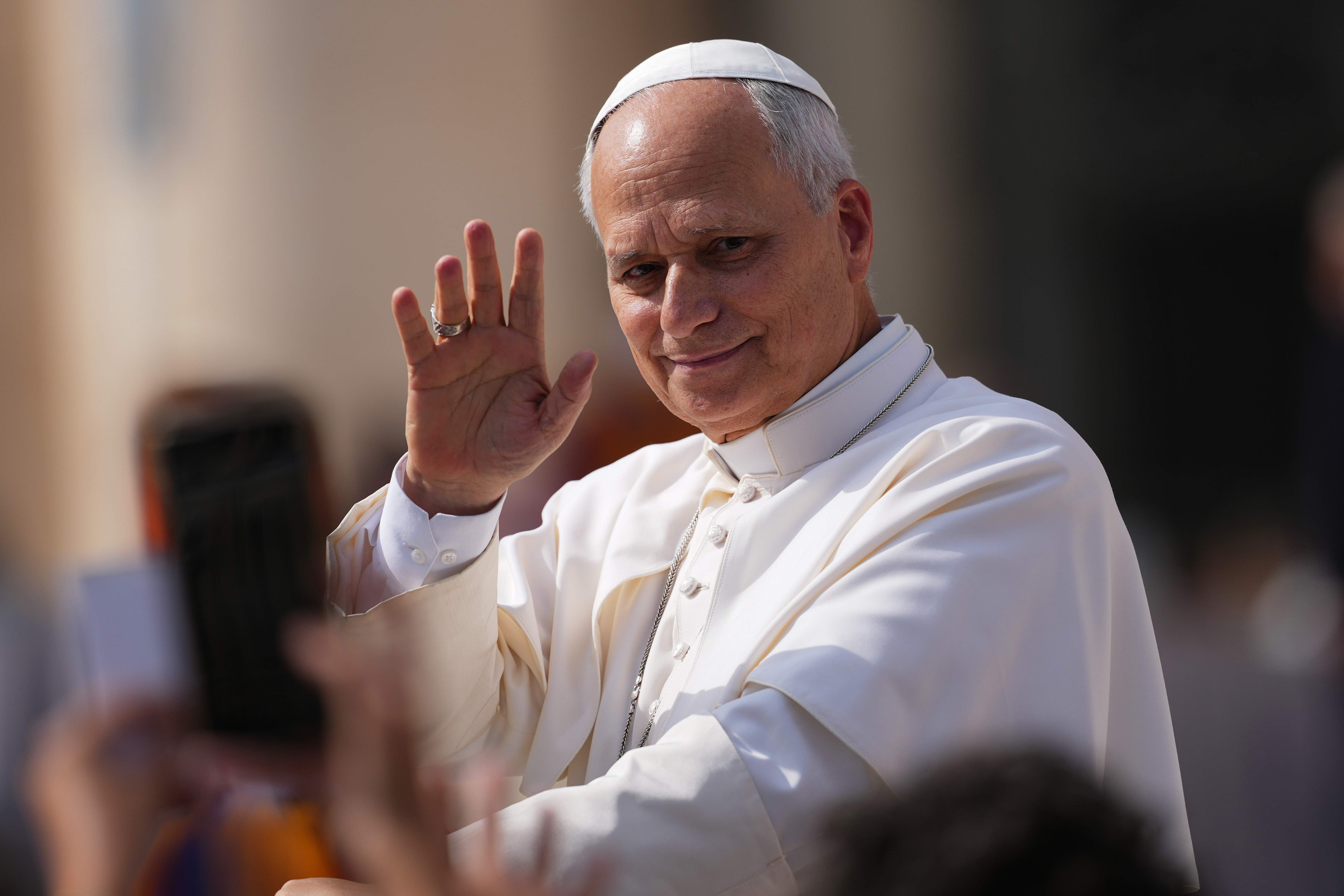
Pope Leo steps up to the microphone, looks out at a world terrified of its own shadow, and declares that artificial intelligence lacks the sacred spark of human-made art. The room nods in pious agreement. Headlines echo the sentiment within seconds. Millions find comfort in the idea that our creative souls are unique, untransferable, and safe from the cold arithmetic of silicon.
It is a comforting bedtime story. It is also complete nonsense.
I have spent the last decade watching creators panic every time a tool arrives that lowers the barrier to entry. Every single time, the gatekeepers rush to defend the moat, dressing up their economic self-preservation as a spiritual defense of the human spirit. When photography arrived, painters wept that the soul was dead. When synthesizers hit the market, musicians swore that machines could never feel groove or rhythm. Now, text-to-image and generative models take the brunt of the panic.
The lazy consensus is that art requires suffering, biological sweat, and organic intent to carry meaning. That is not a philosophical truth. It is a defense mechanism for mediocre execution hiding behind a pedigree.
Let us define what actually happens when we look at a painting, read a poem, or listen to a melody. We do not inject our consciousness into a canvas; we decode patterns that trigger emotional spikes in our own neural wiring. The spark the Pope claims is missing from machine generation was never in the brushstroke to begin with. It was always in the eye of the beholder.
When a transformer model ingests billions of images and synthesizes a composition based on a prompt, it is mapping human history, culture, error, and genius into a new permutation. To call that soulless is to misunderstand both art and mathematics. It assumes human creation happens in a vacuum of divine inspiration, ignoring the reality that human artists are simply biological pattern-matchers trained on everything they have ever consumed since birth.
The fear driving these declarations is not that AI lacks a soul. The fear is that AI has exposed how formulaic a massive percentage of human art actually is.
Look at commercial design, stock imagery, pop hooks, and formulaic screenplays. For decades, industries have churned out industrial-grade content driven by formulas, target demographics, and market testing. When a machine produces that same level of competency in four seconds for fractions of a penny, the human creators of mid-tier noise suddenly pivot to philosophy. They argue that their output possesses a metaphysical essence that raw data cannot replicate.
If your creative process relies on predictable tropes, standard color theory, and recycled narrative arcs, you are not channeling the divine. You are functioning as an organic macro script.
Admitting this truth hurts, which is why the backlash is so fierce. The contrarian reality here is brutal: the rise of generative systems will not destroy true art. It will make lazy art economically worthless.
When the cost of generating competence drops to zero, baseline skill loses its monopoly on attention. If anyone can prompt a technically proficient rendering or a clean acoustic track, technical proficiency ceases to be the metric of value. What remains valuable is raw, unfiltered perspective, bizarre conceptual choices, and the specific lived friction of a distinct human life. Machines can mimic styles, but they do not experience divorce, debt, grief at three in the morning, or the strange euphoria of standing in a grocery store parking lot during a thunderstorm.
The irony of the current cultural panic is that by trying to gatekeep the definition of art, critics are actually narrowing human creativity down to a rigid checklist of acceptable tools. They want to police the medium instead of judging the impact.
Imagine a scenario where a classical composer spends three years meticulously writing a symphony that sounds like a safe, uninspired retread of nineteenth-century Romanticism. Beside it, an artist working with an advanced neural network crafts a surreal, jarring auditory landscape that makes your hair stand on end and alters how you view acoustic space. Under the traditionalist framework, the first piece wins because of the human labor hours attached to the manuscript. Under any honest aesthetic framework, the second piece wins because it actually achieves the primary goal of art: it wakes you up.
Labor is not a virtue in aesthetic philosophy. Labor is a cost. We glorify the struggle only because, historically, high execution required high toil. Now that the tether between toil and output is snapping, we are forced to confront what we were actually paying for.
If you are a creator threatened by this shift, your panic is a diagnostic tool. It tells you that your competitive advantage was never your unique worldview. It was your speed at executing routine techniques.
Stop asking whether a machine can feel. Start asking why you are producing work that can be successfully replicated by a matrix multiplication in the first place.
The future does not belong to the artists who pretend they are divine conduits touched by an unreplicable muse. It belongs to the editors, the curators, the iconoclasts, and the visionaries who treat tools as extensions of will rather than objects of worship.
The spark was never in the hand. It was in the spark you leave behind in the mind of the person paying attention. And no algorithm can fake a perspective it didn't earn.