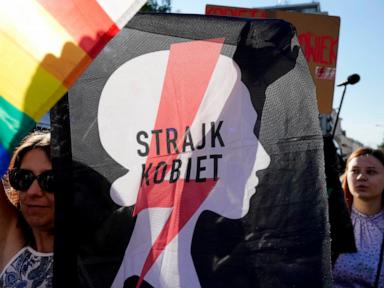
Streets wet with autumn rain. Banners waving in Warsaw, Kraków, and two dozen smaller towns. Thousands of people marching again for free, legal abortion.
And right on cue, the standard media script rolls out. Protesters demand reform. Conservative politicians dig in. Activists condemn a cruel status quo.
It is emotionally tidy. It is morally clear. And as a strategic diagnosis of what actually stops women in Poland from ending pregnancies safely, it misses half the board.
When you look closely at what is happening on the ground in Poland—from the Sejm floor to the clinics across the German border to the pill lockers dubbed Abortomat—the lazy consensus treats "free access to legal abortions" as a single legislative switch waiting to be flipped. Flip the law, fund the procedure, problem solved.
Except Poland is not stuck in a simple tug-of-war between progressive marchers and conservative lawmakers. It is trapped inside a three-lock institutional box: a conservative presidency with veto power, a deeply fractured coalition that can barely pass incremental measures let alone abortion on request, and a hospital system hollowed out by decades of conscientious objection and political fear.
Chanting for free legal abortion on demand in the streets is cathartic. It keeps pressure on politicians who promised change and then stalled. Yet if activists, donors, and voters measure success solely by whether a sweeping bill clears parliament and gets signed into law, they are setting themselves up for another round of heartbreak.
The Lazy Consensus Around Street Protests and Parliament
Read almost any conventional coverage of demonstrations in Poland and you will find the same comforting storyline. Public opinion polls show broad support for liberalizing the law, especially among younger women and city dwellers. Thousands take to the streets to mark anniversaries of the 2020 Constitutional Tribunal ruling that gutted the fetal abnormality exception. Therefore, the story goes, the bottleneck is simply political will plus a statutory ban.
That framing leaves out the hard mechanics of Polish power.
Even when parliamentary majorities shift or lawmakers finally advance bills to decriminalize assistance or roll back elements of the restriction, those bills still have to run a gauntlet through the Senate and land on the desk of a president who opposes abortion liberalization. A veto resets the clock. Overcoming a veto requires a supermajority that does not exist in a polarized Sejm where coalition partners themselves disagree on first-trimester abortion on request.
Worse, the "free and legal" slogan can lull outsiders into thinking either that change is right around the corner or that nothing is happening unless a statute changes. Both assumptions are dangerous. When international observers assume the political tide has already turned, funding and attention drift away. When activists treat parliamentary passage as the sole finish line, they ignore the reality that even existing legal exceptions—such as threats to a pregnant woman's health—have faced resistance and hesitation inside public hospitals.
What "Free and Legal" Actually Means on the Ground
In policy debates, "free and legal" sounds like a unified goal. In practice, those two words solve two very different problems—and neither one automatically fixes the third problem, which is de facto access.
- Legal means removing criminal penalties for doctors, helpers, and patients, and expanding statutory grounds beyond narrow exceptions like grave risk to life or health and pregnancies resulting from crime.
- Free means state reimbursement through the public health system so cost does not price low-income women out of care.
- Accessible means a physician actually agrees to perform or prescribe it without delay, harassment, or ideological grandstanding.
You can pass a law on paper and still hit a wall of hospital bureaucracy, legal ambiguity, and cultural stigma. Ask any woman who has navigated a public ward when her health is on the line and watched doctors hesitate out of fear of prosecutors or professional backlash.
What the Protesters and Pundits Are Missing
Having watched political campaigns and advocacy movements over years of policy battles, I have seen smart people blow millions of euros and endless energy fighting the last war instead of mapping the real choke points. Movements fall in love with dramatic slogans because slogans fill squares. Policymakers and advocates who want durable outcomes have to look past the slogan to the operational reality.
The real story in Poland is not that abortions stopped happening when the law tightened. The real story is that termination moved out of state hospitals and into self-managed medication, cross-border travel, and mutual-aid networks.
Groups like the Abortion Dream Team and cross-border helpers have spent years building practical workarounds—sharing verified protocols for medication abortion, connecting people with pills sent from abroad, and coordinating travel to clinics in neighboring countries like Germany. Meanwhile, activists have experimented with high-visibility tools like pill lockers (Abortomat) to dramatize how easy early medication is clinically compared to how absurdly criminalized it remains legally.
Look at the numbers reported by advocates and public health observers: official hospital abortions in Poland number in the hundreds or low thousands per year under strict criteria, while grassroots networks field inquiries from well over a hundred women a day, with the vast majority relying on abortion pills rather than hospital procedures.
That gap exposes a massive blind spot in conventional commentary. The protest marches focus on what the state refuses to do. The actual care happening every day relies on non-state channels, international medical guidance, and legal gray zones.
The Real Question Voters Should Be Asking
If you want to cut through the noise, stop asking, "When will Poland pass free abortion on demand?" That question assumes a political alignment that is blocked at the executive level right now.
Ask instead: How do we expand safe, low-cost, zero-stigma access and protect helpers from prosecution within the constraints of a veto-wielding presidency and a cautious medical establishment?
That shift changes everything. It turns vague outrage into concrete leverage points.
People Also Ask: Dismantling the Premises
Why are women still protesting if a more liberal government is in power?
Because winning a parliamentary election is not the same thing as controlling every lever of the state. A governing coalition can introduce bills, issue ministry guidelines on interpreting existing health exceptions, and debate decriminalization. It cannot simply wish away constitutional gridlock, coalition divisions, or a president aligned with the conservative camp who can veto legislation. Protesters are in the streets precisely because voters expected rapid results after past elections, and the gap between campaign promises and lived reality has grown wide enough to spark anger at the coalition itself.
Is abortion completely illegal in Poland right now?
No, and calling it a "total ban" is sloppy shorthand. Under the post-2020 legal framework, termination remains permitted in narrow circumstances—specifically when the pregnancy threatens the woman's life or health or results from a criminal act such as rape or incest. In practice, however, fear of legal scrutiny, narrow interpretations, and institutional resistance have kept hospital numbers tiny relative to actual demand, pushing most people who seek terminations outside the formal hospital system.
Why do activists focus so much on decriminalizing "assistance"?
Because in restrictive regimes, the sharpest weapon isn't just punishing the person ending a pregnancy—it's prosecuting the partner, friend, family member, or activist who orders pills, shares information, or helps someone travel. Prosecutions and trials against helpers create a chilling effect that isolates women and forces them to go through risky or late situations alone. Decriminalizing assistance lowers the legal temperature around everyday solidarity long before full legalization on request is politically feasible.
Could the European Union force Poland to legalize abortion?
Not directly. Reproductive healthcare policy and criminal law around abortion largely sit within national competence, even as international bodies—such as the European Court of Human Rights and UN human rights committees—have criticized restrictive rules and pushed for compliance with human rights and healthcare obligations. Brussels can apply political pressure or link broader rule-of-law and health standards to wider debates, but there is no magic EU button that overrides Polish domestic law overnight.
A Thought Experiment: What If Parliament Passed Full Legalization Tomorrow?
Imagine a scenario where the Sejm passes a sweeping law tomorrow making abortion free and legal on request up to twelve weeks, and the president somehow signs it without delay.
What happens on Monday morning?
First, clinics and hospital wards do not magically sprout trained staff and clear protocols overnight. Doctors who practiced for years under strict rules and intense political scrutiny will look for clear liability protections and hospital management backing before moving fast.
Second, regional inequality will show up immediately. Warsaw, Gdańsk, or Wrocław may adapt quickly; smaller towns in more conservative regions may see long waitlists, quiet refusals, or referrals that eat up precious weeks.
Third, self-managed medication abortion will not disappear just because hospitals open up. Privacy, convenience, speed, and control over one's own home matter deeply to many patients—even in countries where clinic abortion is completely legal and free.
Passing the law would be a monumental symbolic and legal victory. It would not be the end of the work. Treating legislation as a silver bullet ignores how healthcare delivery actually works.
Heavy Hitters and Real-World Precedents
To understand why legal reform alone rarely delivers instant access, look at organizations and legal bodies that track reproductive health and rights across Europe:
- The Center for Reproductive Rights has repeatedly highlighted both legislative gaps and practical enforcement failures in Poland, pointing to rulings and findings from international bodies like the European Court of Human Rights and the UN Committee on the Elimination of Discrimination against Women.
- Polish grassroots collectives, including the Abortion Dream Team and Abotak, have documented the day-to-day reality of medication access, cross-border care, and court battles over assisting terminations.
- International public health guidance from the World Health Organization has long emphasized that early medical abortion using mifepristone and misoprostol is safe and effective, and that criminalizing care or imposing unnecessary barriers harms public health.
Put those perspectives together and a clear pattern emerges: the law sets the ceiling or floor of formal permission, while medical culture, enforcement, and cross-border supply chains determine what actually happens in people's lives.
Where My Contrarian Take Can Backfire
Let's be honest about the risks of arguing against a pure "fight for free and legal abortion" frame. Every strategic shift has a cost.
If advocates dial back the demand for free, legal abortion on demand to focus on incremental decriminalization or harm reduction, critics will accuse them of settling for crumbs or surrendering bodily autonomy to political convenience. In politics, if you ask for a compromise before negotiations even start, you often end up with less than half a loaf.
There is also a real danger of normalizing a two-tier system: affluent or connected women with internet access, bank cards, and passports get pills or fly to Berlin or Vienna, while poorer, younger, or isolated women get stuck navigating fear, delays, or hospital refusals. Harm reduction is vital—never confuse a lifeline with justice.
Finally, focusing too heavily on workarounds can let politicians off the hook. If activists make access "good enough" through informal networks, coalition leaders who treated reproductive rights as a bargaining chip get a free pass to keep stalling.
Actionable Moves That Actually Work
If you care about reproductive autonomy in Poland—whether as an activist, donor, voter, or observer—stop treating street marches and bills as mutually exclusive, and start sequencing your pressure smarter.
- Treat decriminalization of helpers as a non-negotiable firewall. Protecting people who share information or assist someone costs less politically than passing full abortion on request and immediately reduces fear across families, friends, and advocates.
- Audit hospital enforcement, not just parliamentary votes. Push health ministries and hospital directors on concrete compliance when a pregnant woman's health is threatened. Paper guidelines mean little without accountability when doctors hesitate.
- Fund frontline support even when headlines cool down. Protest spikes bring brief bursts of attention; sustained cross-border coordination, counseling, and legal defense keep people safe on ordinary Tuesdays when no cameras are around.
- Refuse to let politicians trade rights for coalition calm. Hold every party accountable to clear, time-bound commitments rather than vague promises timed to election cycles.
Keep marching when the streets call for it. Just don't mistake noise in the square for power in the clinic.