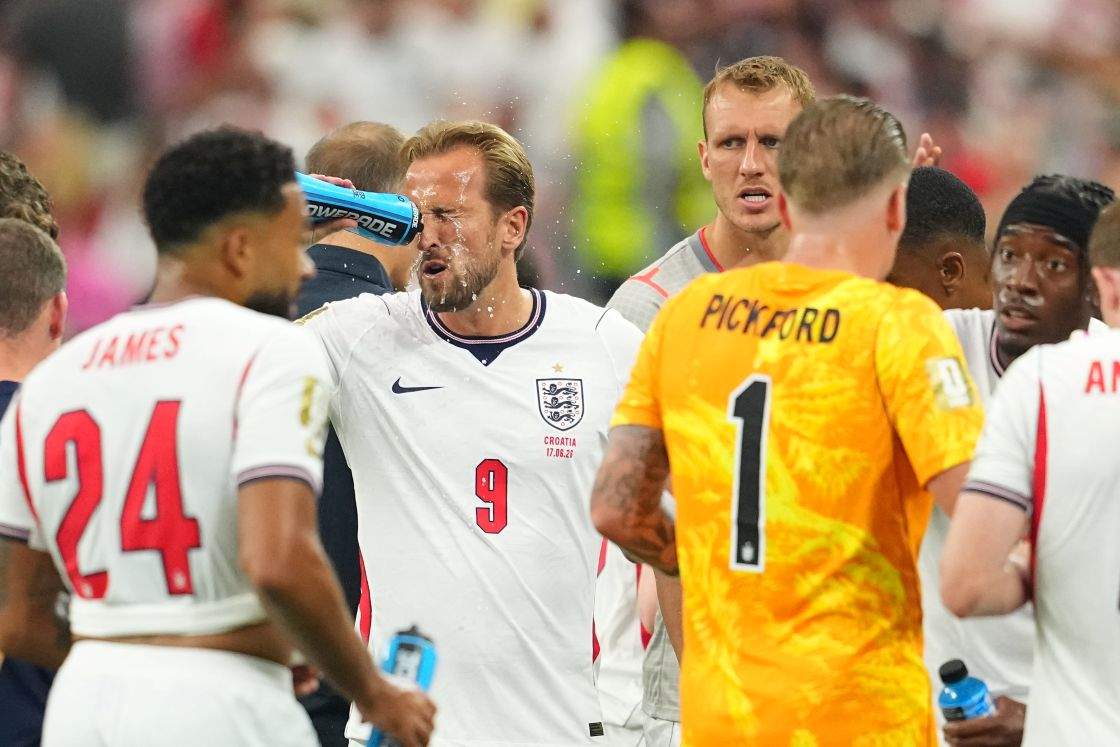
Media outlets love the lazy tradition of the "World Cup in photos" gallery. You know the formula. A glossy snapshot of a fan weeping in colorful face paint. A perfectly timed, high-definition freeze-frame of a striker mid-air. A wide-angle drone shot of a packed stadium glowing under stadium lights. They present these images as the pure, unadulterated essence of global joy and athletic perfection.
It is a lie. You might also find this connected article insightful: The Price of Redemption and the Reality Behind the Knicks Championship Parade.
Those curated galleries do not capture the tournament. They sanitize it. By flattening a massive, chaotic, politically charged corporate operation into a series of heartwarming vignettes, sports journalism fails its audience. The real tournament does not happen in the pristine vacuum of a shutter click. It happens in the friction between massive corporate interests, systemic fan exploitation, and the grueling physical degradation of the athletes themselves.
The Illusion of Unity in a 1/2000th of a Second
Look closely at any standard tournament photo essay. The underlying narrative is always the same: football brings the world together. The imagery relies on a highly manufactured brand of nationalism made safe for corporate sponsorship. As extensively documented in latest articles by Yahoo Sports, the implications are notable.
The industry reality is far darker. FIFA operates less like a sports governing body and more like a transient sovereign state that extracts billions in tax-free revenue from host nations before packing up and leaving behind empty infrastructure. When photojournalists train their lenses exclusively on the ecstatic crowds, they actively obscure the displacement of local populations and the aggressive policing required to create those clean, brand-safe perimeters.
During major tournaments, the host city becomes a highly controlled corporate simulation. Budweiser banners replace local vendors. High-tech surveillance grids monitor fans. The "global village" depicted in your Twitter feed is a heavily policed, paywalled enclosure designed to maximize per-capita spending. Capturing a smiling fan in front of a stadium without showing the sterile, militarized security cordon fifty yards away is not journalism. It is free marketing.
The Real Cost of the "Beautiful" Shot
- Economic Extraction: Host cities routinely absorb billions in infrastructure debt while soccer's governing body retains the vast majority of broadcasting and sponsorship revenue.
- Sanitized Dissent: Protestors, local workers, and economic realities are systematically pushed outside the camera's frame to maintain a pristine broadcast product.
- The Tourism Mirage: The influx of wealthy international fans frequently displaces local match-going subcultures, replacing authentic football passion with corporate hospitality clients.
The Athletes Are Breaking, and We Are Applauding the Breakdown
Every tournament gives us the iconic image of a player collapsing to the turf in exhaustion or agony. The media frames this as heroic sacrifice. It is actually evidence of an industry driving its primary assets to total physical breakdown.
The modern football calendar is an absolute disaster. Elite players are now subjected to a relentless cycle of domestic leagues, continental club competitions, international breaks, and expanded summer tournaments. We look at a photo of a player sprinting in the 120th minute of a knockout match and marvel at their conditioning. What we should see is the immense risk of soft-tissue injuries and long-term career shortening.
"The current match load is unsustainable for top-tier players. We are seeing a measurable spike in fatigue-related injuries because the recovery windows have been completely eliminated to satisfy broadcasting schedules." — FIFPRO Elite Player Welfare Report
By celebrating the aesthetic of exhaustion, the media normalizes the exploitation of these athletes. The frantic pacing of the matches, often played in extreme climates due to questionable hosting selections, is not a testament to human spirit. It is a design flaw born of greed.
The Death of Authentic Fan Culture
The standard photo essay loves the "super-fan"—the individual who spends thousands on elaborate costumes and travels across hemispheres. This hyper-visible caricature has replaced the actual lifeblood of the sport: the local supporter.
The hyper-commercialization of international tournaments has priced out the traditional working-class fanbase that built the sport's global identity. The stands are increasingly populated by affluent tourists and corporate sponsors who treat the match like a networking event or an Instagram backdrop.
This shifts the entire energy of the stadium. The organic, hostile, deeply tribal atmosphere of traditional football is replaced by a sterile, family-friendly entertainment product. The cameras focus on the choreographed card stunts and the pre-approved fan zones because the authentic, unpredictable element of supporter culture has been systematically priced out and banned.
How to Actually Watch the Tournament
If you want to understand the modern game, you have to look past the official broadcast feed and the curated photo galleries. Stop looking at the ball. Look at what happens off it.
Monitor the Technical Area, Not Just the Net
Watch how managers react to the tactical rigidity imposed by extreme fatigue. As tournaments progress, tactical sophistication drops precipitously because teams lack the training time and physical energy to execute complex pressing schemes. The game becomes slower, more cautious, and heavily reliant on individual errors.
Follow the Money, Not the Mascot
Pay attention to the empty seats in the premium hospitality sections during the first fifteen minutes of the second half. That is the true face of modern football: corporate ticket holders finish their buffet lunches while the actual singing fans are relegated to the upper upper tiers, invisible to the primary television cameras.
Look for the Unseen Labor
Every glossy image of a pristine pitch is the result of immense, often underpaid labor working under brutal conditions. The infrastructure that enables these mega-events relies on a global underclass that is never featured in the celebratory photo essays.
Stop consuming the tournament through the lens of corporate myth-makers. The beauty of football does not belong to the executives who market it or the photographers who sanitize it. It exists in spite of them. Strip away the corporate pageantry, the manufactured sentimentality, and the glossy filters. What is left is a brutal, high-stakes industry that views the passion of billions as nothing more than an extractive resource. Look at the whole picture, or do not look at all.