The cabin door seals with a heavy, pneumatic thud. Outside, the tarmac of Atlanta’s Hartsfield-Jackson shimmers under a bruised afternoon sky. Inside, at Row 23, Seat A, a passenger reaches up to slide down the plastic shade against the glare—and finds only a blank, beige wall of fiberglass.
No glass. No clouds. Just a solid stretch of fuselage paneling where the seat map promised a window.
For years, this small betrayal has been treated as a harmless travel quirk, the kind of thing you shrug off with a wry smile and a complaint on social media before putting on your noise-canceling headphones. Airlines collected their thirty-five, fifty, or eighty-five dollars in seat-selection fees, passengers swallowed their frustration, and the boarding process marched relentlessly forward.
Until someone finally decided that calling a wall a window wasn't a quirk. It was fraud.
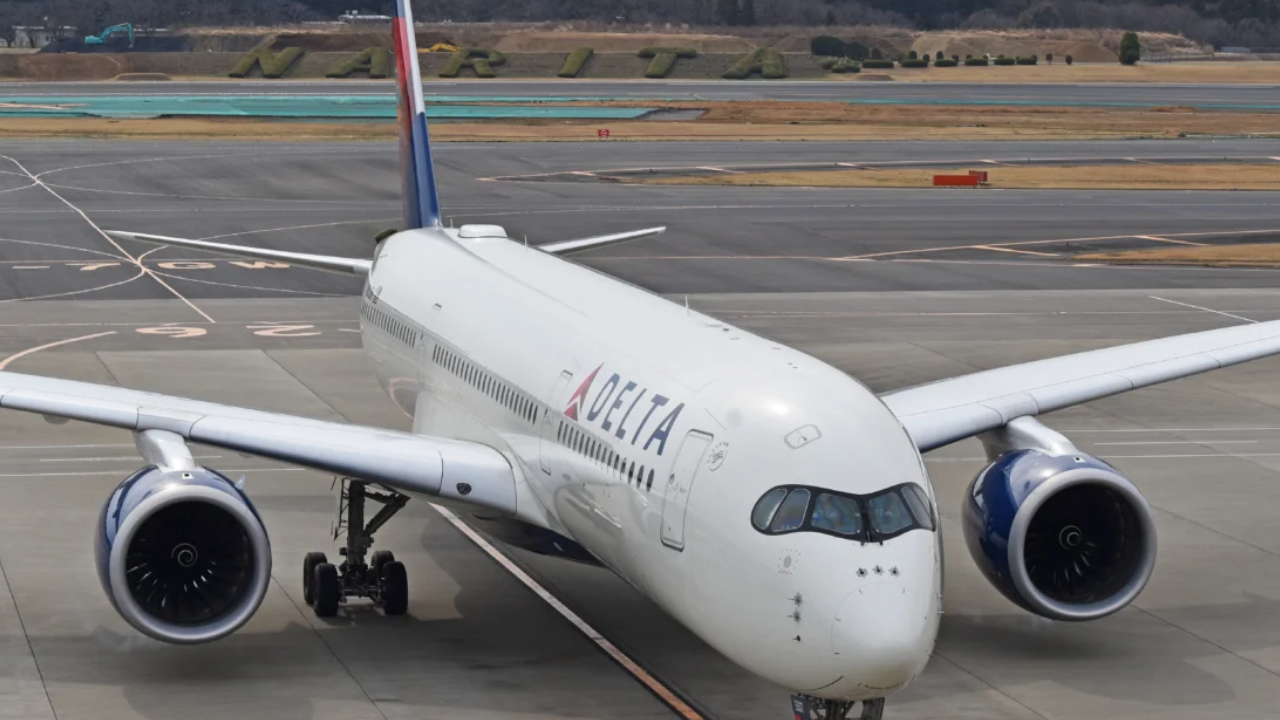
A federal judge has now agreed that the argument deserves its day in court, allowing a class-action lawsuit against Delta Air Lines to proceed over the sale of "window" seats that have no windows at all. On the surface, the legal dispute looks like petty consumer friction over a few square inches of acrylic glass. Look closer, however, and you will see the fault lines of an entire industry built on selling illusions, unbundling basic dignity, and betting that tired travelers will never fight back.
The Anatomy of a Modern Boarding Pass
To understand why a missing window has sparked a federal legal battle, you have to remember what buying a plane ticket used to feel like, and compare it to the digital obstacle course it has become today.
Once, a ticket bought you a place on a plane. You showed up, took your assigned spot, and accepted the luck of the draw. If you ended up next to a structural pillar where an air conditioning duct ran up the side of the hull, you sighed, leaned your head against the hard plastic, and tried to sleep. You hadn't paid extra for the view, so you couldn't claim you had been robbed of one.
Then came the great unbundling.
Over the last two decades, airlines discovered that the real money wasn't in the base fare; it was in the friction. First came baggage fees. Then came priority boarding. Soon, the cabin itself was sliced into a dozen micro-tiers, each monetized down to the inch. Suddenly, choosing where you sat wasn't a courtesy—it was a premium transaction. The seat map on your screen transformed into a glowing grid of price tags, turning every row into a high-stakes negotiation between your wallet and your spine.
Consider a hypothetical traveler—let’s call her Elena—booking a cross-country flight to visit her aging father. She suffers from mild claustrophobia, the kind that makes a five-hour metal tube feel like a slow-motion panic attack unless she can anchor her eyes to the horizon. When Delta’s booking interface displays the cabin layout, Seat 14F sits neatly along the outer edge, iconically framed like every other window seat on the diagram. There is no asterisk. There is no warning banner. She clicks the square, pays the extra fee for the privilege of selecting her spot, and breathes a sigh of relief.
Months later, she boards the aircraft, stows her bag, and turns toward the wall. There is nothing to look through. The structural ribs of a Boeing 737 or an Airbus A321 require blank spaces for wiring, insulation, and environmental ducts, leaving certain rows completely blind. Elena paid a surcharge to cure her claustrophobia, and the airline handed her a sensory deprivation chamber instead.
Her frustration isn't theoretical. In the lawsuit moving forward against Delta, plaintiffs argue that the airline knowingly charges extra for "window" seats on specific aircraft configurations where those windows simply do not exist, while competitors like American Airlines and United have at least begun flagging some of these blind spots on their digital seat maps.
When Fine Print Meets Federal Court
Airlines have spent decades insulating themselves behind towering walls of contractual legalese. Whenever a passenger sues over delays, cancellations, or cramped conditions, the industry’s default defense is the Contract of Carriage—a sprawling, forty-page document nobody reads until something goes terribly wrong.
In this case, Delta argued that a seat assignment is never guaranteed, that aircraft swaps happen, and that federal airline deregulation laws preempt state-level consumer protection claims. It is a familiar shield. The Airline Deregulation Act of 1978 was designed to let market forces set fares and routes without state interference, and carriers have wielded it like a broadsword to swat away almost every lawsuit challenging how they advertise and sell their products.
Yet the court drew a sharp, fascinating line in the sand.
While federal law protects an airline’s right to set its own prices and manage its routes, it does not grant a license to deceive consumers about what they are actually purchasing. The judge recognized a fundamental distinction between operational necessity—like swapping a plane at the last minute due to mechanical trouble—and systemic misrepresentation baked directly into the booking software.
Think about that distinction for a moment.
If you walk into a bakery and pay extra for a chocolate croissant, and the baker hands you a plain roll because they ran out of chocolate, you expect your money back. If the baker knows every morning that the third tray in the oven contains zero chocolate, yet continues to label and price those rolls as chocolate croissants anyway, that isn't an operational hiccup. That is a business model.
The plaintiffs' legal team successfully argued that Delta’s seat maps operate like that dishonest bakery. The airline knows the exact schematics of every jet in its fleet. It knows down to the millimeter which rows lack windows on a Boeing 737-900ER or a 757-200. Yet the software takes the customer's money for a "window seat" without a whisper of disclosure, shifting the burden onto the passenger to memorize obscure aviation seat-guru forums before clicking purchase.
The Invisible Tax on Trust
I still remember the first time I got burned by the invisible architecture of a modern cabin. It was a red-eye out of Seattle, and I had splurged on what the map showed as a prime window spot near the wing. I had a brutal week ahead of me and needed four hours of uninterrupted sleep against the wall. When I folded my jacket into a pillow and leaned my head to the left, my temple hit a freezing, unyielding slab of fiberglass that vibrated with the low-frequency hum of the air conditioning riser running directly behind it. No recess to tuck a shoulder into. No view of the dawn breaking over the Rockies to make the sleepless night worth it. Just cold plastic and the realization that I had paid fifty dollars extra for the worst seat in the row.
You don't file a federal lawsuit over fifty dollars. Nobody does. And that is precisely why the practice survives.
This is the quiet genius of modern corporate friction: keeping the harm small enough that individual outrage feels petty, yet widespread enough that the cumulative revenue runs into the tens of millions of dollars. Behavioral economists call this drip pricing and asymmetric information. You show the customer a clean, comforting graphic—a neat row of little rounded rectangles representing windows—and you bank on the psychological reality that once a traveler is strapped into their seatbelt with the overhead bins slammed shut, they aren't going to walk off the plane to demand a refund.
They will just take out their phone, snap a photo of the blank wall, post it online for a few dozen sympathetic likes, and let the airline keep the cash.
By allowing these claims to survive a motion to dismiss, the court has disrupted that quiet calculus. Suddenly, the hidden tax on trust has a price tag attached to it. If the litigation advances toward discovery, Delta may be forced to open its internal records, revealing how much revenue these windowless "window" seats generated, whether executives knew about customer complaints, and why the booking software was never updated to add a simple five-word warning: No window at this seat.
The Domino Effect Across the Tarmac
What happens next reaches far beyond a single airline or a few missing panes of glass.
If a judge holds that labeling a blank wall a "window seat" constitutes actionable misrepresentation, every corner of the travel industry’s creative vocabulary comes under immediate scrutiny. Consider the other euphemisms travelers navigate every time they book a trip:
- "Extra Legroom" seats that sit directly behind a rigid bulkhead wall, offering more knee space at the cost of zero under-seat storage and immovable armrests that dig into your hips.
- "Ocean View" hotel rooms where you have to lean dangerously over the balcony railing and crane your neck ninety degrees to catch a sliver of blue water between two concrete parking garages.
- "Basic Economy" fares marketed as a budget-friendly choice, stripped of so many standard inclusions that the final checkout price quietly eclipses a regular ticket.
For years, consumer advocates have warned that digital interfaces were outpacing the laws meant to keep commerce honest. When a company designs the map, writes the definitions, and controls the checkout screen, transparency becomes optional unless a judge forces the issue.
Airlines have always argued that clear disclosures complicate the user experience, cluttering sleek mobile apps with messy caveats. That excuse collapses under the weight of common sense. A tiny icon—a window with a slash through it, or a subtle gray shading on the seat map—takes a software engineer less than an afternoon to implement. It costs nothing. It preserves the elegance of the app. The only thing it threatens is the extra revenue collected from passengers who wouldn't have paid the fee if they had known the truth.
The View From Row 23
The legal battle ahead will be slow, technical, and fiercely contested. Class certification isn't guaranteed, and airlines possess formidable legal teams skilled at dragging litigation out until memories fade and settlements quietly bury the headlines. Passengers shouldn't expect a sudden windfall of refund checks landing in their mailboxes next Tuesday.
Yet something fundamental has already shifted in the cabin.
The next time a traveler opens a seat map on their phone, squinting at those tiny glowing squares before handing over their credit card, the power dynamic won't feel quite so lopsided. The industry’s favorite defense—that a seat is just a seat, and whatever wall you end up staring at is your problem—has been punctured in federal court.
High above the clouds, miles away from any courtroom, another flight levels off at cruising altitude. Sunlight pours through the cabin in bright, slanted shafts, illuminating dust motes dancing in the recycled air. Passengers lean forward to snap photos of the golden horizon stretching endlessly below them—all except the person in Row 23, sitting silently in the dim shadow of a blank plastic wall, waiting for the descent to begin.