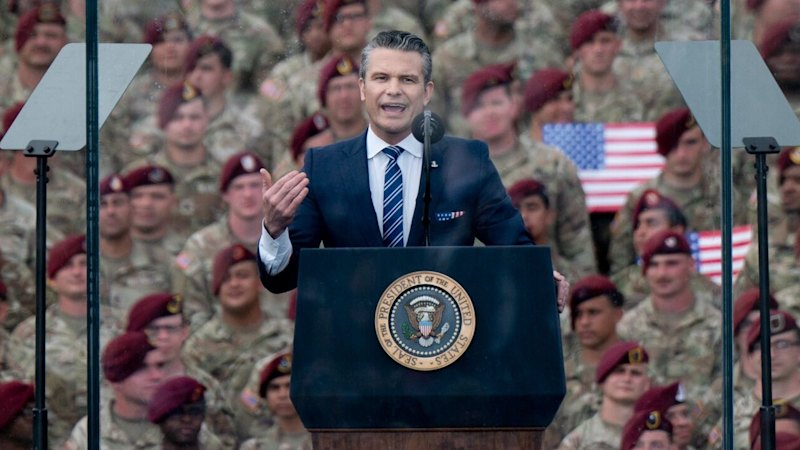
When you strip out the leadership of an institution built on chain of command, things don't just get messy—they break. Right now, the United States Army is facing a brutal convergence of active conflicts, low-cost drone threats in the Middle East, and an internal restructuring led by Defense Secretary Pete Hegseth that critics argue is hollowing out its core.
If you look past the political talking points, the reality on the ground inside the Pentagon and at forward-deployed bases reveals a military leadership vacuum. Let's break down what is actually happening, why seasoned commanders are sounding the alarm, and what this means for national defense.
The Leadership Vacuum at the Top
A combat-ready force requires stability at the highest echelons. Instead, the Army has spent months without a confirmed chief of staff following the abrupt firing of Gen. Randy George. Out of ten active four-star generals who held positions when Hegseth took office, only five remain.
This isn't just about shuffling titles on an organizational chart. When experienced generals are forced out or sidelined, decades of institutional knowledge vanish overnight.
- Loss of Experience: Senior officers who navigated complex operational theaters are being replaced by loyalists or left vacant entirely.
- Shrinking Ranks: Mandated cuts have slashed four-star and flag officer positions by up to 20 percent, leaving fewer seasoned minds to oversee massive global logistics and tactical deployments.
- The Succession Crisis: Mid-level and junior officers watch these purge cycles and learn the wrong lessons about career survival over tactical honesty.
Real-World Consequences in the Middle East
The timing couldn't be worse. U.S. bases across the Middle East are absorbing relentless waves of inexpensive, enemy attack drones and missiles. Troops are paying the price in blood and injuries, while supply lines and regional shipping face mounting economic pressure.
When command structures are fractured, tactical responsiveness slows down. Decision-making bottlenecks at the top mean frontline units wait longer for defensive assets and strategic clearances. Cutting staff numbers in the name of efficiency sounds great in a press release, but in an active theater, it translates directly to diminished battlespace awareness and slower reaction times.
Ideological Overhauls Versus Combat Readiness
Hegseth’s mandate has focused heavily on rolling back diversity programs, altering grooming and physical fitness standards to strict gender-neutral male benchmarks, and dismantling civilian harm mitigation offices. The argument from leadership is that these measures restore maximum lethality and purge bureaucratic distractions.
Yet, top commanders who were polled on these changes heavily pushed back. They warned that gutting civilian protection units and overriding regional commanders increases the risk of target misidentification, legal blowback, and strategic failure.
When you tell a military force that political loyalty and rigid conformity matter more than independent tactical counsel, you stop building an apolitical shield for the nation. You build a fragile hierarchy vulnerable to catastrophic blind spots.
To fix the trajectory, military oversight needs to shift back toward strategic competency and institutional resilience rather than ideological compliance. Keep a close eye on upcoming congressional hearings regarding defense appointments, because the personnel choices made this year will dictate national security outcomes for the next decade.
Panic Inside Pentagon? Hegseth's Purge Leaves US Military A Shell
This video explores the sweeping high-level purges and institutional strain facing the US military under current Pentagon leadership.


