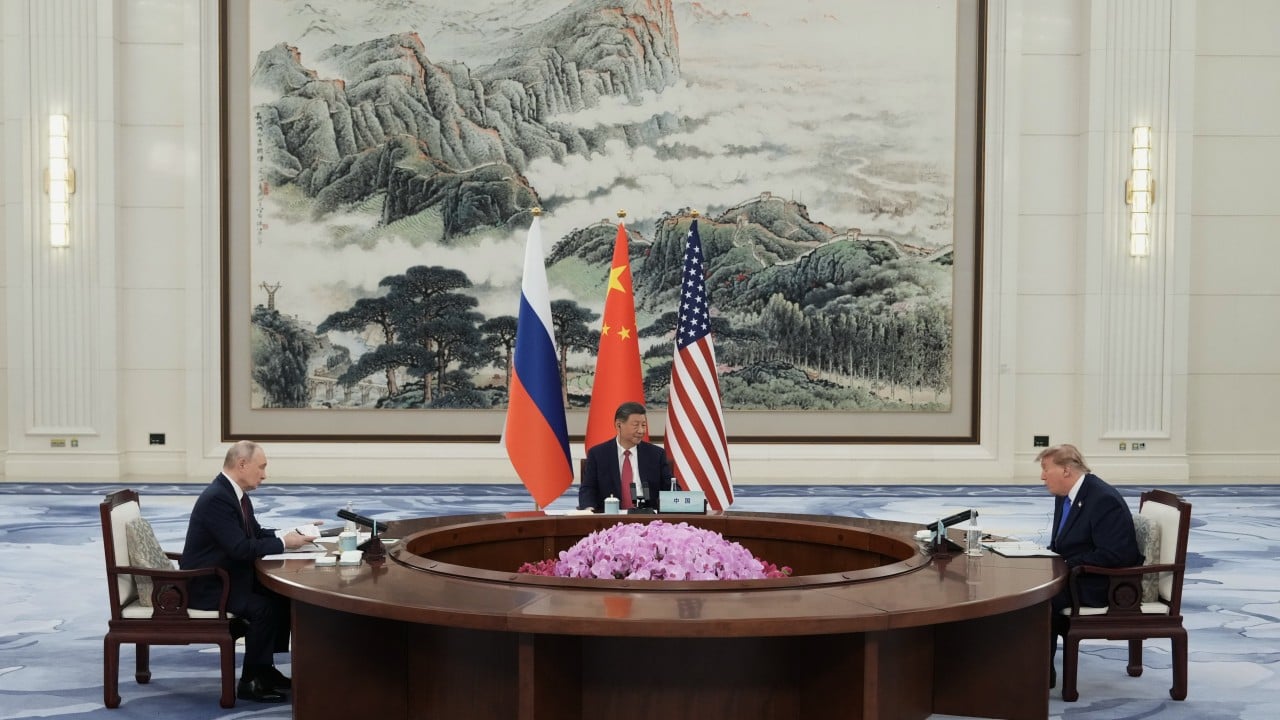
Diplomacy rarely happens in the speeches. It happens in the floor plan. When photos surface of Chinese President Xi Jinping, U.S. President Donald Trump, and Russian President Vladimir Putin positioned side-by-side—or separated by a carefully calculated buffer—internet commentators immediately lose their minds. Half the pundits scream that Beijing is asserting a new, China-centred world order. The other half shrug and call it routine host protocol.
Both sides are missing the real story.
Having spent years tracking international summits and dissecting diplomatic choreography, I can tell you that seating charts at high-stakes gatherings like APEC or the G20 are never accidental. Neither are they pure power plays. They're a tug-of-war between rigid bureaucratic rules and ruthless geopolitical signaling. If you only look at who stands next to whom, you'll misread the room every single time.
Why Seating Charts Trigger Geopolitical Panic
Protocol officers lose sleep over millimeters. A single chair placement can spark a diplomatic incident before the soup even arrives. When Xi, Trump, and Putin share a stage or a round table, every camera lens zooms in on the geometry of the room.
Critics who argue the arrangement signals a China-centred order point to visual optics. Put Xi squarely in the middle with Trump on one flank and Putin on the other, and the image practically writes its own headline: Beijing as the indispensable center of gravity, mediating between Washington and Moscow. State media loves that visual. For domestic audiences in China, seeing the leader flanked by the heads of the world's other major military and economic powers projects undeniable authority.
Hold on. Look at standard summit mechanics before jumping to conclusions.
Host nations carry specific administrative duties, and international forums operate under strict, often boring, formulas. Depending on the venue, seating is dictated by:
- Alphabetical order using the English names of the member economies or countries.
- Seniority and tenure, ranking leaders by the exact date they took office.
- Troika rotations, which place past, current, and incoming hosts together at the center of the dais.
When a host country follows these templates, the resulting photo can look wildly symbolic even when nobody moved a single chair out of sequence. If the rules naturally put the host in the middle, Beijing doesn't need to manipulate the floor plan to look dominant. The rulebook hands them the center spot for free.
Host Duties vs. Intentional Power Plays
So how do you tell the difference between standard host duties and deliberate geopolitical messaging? You look at the exceptions.
In my experience analyzing summit transcripts and pool reports, protocol teams follow the rulebook religiously until a bilateral relationship turns toxic—or overly cozy. Under standard alphabetical seating in English, "China," "Russia," and "United States" shouldn't naturally cluster together. If you see Trump and Putin seated side-by-side without alphabetical justification, someone intervened. Usually, that intervention happens days before the leaders even board their planes, negotiated by advance teams who measure table widths and test sightlines.
Beijing knows how to play within the lines while bending the perception. As host, China controls the staging, the lighting, the camera angles, and the order of arrival. Even when adhering strictly to multilateral protocol, a host nation decides:
- Who enters the room last. In diplomatic tradition, the final person to walk onto the stage commands the highest status.
- Where the bilateral pull-asides happen. An "unplanned" hallway chat captured by official photographers carries more weight than a formal seating card.
- How the family photo is framed. Tight cropping can make an awkward distance look like warm camaraderie, or vice versa.
Western observers often fall into the trap of assuming every detail is a Machiavellian plot by Beijing. Meanwhile, defenders of the "mere host duties" explanation act like Chinese diplomats are naive bureaucrats just following a checklist. Both views are lazy. Beijing uses existing protocol rules as a shield to achieve visual outcomes that serve its foreign policy narrative. It's smart, subtle, and entirely deniable.
The Washington and Moscow Angles
You can't analyze a Xi-Trump-Putin arrangement without looking at what Washington and Moscow want out of the frame. Neither the White House nor the Kremlin lets a foreign protocol office dictate their image without a fight.
Trump's team has always treated summit optics as transactional theater. For Trump, standing next to Xi and Putin isn't about bowing to a Chinese-led hierarchy—it's about showing American voters that he deals directly with the world's toughest strongmen on equal footing. His advance staff cares far more about body language, handshakes, and camera dominance than traditional diplomatic pecking orders. If Trump ends up next to Xi, his team frames it as two titans hashing out deals while everyone else watches.
Putin operates from a completely different playbook. Facing sustained Western isolation and sanctions, the Kremlin treats any proximity to the U.S. president as a massive diplomatic win. Being seated near Trump—and alongside Xi—shatters the narrative that Russia is a global pariah. Russian state television doesn't care whether the seating chart was determined by alphabetical order, tenure, or host discretion. Just being in the same tight camera frame with Washington and Beijing proves Moscow remains a core pillar of global power.
How to Actually Read Diplomatic Choreography
Stop trusting single viral screenshots from social media. One wide-angle lens can distort distance, making two leaders look miles apart when they're actually sitting three feet from each other.
Next time a major summit photo drops and pundits start debating whether the world order just shifted, run through a quick reality check before buying the hype:
- Check the summit's official protocol rules. Look up whether the forum uses English alphabetical order, host-language order, or tenure. At APEC, for instance, seating often follows alphabetical order by economy name—which is why "United States" sits near the end, far from "China." If that rule suddenly breaks, you've found a real story.
- Watch the unscripted transitions. The five seconds before leaders sit down tell you ten times more than the posed photo. Look at who makes eye contact, who avoids turning their head, and who lingers to chat after the cameras click off.
- Compare official pool photos from all three capitals. Look at how Xinhua, the White House press office, and TASS crop the exact same moment. You'll immediately see which country is trying to manufacture intimacy and which one is trying to project distance.
- Track the bilateral meeting order. Who gets the first formal sit-down with the host? Who gets relegated to a brief standing chat? The schedule always exposes the true hierarchy that the dinner table tries to hide.
Seating charts are just the opening act. Pay attention to the rules governing the room, watch how the cameras are managed, and judge the leaders by the deals they sign after the photographers leave.