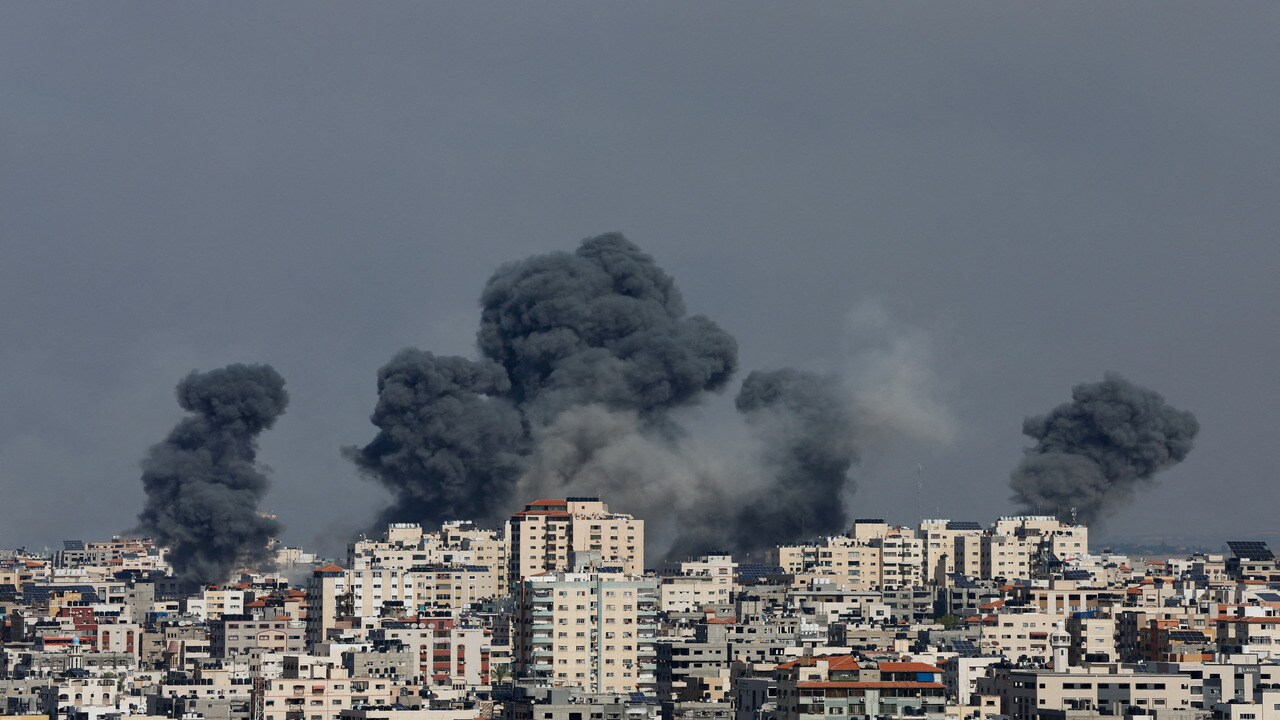
Don't fall for the headlines. Every time a new ceasefire handshake or a high-profile diplomatic summit wraps up in Islamabad or Washington, the pundits rush to declare a historic turning point. They look at temporary pauses in fighting and mistake them for a permanent fix. It's a classic trap.
The harsh reality on the ground shows that West Asia's old security order is entirely dead. The region hasn't found a path to actual stability, and the superficial agreements brokered recently are little more than crisis management disguised as diplomacy. Security experts aren't cynical; they just look at the structural facts rather than the photo-ops. Read more on a connected topic: this related article.
True stability isn't holding because the fundamental grievances driving the region's friction are completely unaddressed. From the collapsed security frameworks to the breakdown of traditional state diplomacy, the deep structural fractures run too deep for a quick signature to mend.
The Illusions of Maximum Pressure and Forced Disarmament
A core reason real stability remains out of reach is the flawed assumption that peace can be coerced through pure leverage. The Trump administration's return to a heavy-handed diplomatic posture has fundamentally polarized regional dynamics rather than calming them. The strategic goal of forcing total compliance through economic strangulation and targeted military strikes simply backfires over the long term. Further journalism by Reuters highlights similar perspectives on this issue.
Look at the collapse of the April talks in Islamabad. The structural gaps between Washington and Tehran remain vast. Western negotiators pushed for terms that required sweeping concessions on regional influence and nuclear infrastructure. From the perspective of the Iranian leadership, these demands look less like a diplomatic framework and more like a call for total surrender. A nation feeling structurally cornered rarely compromises; instead, it hedges.
This dynamic ripples across the region. In Gaza, the political framework rests on the core demand that non-state factions completely disarm before any permanent political or economic rebuilding can start. But armed groups don't willingly hand over their only source of leverage without a credible alternative security guarantee. Because no such alternative exists, the cycle repeats. Tactical gains achieved through force evaporate the moment the bombs stop falling, leaving the underlying political wounds to fester openly.
Why Military Superiority Fails to Buy Stability
For decades, the prevailing logic argued that overwhelming military deterrence could enforce a stable equilibrium. If one state held an absolute monopoly on advanced air defenses, stealth technology, and intelligence-gathering, the other side would simply back down. That assumption has spectacularly shattered.
What we see now is the strict limit of pure force. A state can win individual battles, take out field commanders, and destroy critical infrastructure with precise drone strikes. But tactical success doesn't equal political legitimacy. When military power operates in a complete vacuum without a clear political horizon, it produces highly volatile outcomes:
- Deepened Local Resentment: Communities hit by continuous operations harden their resistance, ensuring a steady stream of new recruits for insurgent factions.
- The Rise of Gray Zone Warfare: State and non-state actors move away from conventional armies toward asymmetric tactics, using low-cost drones, cyber operations, and maritime harassment.
- Perpetual Security Creep: Temporary security cordons turn into permanent, heavily armed buffer zones that drain state budgets and provoke neighboring states.
The ongoing friction along the Litani River in Lebanon and the western migration of defensive lines inside Gaza show this breakdown in real time. Forcing civilian populations out of localized conflict zones might achieve short-term tactical isolation, but it widens the geographic theater of resentment. You can't shoot your way to a legitimate regional order.
The Non-State Actor Dilemma
Traditional diplomacy assumes that governments control the territory inside their official borders. In modern West Asia, that concept is an absolute myth. The conflicts shaking the region aren't fought solely by regular, uniformed state armies. They're driven by decentralized, highly mobile non-state groups that wield massive political and military influence.
Any security framework that treats these groups as minor nuisances to be ignored or bombed out of existence is fundamentally broken. They are deeply embedded in the social and political fabric of failed or fragile states. In Yemen, the North-Central regions remain under firm control of factions capable of disrupting global shipping lanes through the Bab el-Mandeb strait at will. In Syria, the post-Assad transition remains incredibly fragile, with a deep cultural and political split between conservative factions in Damascus and diverse local populations.
When external powers try to broker top-down peace deals exclusively with sovereign capitals, they ignore the actors who actually hold the ground. If a group has the capability to veto a ceasefire by launching a single volley of localized missiles, any peace deal that excludes them isn't worth the paper it's printed on.
Gulf States Are Quietly Hedging Their Bets
Perhaps the clearest sign that peace isn't around the corner is the shifting behavior of the Arab Gulf monarchies. For years, the GCC capitals relied almost entirely on American security guarantees and Western military bases to deter regional rivals. Now, that absolute reliance has turned into strategic caution.
The policy shift is driven by pragmatism. Local leaders see that a massive foreign military presence hasn't stopped regional escalation, protected maritime trade, or prevented direct missile exchanges. Instead, hosting foreign assets can turn a domestic territory into a prime target when external tensions boil over.
As a result, middle powers are aggressively diversifying their alliances. They aren't abandoning their old partners, but they're building deep economic and diplomatic relationships with alternative global powers like Beijing and Moscow. They're engaging in direct, quiet de-escalation talks with regional rivals behind closed doors. This hedging proves they don't believe a grand, Western-led peace plan is going to save them. They're preparing for a prolonged, decentralized "armed peace" where every state must look out for its own survival.
Resource Scarcity Is the Real Ground-Level Trigger
While diplomats debate nuclear enrichment percentages and border lines in luxury hotel conference rooms, a much more dangerous crisis is developing below the surface. Simple resource scarcity, particularly water and basic economic stability, is rapidly becoming the primary driver of localized conflict.
The numbers are alarming. Major aquifers across Jordan, Iran, and the broader Levant are facing severe exhaustion that vastly outpaces local desalination efforts. By the time summer heat waves peak, water mismanagement moves from an environmental issue straight into a matter of national security.
+---------------------------+---------------------------------------+
| Strategic Chokepoint      | Core Vulnerability                    |
+---------------------------+---------------------------------------+
| Strait of Hormuz          | Global energy market price spikes     |
| Bab el-Mandeb             | Commercial shipping insurance surges  |
| Tigris-Euphrates Basin    | Upstream resource control disputes    |
+---------------------------+---------------------------------------+
When a state prioritizes upstream resource control, it directly starves its downstream neighbors. This zero-sum competition for basic survival completely undermines grand diplomatic overtures. A population facing chronic water shortages, hyperinflation, and food insecurity doesn't care about a high-level diplomatic accord. They take to the streets, creating domestic instability that quickly spills across porous borders, pulling regional militaries back into the fray.
Moving Beyond the Illusion of Quick Fixes
If you want to understand where the region is actually heading, stop looking for a sudden, definitive peace agreement. It doesn't exist. The path to real regional stability requires abandoning the idea that a single outside power can impose a grand bargain through military superiority or economic coercion.
To break out of this destructive loop, the basic approach to regional security needs a complete overhaul. True progress requires shifting toward small, verifiable, and reciprocal steps rather than demanding unconditional concessions right out of the gate.
- Establish Direct De-escalation Channels: Set up permanent crisis hotlines and shared maritime security protocols to prevent local miscalculations from turning into regional wars.
- Tie Economic Relief to Tangible Actions: Link the phased unfreezing of state assets or the lifting of specific trade restrictions to measurable, independent de-escalation steps rather than vague promises.
- Create Inclusive Diplomatic Formats: Bring every stakeholder to the negotiating table, including regional middle powers and influential non-state actors who possess actual on-the-ground leverage.
- Prioritize Shared Resource Management: Focus regional cooperation on cross-border water management, energy grids, and climate adaptation to resolve the structural triggers of local unrest.
The coming months will likely see a continued state of no-war, no-peace, marked by periodic localized strikes, high defense budgets, and constant trade disruptions. Recognizing this reality for what it is—rather than pinning hopes on superficial ceasefires—is the only way to build a security framework that actually lasts.



:max_bytes(150000):strip_icc():focal(665x0:667x2)/gettyimages-50733149-2000-8b129a2475974982a915418ce92a73d8.jpg)