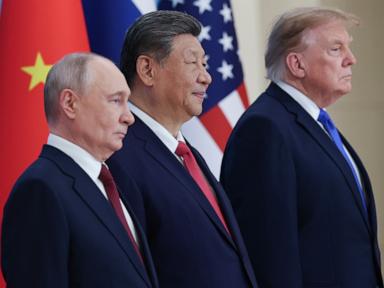
Diplomacy usually runs on carefully scripted ambiguity. Then Donald Trump walked into Kylin Villa in Shenzhen, China, hugged Vladimir Putin, and announced to the cameras, "Who is that? He's my friend".
He didn't stop there. Later, he posted a photo of the two of them on Truth Social with the exact same two-word caption.
If you've been following the coverage, you've probably seen the usual split-screen reaction. Critics call it a catastrophic betrayal of Western allies. Supporters shrug it off as classic Trump charm designed to grease the wheels of a deal. Both sides miss what actually happened at the November 19 trilateral summit in Shenzhen—and what the fine print of their joint declaration reveals about where the Ukraine war is headed next.
The Shenzhen Optics Were Not an Accident
The West spent years trying to turn Vladimir Putin into a global pariah. Sanctions, diplomatic boycotts, and an International Criminal Court arrest warrant were all meant to keep him locked out of polite international company.
One hug in southern China blew a massive hole in that strategy.
Sitting alongside Chinese President Xi Jinping, Putin didn't look like an isolated war criminal. He looked like an equal partner in a new three-way superpower club. When the U.S. president beams, embraces the Kremlin leader, and labels him a friend, it signals to the rest of the world that Moscow is back at the main table.
Honestly, the timing made the optics even sharper. Just days before the summit, Ukrainian forces used Ukrainian- and European-made missiles to strike and partially collapse Putin's bridge to Crimea. Kyiv was trying to prove it could still inflict real pain on Russian infrastructure. Yet in Shenzhen, Putin walked away looking completely unbothered, validated by the leader of the free world.
Why Trump Uses Personal Flattery as a Negotiating Tool
To understand why Trump did it, you have to separate personal flattery from statecraft—even when the two collide in public.
Speaking to reporters at Mar-a-Lago days after the summit, Trump didn't walk the comment back. Instead, he laid out his transactional logic in plain English. "We want to make a deal. We want to stop the killing," he said. He argued that walking into a room and telling Putin he doesn't like him would simply recreate the exact same hostility that already exists between Putin and Ukrainian President Volodymyr Zelenskyy.
You can see the exact same script running through his administration. When pressed on Sunday news shows, Director of National Intelligence Jay Clayton defended the president's phrasing as "entirely appropriate" for the room. Yet Clayton immediately drew a hard line when asked if Putin is a friend to the United States. "He is not America's friend in Ukraine. Not at all," Clayton said.
That distinction is Trump's entire foreign policy playbook in a nutshell:
- Personal warmth is treated as free currency that costs nothing to spend.
- Harsh ideological labels are seen as obstacles that lock leaders into corners.
- Security guarantees get pushed to the back of the line until a ceasefire is signed.
When asked in Washington what security guarantees Ukraine could expect in a settlement, Trump brushed the question aside. "I don't want to talk about security guarantees because we got to get a deal first," he said.
Kyiv's Fury and the Hitler Comparison
In Kyiv, nobody is buying the "it's just a negotiating tactic" excuse.
Ukraine has been grinding through a brutal war for nearly five years. Hours after Trump, Xi, and Putin signed their joint "Declaration toward Peace" in Shenzhen, Russian missiles and drones slammed into Ukraine's electricity grid. That stark contrast between warm summit handshakes and freezing civilian apartments explains why Zelenskyy didn't hold back.
In a BBC interview broadcast from Kyiv on November 27, Zelenskyy called Trump's "my friend" remark "strange". He called Putin "an aggressor and a killer" and went straight for the sharpest historical comparison possible. Calling Putin a friend, Zelenskyy said, is like calling Adolf Hitler a friend during World War II.
The Kremlin immediately seized on the outburst. Spokesman Dmitry Peskov accused Zelenskyy of insulting his counterpart and claimed it proved Kyiv isn't willing to follow the path of a peace settlement.
That's the exact trap Kyiv now faces. Every time Zelenskyy pushes back against Washington's cozy rhetoric with Moscow, Russia points to his frustration and tells Trump, See? He's the one blocking your peace deal.
The Backlash From Allies and Washington
The blowback didn't just come from Ukraine or predictable Democratic critics like Senate Minority Leader Chuck Schumer, who called the Shenzhen summit a "historic embarrassment". It hit right inside conservative circles abroad and allied capitals across Europe.
Polish Prime Minister Donald Tusk was blunt. "Mr. Putin is not our friend and will never be," Tusk stated.
Even more telling was the reaction from Reform UK, the right-wing British party led by Nigel Farage that usually mirrors Trump's politics. Reform UK deputy leader Richard Tice told Sky News he reacted with "horror". He called the remark a "grave mistake" and stressed that Putin is a "murderous dictator".
When a populist British ally closely aligned with Trump breaks ranks on live television over a single phrase, you know the diplomatic shockwaves are real. European leaders are already worried about the future of financial and military commitments to Kyiv. Seeing Washington normalize Putin while European countries prepare new sanctions only widens the Atlantic divide.
What the Shenzhen Peace Declaration Actually Said
Most headlines focused on the hug and the Truth Social post. Very few people actually read the four-point U.S.-Russia-China Heads of State Declaration toward Peace released by the White House on November 19.
If you read the text, two things jump right off the page. First, Ukraine isn't even mentioned. Neither is Iran. Second, buried inside the diplomatic boilerplate is a massive legal gift to Vladimir Putin.
The declaration includes four main commitments:
- United Nations Reform: The three permanent Security Council members pledged to reform the UN to better handle global challenges.
- Energy Supply: All three nations agreed to boost the production and supply of refined petroleum products to stabilize global energy flows.
- Nuclear Risk Reduction: They reaffirmed that a nuclear war cannot be won and promised ongoing dialogue on non-proliferation.
- Limiting the International Criminal Court: The three leaders declared that state consent and official immunities are supreme, warning that the ICC and similar courts "must not abuse their jurisdiction".
Read that fourth point again.
The International Criminal Court issued an arrest warrant for Putin over the unlawful deportation of Ukrainian children—a crisis Zelenskyy highlighted again this week while noting Ukraine has only managed to bring home 2,875 children so far. By signing a joint statement attacking ICC jurisdiction, Washington handed Moscow and Beijing official cover against international war crimes prosecutions.
Meanwhile, Chinese President Xi Jinping walked away as the quiet winner of the entire event. By hosting both leaders in Shenzhen, Xi framed China as the indispensable broker of "great-power relations" and peaceful coexistence. Beijing didn't have to make a single concession on Ukraine to look like the adult in the room.
How to Read Trump's Russia Moves Going Forward
If you're trying to track where U.S. policy on Russia and Ukraine actually stands, stop reacting to every Truth Social caption and look at the concrete leverage points.
Watch three specific indicators over the coming weeks:
- Sanctions Enforcement vs. Energy Deals: The Shenzhen declaration explicitly calls for increasing refined petroleum supplies. Watch whether the White House quietly eases pressure on Russian energy exports while European allies roll out new sanctions packages.
- The Order of Operations on Peace Talks: Trump refuses to discuss security guarantees for Ukraine before a ceasefire deal is struck. If Washington pressures Kyiv into freezing the front lines without NATO-style protection, Putin keeps the territory he holds while retaining the option to regroup.
- European Burden-Sharing: With uncertainty hanging over future U.S. backing, track how quickly European capitals step in with independent funding and long-range weapons approvals to keep Ukraine's power grid and front lines intact.
Personal warmth in front of cameras doesn't end a five-year war. Until Moscow faces real economic or military pressure to alter its demands, calling Putin a friend changes nothing on the battlefield in Ukraine—except the leverage Kyiv brings to the table.