Most headlines treat every North Korean missile test like a random burst of aggression. They're wrong.
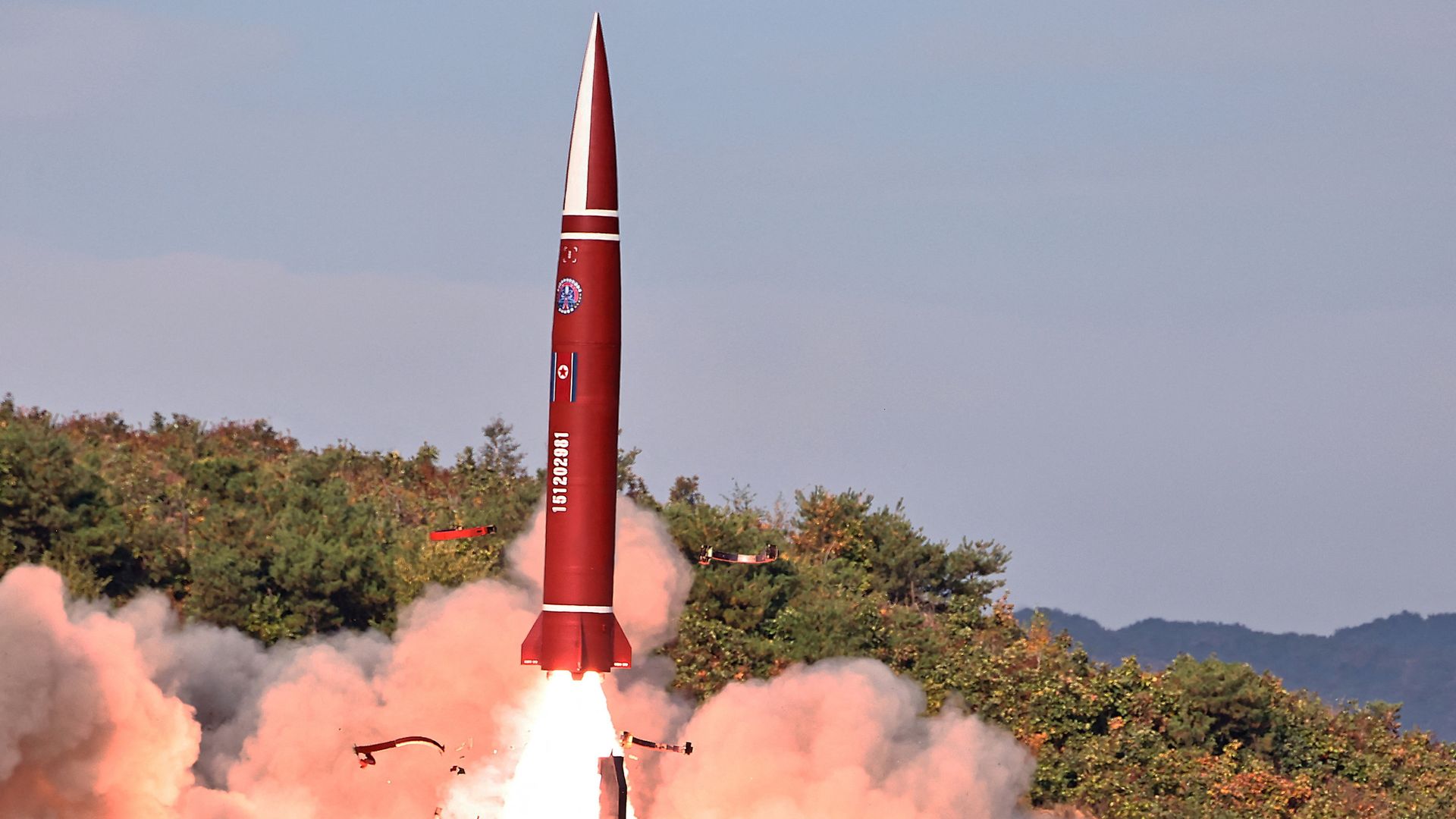
When Pyongyang fired roughly a dozen short-range ballistic missiles off its east coast from around Wonsan on October 29, 2026, the international press largely framed it as routine saber-rattling. That misses the bigger picture entirely. Those launches weren't isolated fireworks—they were the latest move in a tit-for-tat escalation involving landmines along the Demilitarized Zone (DMZ), competing hypersonic weapons tests, and a flat rejection of border talks.
If you're trying to figure out why the Korean Peninsula feels closer to a boiling point right now than it has in years, you have to look past the surface-level wire reports. Let's break down what actually happened, why Seoul and Pyongyang are locked in a dangerous feedback loop, and what the strategic reality looks like on the ground.
The Spark Nobody Paid Enough Attention To
News cycles move fast. By the time a barrage of missiles arcs over the East Sea (also known as the Sea of Japan), audiences have usually forgotten what lit the fuse a month earlier.
On September 21, 2026, a landmine explosion inside the DMZ injured South Korean soldiers. Eight days later, troops discovered a second, unexploded mine nearby. A joint investigation by the U.N. Command and South Korea's military concluded that the devices had been deliberately buried on the southern side of the Military Demarcation Line within the past year, using components matching North Korean designs.
Seoul demanded an apology and ordered Pyongyang to clear the remaining mines. North Korea didn't just refuse—it went on the offensive.
In a letter to the U.N. Security Council on October 26, North Korea accused South Korea of fabricating the blast as a "sinister obstructive move" to interfere with Northern border fortification projects. Pyongyang also threatened to restart border propaganda broadcasts in retaliation for South Korean warning shots. Meanwhile, journalists visiting a South Korean border town spotted newly positioned North Korean artillery guns and ongoing military fence construction across the divide.
Three days after that U.N. letter, the missiles flew from Wonsan.
Why Standard News Coverage Misses the Military Logic
Wire summaries love stating that North Korea "violated United Nations Security Council resolutions" and that Seoul held an "emergency national security meeting." Both statements are true. Neither tells you anything useful about military strategy.
Having tracked Korean Peninsula security dynamics for years, I've noticed analysts make one recurring mistake—they treat Pyongyang's launches as purely political theater aimed at Washington. In reality, the autumn 2026 launch sequence was heavily operational and directly tied to South Korea's own weapons advancements.
The Action-Reaction Missile Cycle
Look at the timeline of weapons tests leading up to the late-October barrage:
- Early October 2026: South Korea conducted a high-profile hypersonic missile test, demonstrating its growing ability to strike deep into Northern territory with minimal warning. North Korea responded on October 3 with an intermediate-range missile test.
- October 12, 2026: Pyongyang fired multiple ballistic missiles from the Pyongyang area toward its eastern coast. South Korea's Joint Chiefs of Staff (JCS) confirmed that at least one missile traveled more than 900 kilometers (559 miles)—a range that easily covers the entire Korean Peninsula and reaches parts of Japan.
- October 14, 2026: North Korea's Missile Administration tested two types of submarine-launched cruise missiles (SLCMs) to evaluate what state media (KCNA) called the "mobilized posture of the underwater combat systems."
- October 29, 2026: Roughly a dozen short-range ballistic missiles launched simultaneously from Wonsan around 12:30 p.m. local time.
Firing a salvo of a dozen short-range missiles isn't about testing whether a rocket engine works. Pyongyang already knows its short-range systems work. Firing them in a concentrated volley is a saturation drill designed to overwhelm South Korean and U.S. missile defense batteries—like Patriot and THAAD interceptors—through sheer volume.
As Lim Eul-chul, a professor at Kyungnam University, noted to AFP following the October 29 launches, the salvo represented a "fairly high-level show of force." When both Koreas test hypersonic systems, sea-launched cruise missiles, and saturation barrages within the same 30-day window, you aren't watching a one-sided tantrum. You're watching an active regional arms race.
What Pyongyang Actually Wants From Seoul and Washington
Another major misconception is that North Korea launches missiles because it wants to jumpstart peace talks. Right now, the exact opposite is happening.
Just days before the October 29 barrage, South Korea proposed formal military talks to clarify border boundaries and restore communication hotlines so an accidental firefight wouldn't spiral out of control. Pyongyang ignored the offer, and Kim Yo Jong—sister of leader Kim Jong Un and Director of the General Affairs Department of the Workers' Party of Korea—publicly dismissed Seoul's outreach, stating South Korea should stop playing "cheap tricks."
Washington hasn't gotten a warmer reception either. Despite U.S. President Donald Trump floating the idea of meeting Kim Jong Un again, Pyongyang has doubled down on its preconditions. In early November 2026, Kim Yo Jong reiterated that North Korea sees "no need" for dialogue unless the United States drops its "hostile" policy, removes sanctions, and abandons demands for denuclearization.
Think about what that means. For decades, the standard playbook was "provoke, negotiate, extract concessions, repeat." Today, backed by deeper defense ties with Russia and ongoing naval modernization—including new surface combatants inspected by Kim Jong Un at the Nampo Shipyard in early November—Pyongyang doesn't feel desperate enough to trade missile freezes for sanctions relief.
Why the DMZ Friction Is More Dangerous Than the Missiles
Here's the uncomfortable truth most defense observers will tell you over coffee—missiles splashed into the East Sea rarely start wars, whereas miscalculations along a contested border frequently do.
Because the 1950–1953 Korean War ended in an armistice rather than a peace treaty, North and South Korea remain technically at war. For years, inter-Korean military agreements kept a fragile buffer in place. Now, with North Korean troops actively laying mines, building physical barriers, and moving howitzer artillery closer to the frontier while South Korean soldiers conduct mine-clearing operations under heightened alert, the margin for human error has shrunk to almost zero.
If a South Korean patrol steps on another newly buried mine, or if warning shots across the Military Demarcation Line hit a North Korean construction crew, there is no active military hotline left to de-escalate the crisis before artillery units open fire.
How to Read Future Developments Without Falling for the Hype
If you follow geopolitical news, you're going to see dozens more alerts about North Korean projectiles over the coming months. Instead of reacting to every headline at face value, use this quick filter to separate routine military posturing from genuine escalation:
- Check the trajectory and payload type. Short-range salvos fired into the East Sea from Wonsan test saturation tactics and troop readiness. Intermediate-range or solid-fuel tests exceeding 900 kilometers signal strategic deterrence aimed at U.S. bases in Japan and Guam.
- Watch the DMZ, not just the launchpads. Pay closer attention to reports of border warning shots, artillery movements, and unexploded ordnance than to standard missile splashes. Ground friction carries the highest immediate risk of casualties.
- Track South Korean counter-tests. Whenever Seoul tests a new hypersonic weapon or ballistic system, expect a symmetrical response from Pyongyang within days. Understanding the sequence keeps you from misreading a reactive test as an unprovoked surprise.
- Follow primary regional analysts. Skip sensationalist aggregator clips and read direct reporting from specialized outlets like NK News, Arms Control Association, and the Institute for the Study of War to see satellite imagery and exact JCS telemetry breakdowns.
Apply that framework the next time a breaking news banner flashes across your screen, and you'll immediately understand what Pyongyang is actually signaling—and what it isn't.