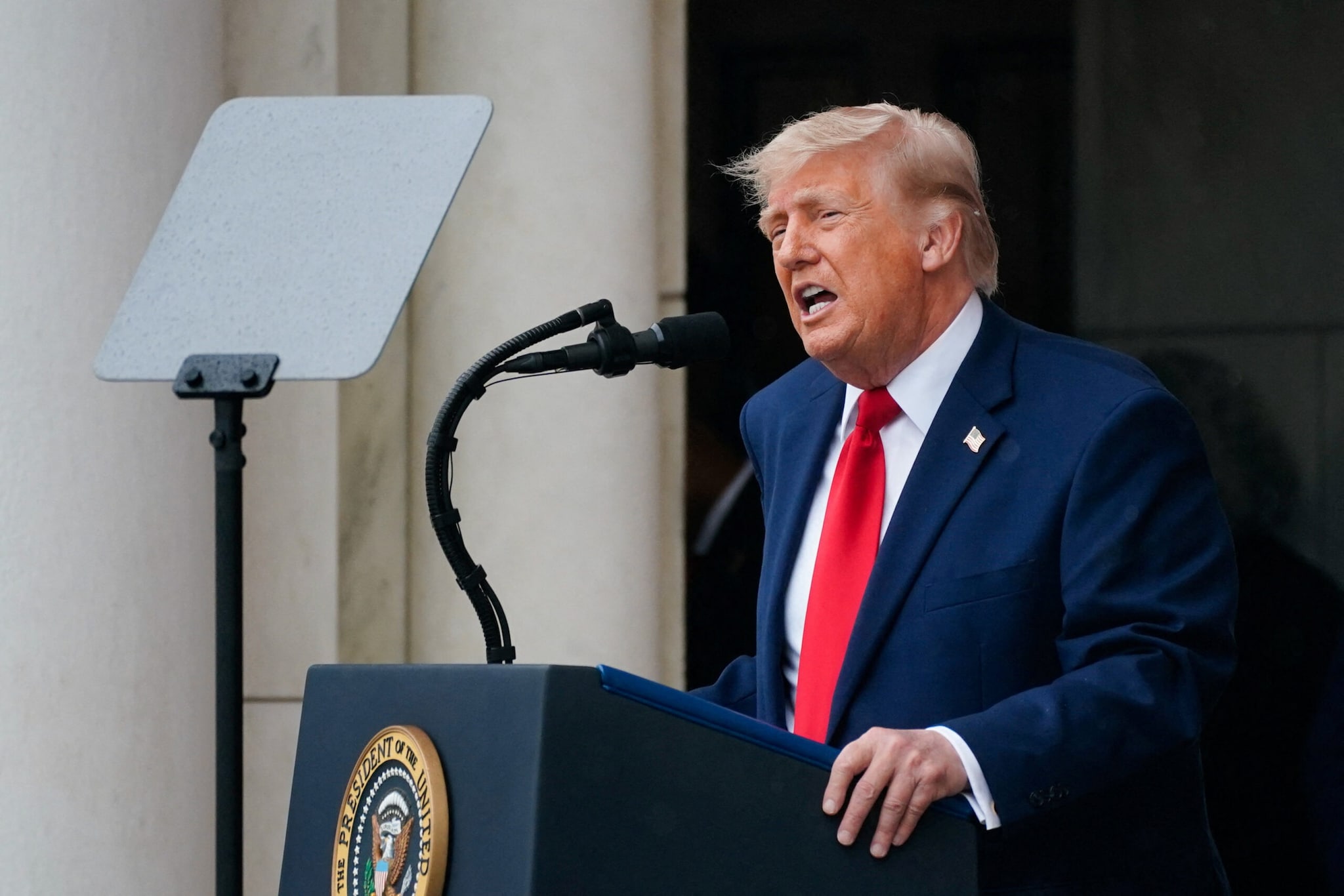
The ink on the digital signatures wasn't even dry before Donald Trump threatened to start dropping bombs again.
Just hours after world leaders at the G7 summit in France showered praise on a tentative US-Iran deal to end three months of brutal warfare, the American president flipped the script. Speaking to reporters in Evian-les-Bains right before a meeting with Egyptian President Abdel Fattah el-Sisi, Trump made it clear that this peace agreement hangs by a very thin thread. He told the press pool that if Tehran doesn't behave, the military option is right back on the table. He said the US would go right back to shooting and dropping bombs right smack in the middle of their heads.
This is classic Trump diplomacy. It's erratic, aggressive, and leaves both allies and adversaries guessing about what comes next. While the G7 leaders issued a joint statement celebrating a historic opportunity to stabilize the region, the man who brokered the framework is already acting like he's ready to walk away.
To understand what's really happening behind the closed doors of the summit, you have to look past the theatrical threats and look at the actual facts on the ground.
The Reality of the New US-Iran Deal Framework
Many commentators are treating this agreement as a final treaty. It isn't. Right now, what Washington and Tehran actually have is a memorandum of understanding. It's a temporary roadmap designed to pause a conflict that has choked global energy markets for fifteen weeks and spiked oil prices worldwide.
The Swiss foreign ministry confirmed that the official signing of this preliminary agreement is scheduled for Friday at the Burgenstock resort near Lucerne. Pakistani and Qatari mediators spent weeks shuffling messages back and forth to make this happen. But signing the paper on Friday doesn't mean the issue is resolved. Instead, it marks the beginning of a strict 60-day window for intense negotiations.
During those two months, negotiators will try to hammer out permanent terms regarding the total dismantling of Iran's nuclear program and the permanent lifting of heavy economic sanctions. For now, the agreement focuses entirely on immediate relief and maritime security.
The core mechanics of the interim deal are straightforward:
- The United States has started lifting its two-month naval blockade on Iranian ports.
- Iran must guarantee the completely free flow of international shipping through the crucial Strait of Hormuz.
- The US will allow Iran to resume selling oil and fuel immediately, but only if they stick strictly to the terms.
- Vice President JD Vance confirmed that no frozen Iranian assets are being released yet, calling the entire framework a performance-based arrangement.
Why G7 Leaders are Applauding a Deal They Didn't Write
The diplomatic scene in France reveals a massive undercurrent of frustration among America's closest allies. French President Emmanuel Macron, British Prime Minister Keir Starmer, and German Chancellor Friedrich Merz have spent days privately clashing with Trump. The source of their anger is simple. The White House launched into a full-scale military conflict with Iran three months ago without consulting its NATO allies.
Trump even threatened to draw down US troop deployments in Europe because those nations refused to join his naval blockade. Now that a pause has been called, European leaders are rushing to support it, mostly out of sheer desperation to protect their own economies.
NATO Secretary General Mark Rutte called the planned reopening of the Strait of Hormuz a massive step forward. European industry relies heavily on Middle Eastern energy, and the fifteen-week war hammered their domestic markets. When the G7 leaders praise Trump's strong leadership in their official communiqués, they are playing a calculated game. They are trying to flatter the American president so he stays committed to the diplomatic path rather than returning to his preferred strategy of maximum pressure and sudden military strikes.
The Fractured Front Inside Iran and Israel
While Washington and Europe argue over the details, the domestic politics in both Tehran and Jerusalem are threatening to tear this framework apart before Friday's ceremony.
In Iran, the regime is dealing with severe internal fractures. Several top Iranian officials were killed during the peak of the US and Israeli airstrikes over the last few months. The government is struggling to project strength while its economy sits in ruins from the blockade. Iranian Deputy Foreign Minister Majid Takht-Ravanchi tried to spin the deal as a victory, telling state media that the lifting of the US naval blockade proves Washington was forced to compromise. Hardliners in Tehran are already warning that any cooperation with the West is a sign of weakness, making it incredibly dangerous for Iranian negotiators to concede anything on their nuclear development during the upcoming 60-day talks.
On the other side, Israeli Prime Minister Benjamin Netanyahu is furious. Israel was largely sidelined during the secret talks mediated by Qatar and Pakistan. Netanyahu has publicly declared victory over Iran but has explicitly rejected American demands to halt military operations in southern Lebanon. Israeli drone strikes continue to target Hezbollah positions, and Tehran has warned that a massive retaliation could still happen. If Israel continues to strike Iranian allies in Beirut, the ceasefire holding this entire US-Iran deal together will fall apart in days.
The Strategic Moves You Should Watch Next
Don't buy into the hype that peace has suddenly arrived in the Middle East. This is a highly volatile pause in a long-term geopolitical conflict. If you want to know whether this agreement will actually hold or collapse into a wider war, you need to watch three specific developments over the coming weeks.
First, keep a close eye on the shipping traffic in the Strait of Hormuz. Maritime intelligence reports indicate that oil tankers are already preparing to move through the gateway as the US naval blockade eases. If Iran tries to impose any hidden transit fees or service charges, or if a rogue drone targets a western vessel, Trump will likely carry out his threat to resume bombing.
Second, watch the political battle in Washington. Trump has unexpectedly stated that he intends to send the text of this memorandum of understanding to the US Congress for a formal review. While he claims that everyone will obviously approve it, hardline Republicans and skeptical Democrats are already pointing out that this agreement looks suspiciously like the original 2015 nuclear deal that Trump spent years criticizing. The legislative debate will be messy and could easily spook the leadership in Tehran.
Finally, watch the behavior of oil markets. Energy prices dropped significantly following the initial leak of the agreement, but the market remains incredibly anxious. If oil traders sense that the 60-day negotiations on Iran's nuclear material are stalling, prices will skyrocket again, putting immediate pressure back on global leaders.
The reality of this situation is that nothing is settled. We are looking at a high-stakes poker game where both sides are still holding loaded weapons under the table. Friday's formal signing in Switzerland is just the opening whistle for a much tougher, far more dangerous diplomatic battle. Maintain a healthy dose of skepticism and don't assume the danger has passed just because the politicians are smiling for the cameras in France.