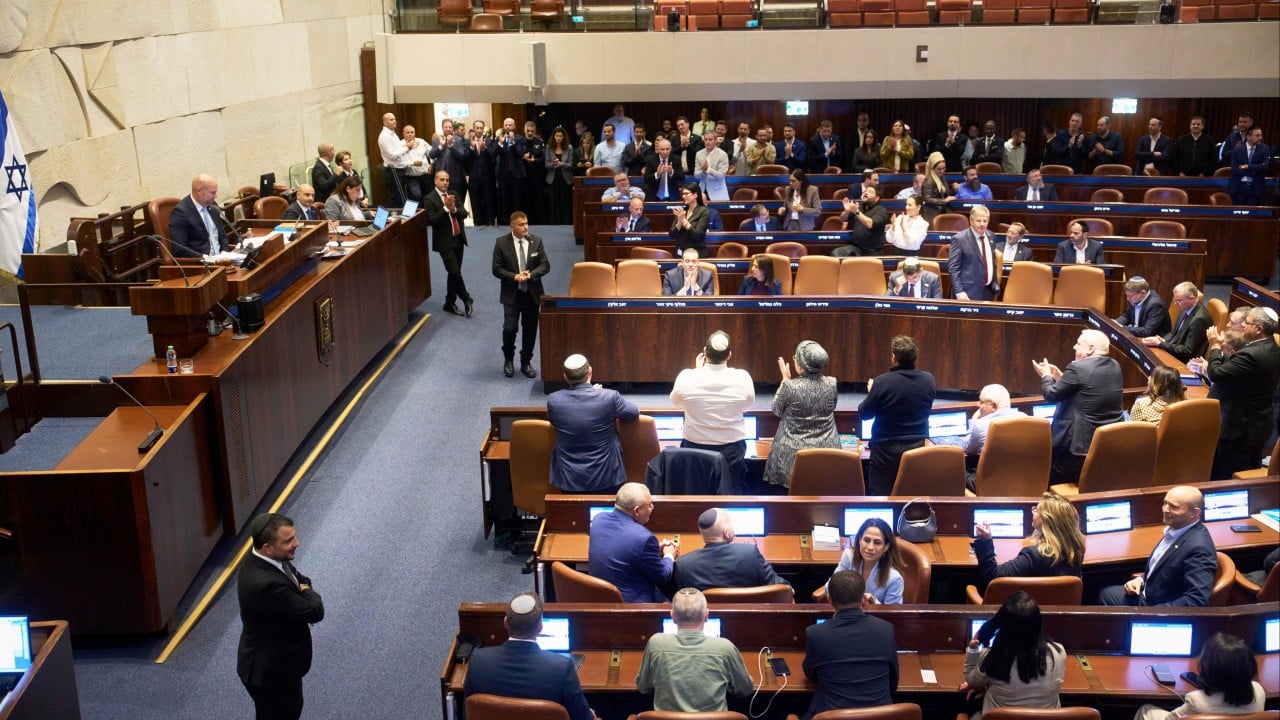
Everyone assumes undoing Benjamin Netanyahu’s political footprint is a quick legislative scrub. It isn't. When Israel’s parliament moves to roll back Netanyahu’s divisive legacy, lawmakers aren't just repealing a few unpopular bills from a single legislative session—they're trying to untangle decades of institutional restructuring, judicial battles, and deeply embedded coalition politics.
I've watched Knesset floor debates turn into shouting matches over single clauses in Basic Laws for years. If you think passing a repeal bill solves the problem, you're missing how the Israeli parliamentary system actually operates. Passing a law is the easy part. Making it stick without triggering another constitutional crisis is where things get messy. Meanwhile, you can explore related stories here: The Architecture of Statecraft Dining Inside the APEC Banquet Strategy.
The Reality Behind Rolling Back Netanyahu’s Policies
Let's be clear about what we're talking about here. Over multiple terms as prime minister, Netanyahu reshaped Israel's political, legal, and social institutions. From the contentious judicial overhaul push that brought hundreds of thousands of Israelis into the streets in 2023, to the 2018 Nation-State Law, to shifting budget allocations toward specific coalition sectors, his tenure left a permanent mark on how the country governs itself.
When opposition lawmakers or post-Netanyahu coalitions step up to reverse these moves, headlines usually frame it as a clean slate. That's a massive oversimplification. To explore the bigger picture, we recommend the excellent analysis by USA Today.
Here is why rolling back these measures is so complicated:
- Basic Laws aren't ordinary statutes. Israel doesn't have a formal written constitution. Instead, it relies on a set of Basic Laws that hold quasi-constitutional status. Amending or repealing them often requires an absolute majority of at least 61 out of 120 Knesset members, and sometimes even higher thresholds depending on the specific clause.
- Coalition math is brutal. Israeli governments are always built on fragile multi-party alliances. A party that wants to repeal the judicial overhaul legislation might clash violently with its coalition partner over ultra-Orthodox military draft exemptions or West Bank settlement funding.
- The Supreme Court sits right in the middle. Even when the Knesset passes a repeal or an amendment, advocacy groups immediately petition the High Court of Justice. Nothing is settled until the justices rule on whether the Knesset overstepped its authority.
Honestly, most foreign observers treat Knesset votes like American congressional bills. They aren't the same thing. In a parliamentary democracy with proportional representation and a low electoral threshold of 3.25%, a tiny faction holding four or five seats can hold an entire legislative agenda hostage.
Why the Judicial Overhaul Is the Hardest Piece to Undo
If you want to understand the core of Netanyahu’s divisive legacy, look straight at the justice system. The 2023 effort by Yariv Levin and Simcha Rothman to curb the Supreme Court's power didn't just divide voters; it fractured the civil service, the military reserves, and the tech sector.
Specifically, the law eliminating the "reasonableness standard"—which prevented the Supreme Court from striking down government decisions it deemed extreme—became the flashpoint of the entire era. Even after the Supreme Court struck down that specific amendment in January 2024 in a historic 8-7 ruling, the broader institutional damage remained.
Rolling back the judicial legacy means dealing with several interlocking mechanisms:
- The Judicial Selection Committee. Changing who picks judges was always the real prize. Reversing rules or customs that politicize this committee requires locking in transparent criteria so future governments can't just pack the bench with loyalists.
- The role of legal advisors. During the Netanyahu years, ministerial legal advisors became targets of constant political pressure, with pushes to turn them into political appointees rather than independent gatekeepers. Restoring their independence takes more than a memo; it requires statutory protection.
- The Attorney General's authority. Splitting the roles of the Attorney General—separating legal advice to the government from criminal prosecution—has been debated for decades, yet under Netanyahu it became a direct response to his own corruption trial.
You can't fix trust in the courts with a single vote. Once citizens see the judiciary treated as a political football, restoring public confidence takes a generation.
The Nation-State Law and Minority Relations
Another pillar of Netanyahu’s legislative record is the 2018 Basic Law defining Israel as the Nation-State of the Jewish People. Critics, including Israel's Druze community and Arab citizens, argued that the law downgraded the Arabic language and codified second-class status for non-Jewish minorities.
Supporters insisted it merely stated the obvious foundational principle of the state.
When lawmakers propose amending this law to explicitly include a clause guaranteeing equality for all citizens, they hit an immediate ideological wall. Right-wing and center-right members of parliament—even those who strongly oppose Netanyahu personally—often refuse to touch the Nation-State Law out of fear of looking weak on Zionist principles.
This is the trap many analysts miss. Opposing Netanyahu doesn't automatically make a politician left-wing. Many of the sharpest critics of Netanyahu's governance style are ideological hawks who agree with the substance of his nationalist legislation, even if they hate how he divided the country to pass it.
Budget Priorities and Haredi Draft Exemptions
Politics follows money. During Netanyahu's coalitions with ultra-Orthodox (Haredi) parties like Shas and United Torah Judaism, billions of shekels were directed toward Haredi educational networks that don't teach core secular subjects like math and English, alongside ongoing exemptions from mandatory IDF military service.
Following the October 7 attacks and the prolonged multi-front war, public tolerance for draft exemptions collapsed. Reservists serving hundreds of days demanded equal burden-sharing.
Rolling back this part of the legacy involves two concrete steps:
- Enforcing High Court rulings on conscription. The Supreme Court ruled unanimously in June 2024 that the state had no legal basis to continue exempting yeshiva students from military service and ordered the freezing of state funds to institutions whose students evade the draft.
- Reallocating coalition funds. Stripping discretionary coalition budgets and tying school funding strictly to core curriculum compliance forces a structural shift in how Israeli governments buy political survival.
It sounds straightforward on paper. In practice, every Israeli prime minister—left, center, or right—knows that alienating the Haredi parties permanently makes forming a 61-seat coalition almost mathematically impossible unless Arab parties are brought into the government. And bringing Arab parties into a governing coalition carries its own massive political cost with mainstream Jewish voters.
What Critics and Defenders Both Get Wrong
If you listen to Netanyahu’s fiercest opponents, every single policy from his 16-plus years in power was a calculated plot to destroy Israeli democracy. If you listen to his die-hard defenders, every move was a heroic stand against an unelected deep state.
Both narratives are lazy.
Netanyahu didn't invent the tension between Israel's Jewish identity and its democratic institutions. That friction has existed since David Ben-Gurion signed the Declaration of Independence in 1948 and decided not to write a formal constitution. Netanyahu didn't create the resentment among Mizrahi voters toward the traditional Ashkenazi establishment either; he just tapped into it more effectively than anyone since Menachem Begin.
What Netanyahu did do was weaponize those divisions for political survival. By framing every institutional check—the courts, the media, the police, the civil service—as an enemy of the people, he turned routine policy disputes into existential battles over identity.
So when parliament moves to roll back his legislative legacy, repealing the laws is only half the battle. You can rewrite a statute in a week. You can't legislate away political polarization.
How to Actually Track What Happens Next in the Knesset
If you're following Israeli politics and want to separate real institutional reform from empty political theater, stop watching the cable news shouting matches and start tracking the actual legislative mechanics.
Watch the Knesset Constitution, Law and Justice Committee. That's where bills are actually shaped, watered down, or buried alive before they ever reach a second and third reading on the plenum floor.
Pay close attention to Basic Law proposals versus ordinary legislation. If a reform isn't anchored in a Basic Law with a supermajority requirement for future changes, the very next right-wing coalition will simply repeal it the week they take office.
Finally, watch budget bills and Finance Committee transfers. Real power in Jerusalem doesn't live in speeches—it lives in line-item allocations. When you see discretionary coalition funds permanently eliminated and funding tied to universal civic standards, you'll know the rollback is actually working.