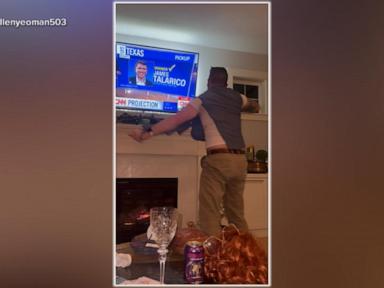
Election night coverage usually sells you a clean, dramatic story. One side erupts in confetti at a hotel ballroom while the other stares blankly at a bank of glowing television screens. It makes for great cable news b-roll.
It's also mostly an illusion. If you liked this article, you should read: this related article.
If you've ever actually worked a campaign floor, watched returns in a local diner, or tracked how real voters process results across different time zones, you know the reality looks nothing like a highlight reel. Those wide-ranging reactions to election night aren't just about who won or lost. They're driven by broken media expectations, delayed ballot counts, and a massive divide between how political insiders and everyday voters experience the exact same evening.
The Myth of the Instant Verdict
We used to get closure before midnight. You poured a drink, watched a network anchor tap a touch-screen map, and went to bed knowing who won. For another look on this development, see the latest update from The New York Times.
That era is dead.
When states expanded mail-in voting and early ballot processing rules over the last several cycles, the entire rhythm of election night changed. Yet broadcast networks and social media feeds still treat 11:00 PM Eastern like a hard buzzer. This creates a weird psychological whiplash. You see premature celebrations in precincts where only in-person Election Day votes have been tallied, followed by panicked conspiracy theories three hours later when urban mail ballots drop in batches.
I've watched seasoned campaign managers age five years in forty minutes because they forgot their own turnout modeling. They see an early deficit in a rural county and start drafting concession notes, only to realize half the absentee drop boxes haven't been scanned yet.
Voters feel that exact same stress, just without the internal polling data to calm them down. When the public expects a definitive answer by bedtime and instead gets days of incremental spreadsheet updates, anxiety spikes across the board.
Why Watch Parties Feel So Different From Living Rooms
There's a massive gap between the curated reactions you see on television and what happens in an actual living room.
Official campaign watch parties are pure theater. Every single person in that ballroom knows cameras are rolling. Staffers are instructed to cheer at specific intervals—usually right after a favorable exit poll drops or a friendly network calls a safe seat—to project momentum to donors watching at home. Even when internal numbers look grim, the music stays loud and the drinks keep flowing until the candidate finally takes the stage to thank volunteers and promise to keep fighting.
Compare that to a regular household.
At home, nobody is performing for a camera crew. People are scrolling through conflicting threads on their phones while muting pundits who haven't knocked on a door in twenty years. According to research from the Pew Research Center, a growing share of Americans report feeling exhausted and angry rather than energized by political news coverage. On election night, that fatigue hits a boiling point. Instead of cheering, most people are just refreshing county clerk websites and texting friends in swing states to ask what things actually feel like on the ground.
The Social Media Echo Chamber Effect
If you want to see the widest range of election night reactions in real time, you don't turn on the TV. You open social media. And honestly, it's a terrible way to stay sane.
Algorithms reward extreme emotion. Nuanced takes about precinct-level turnout shifts don't go viral. Panic does. Outrage does. Premature victory laps definitely do.
During any major election cycle, two parallel universes form online by 9:00 PM:
- The premature victory feed. Users cherry-pick one favorable county result, extrapolate it across the entire country, and declare a historic landslide before polls have even closed on the West Coast.
- The instant doom scroll. Users on the opposing side see that exact same county result, assume their entire coalition collapsed, and start blaming party leadership before a single urban precinct reports.
Both reactions are usually wrong. Data journalists like Nate Silver and the team at FiveThirtyEight have spent years explaining how "red mirages" and "blue shifts" work—phenomena caused entirely by the order in which different types of ballots are legally allowed to be counted. In states like Pennsylvania and Wisconsin, state laws have historically prevented election workers from processing mail ballots until Election Day morning. Meanwhile, states like Florida process mail ballots weeks in advance, giving you a near-complete picture right after polls close.
If you don't know those rules going into the night, every county update feels like an earthquake.
How Financial Markets React Before Pundits Do
While cable news panels argue over body language and exit poll cross-tabs, institutional traders are putting actual money on the line.
Watching overnight futures markets—like the S&P 500 E-mini contracts—or prediction markets gives you a completely different lens on election night. Traders don't care about inspirational speeches. They care about tax policy, regulatory shifts, tariff threats, and deficit spending.
You'll often see bond yields swing sharply at 1:00 AM while television anchors are still stalling for time. When a candidate who favors aggressive deregulation pulls ahead in key swing counties, energy and financial sector futures tend to jump immediately. When gridlock looks likely—meaning a split Congress that can't pass major legislation—markets often rally anyway because Wall Street loves predictability more than almost anything else.
Paying attention to how capital moves overnight strips away the theatrical noise. It shows you what institutions believe is actually happening, rather than what party spokespeople hope is happening.
What Local Reactions Reveal That National News Misses
National networks zoom in on presidential or Senate battlegrounds, which means they miss the most authentic reactions of the entire night—local races.
Go down to a county courthouse or a local VFW hall where candidates for school board, city council, or county sheriff are waiting for results. The energy is completely different. There are no teleprompters, no national press buses, and no multi-million-dollar ad consultants spinning the outcome.
In local races, a margin of forty votes decides whether a neighborhood gets a new transit line or whether a school district changes its curriculum. When those results come in at 11:30 PM on a printed sheet taped to a courthouse door, the reactions are raw and immediate. People hug their neighbors, cry over months of canvassing in the rain, and immediately start talking about what needs to get done at Monday morning's council meeting.
National politics feels abstract until you watch a local race. Seeing how communities react to hyper-local ballot measures—like property tax levies or zoning changes—tells you way more about where a state is heading than a celebrity endorsement ever could.
Common Mistakes People Make Watching Election Coverage
Most people ruin their own election night by treating it like a sporting event. A football game has four quarters, clear rules, and a final score when the clock hits zero. Elections are massive logistical operations run by thousands of local clerks under fifty different sets of state laws.
Here is where viewers consistently get tripped up:
- Trusting early exit polls as final truth. Exit polls are adjusted throughout the night to match actual vote counts. Early leaks of raw exit poll numbers are notoriously unreliable and frequently spark false narratives before dinner time.
- Comparing raw vote totals to past cycles prematurely. Saying a candidate is "underperforming" in a county doesn't mean anything if 40% of the vote is still sitting in uncounted mail trays. You have to compare precinct-to-precinct shifts for the same voting method.
- Ignoring down-ballot split-ticket voters. Plenty of voters pick one party at the top of the ticket and the opposite party for governor, Senate, or local judges. Assuming one race predicts every other race on the ballot leads to bad surprises.
- Staying glued to a single partisan outlet. If you only watch commentators who tell you what you want to hear, every legitimate setback will feel like fraud or incompetence.
How to Watch Election Night Without Losing Your Mind
You don't need a degree in political science to read election night accurately, and you definitely don't need to stay awake until 4:00 AM refreshing your phone.
Start by checking the ballot-counting rules for the specific states you care about before polls close. Know whether a state counts mail ballots first or last. Bookmark official Secretary of State websites or nonpartisan aggregators like the Associated Press—which has called races reliably since 1848 using a massive network of local stringers—instead of relying on viral screenshots from anonymous accounts.
Pay attention to specific bellwether counties rather than statewide raw totals, turn off cable news volume during commercial-heavy filler segments, and accept early on that a slow count isn't a broken system. When you understand the mechanics behind the screen, the noise stops feeling overwhelming and starts making complete sense.