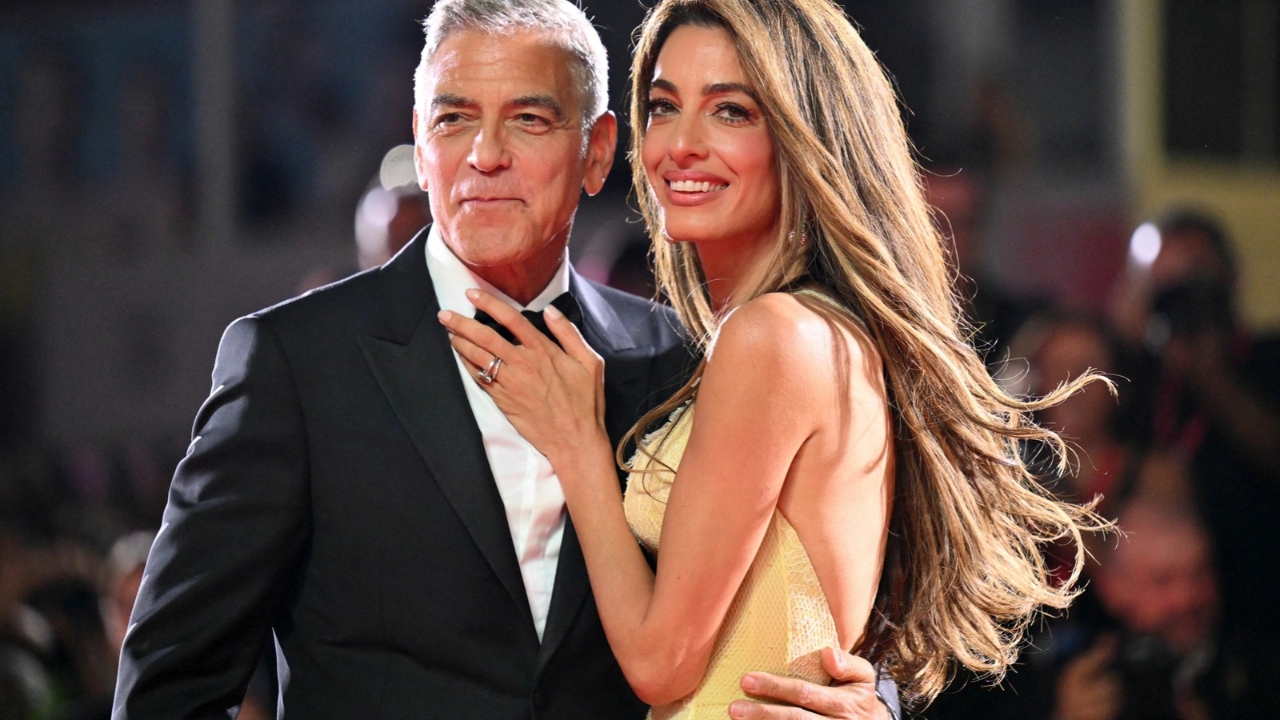
Most celebrity charities are vanity projects. You know the drill. A famous actor slaps their name on a foundation, throws a black-tie gala once a year, writes a big check for a vague cause, and calls it a day.
The Clooney Foundation for Justice doesn't work like that. Not even close.
Founded in late 2016 by George and Amal Clooney, this organization operates more like a global investigative law firm than a Hollywood philanthropy hub. While mainstream entertainment outlets love running surface-level headlines about their red-carpet appearances or their work spanning more than 40 countries, those pieces rarely explain what the foundation actually does on the ground. They skip the gritty legal mechanics. They miss the courtroom strategy.
If you want to understand how human rights accountability actually happens when governments fail, you need to look past the celebrity gloss. Here is what the Clooney Foundation for Justice is really building across dozens of nations, how its legal teams dismantle impunity, and why traditional human rights groups are watching closely.
Why Traditional Human Rights Advocacy Hits a Wall
For decades, the standard playbook for international human rights groups relied on naming and shaming. Researchers would document abuses, publish a thick 200-page report, hold a press conference in Geneva or New York, and hope diplomatic pressure forced bad actors to change behavior.
Honestly, that model has broken down.
Authoritarian leaders don't care about strongly worded press releases anymore. Warlords rarely lose sleep over United Nations committee reports. When there is zero personal risk to the perpetrators—no frozen bank accounts, no arrest warrants, no prison cells—atrocities keep happening.
Amal Clooney recognized this gap early in her career as a barrister specializing in international law and human rights. Having represented victims of ISIS genocide, detained journalists, and political prisoners before the International Court of Justice and the European Court of Human Rights, she saw the exact same bottleneck over and over.
Victims had stories. They didn't have legal standing.
Without structured, courtroom-ready evidence that meets strict criminal standards, horrific human rights abuses remain just tragic news stories. The Clooney Foundation for Justice was built specifically to turn documentation into prosecution. Instead of writing reports that sit on shelves, their teams build criminal dossiers, monitor flawed trials from the inside, and force perpetrators into actual courtrooms.
Inside TrialWatch and the Fight Against Rigged Courtrooms
One of the foundation's most aggressive initiatives is TrialWatch. And its premise is deceptively simple.
In dozens of countries, governments use their own courts as weapons to silence critics. They don't always need to throw a journalist in an unmarked van at midnight. Instead, they charge a reporter with "tax evasion," "spreading false news," or "terrorism" in a closed courtroom where nobody is watching.
TrialWatch puts eyes inside those rooms.
Working alongside partners like Columbia Law School, the American Bar Association, and Microsoft, TrialWatch trains and deploys independent monitors to observe criminal trials around the world. They focus heavily on cases targeting journalists, women and girls, LGBTQ+ individuals, and peaceful protesters.
Here is how the process actually plays out when a trial is flagged:
- Monitoring and Data Collection: Trained legal monitors attend hearings in person or virtually, logging every procedural violation using a standardized digital app. Did the judge deny the defense access to evidence? Was the defendant barred from speaking with their lawyer? Every infraction goes into the record.
- Expert Grading: Once a verdict comes down, an independent legal expert—often a former judge or senior international prosecutor—reviews the trial record against international fair trial standards, such as the International Covenant on Civil and Political Rights. They assign the trial an actual letter grade, from A to F.
- Appellate Intervention: If a trial gets a failing grade, the foundation doesn't just publish a critique. Their legal team uses that formal report to file appeals, petition regional human rights courts, or push for the prisoner's release through diplomatic channels.
Take the case of Maria Ressa, the Nobel Peace Prize-winning journalist in the Philippines. Amal Clooney joined Ressa's international legal counsel as the Philippine government hit her with a barrage of politically motivated cyber-libel and tax charges. TrialWatch monitored the proceedings, documenting the procedural flaws in real time.
Or look at Azerbaijan, Russia, and Turkey, where TrialWatch monitors have tracked dozens of cases against independent reporters. By turning subjective claims of "unfairness" into hard, graded legal data, the foundation makes it much harder for foreign governments to pretend their judicial systems are legitimate.
The Docket Hunting War Criminals Across Borders
While TrialWatch plays defense for people trapped inside broken legal systems, The Docket goes straight on offense.
The Docket is the foundation's investigative unit dedicated to gathering evidence of mass atrocities, war crimes, and genocide. Their goal isn't historical preservation. Their goal is criminal prosecution.
You might wonder how a private foundation can prosecute war crimes in countries where the local government refuses to act. The answer lies in a legal doctrine called universal jurisdiction.
Under international law, certain crimes—genocide, crimes against humanity, war crimes, and torture—are so severe that any nation has the legal authority to prosecute the perpetrators, regardless of where the crimes took place or the nationality of the victims and offenders. If a Syrian intelligence officer or a Russian military commander travels to Germany, France, or Sweden for medical treatment or vacation, local prosecutors can arrest them on the spot.
Provided they have the evidence.
That is where The Docket steps in. Their investigators, open-source intelligence analysts, and forensic experts collect testimonies from survivors, verify satellite imagery, trace financial networks, and compile confidential legal briefs. They hand those ready-made cases directly to war crimes units in countries with universal jurisdiction laws, as well as the International Criminal Court.
Holding Corporate Enablers Accountable
What makes The Docket especially sharp is that they don't just chase men with rifles. They follow the money.
War crimes rarely happen without corporate logistics, illicit financing, or resource smuggling. The Docket actively investigates companies and financial institutions that profit from conflict zones or supply weapons to sanctioned regimes.
For example, their legal teams have submitted extensive evidence to European prosecutors regarding war crimes committed by Russian forces in Ukraine, focusing on specific military commanders and torture facilities. They have also pursued accountability for ISIS atrocities committed against the Yazidi community in Iraq, helping secure landmark convictions in German courts—including the first-ever conviction of an ISIS member for genocide.
That isn't charity. That is hard-edged legal warfare.
Waging Justice for Women and Fighting Child Marriage
Expanding across 40+ countries meant the Clooneys had to confront systemic abuses that rarely make international front pages. That led to the launch of Waging Justice for Women.
Most legal systems in the developing world—and plenty in the developed world—aren't broken by accident. They are written to disadvantage women. Laws governing property ownership, domestic violence, workplace discrimination, and child marriage often trap women in cycles of poverty and abuse with zero legal recourse.
Waging Justice for Women works directly with local female lawyers and grassroots organizations in regions like Sub-Saharan Africa to challenge discriminatory laws in domestic and regional courts.
Rather than parachuting Western lawyers into Nairobi or Lilongwe to tell local activists what to do, the foundation funds fellowships for early-career African women lawyers. They embed these fellows inside local legal aid organizations, giving them the financial backing and strategic mentorship needed to litigate high-impact cases.
Consider child marriage. In several countries, statutory law sets the minimum age of marriage at 18, yet customary or religious loopholes still allow girls as young as 12 or 14 to be married off. Through strategic litigation supported by the foundation, local legal teams have challenged these loopholes before constitutional courts and regional bodies like the African Court on Human and Peoples' Rights.
When a single constitutional ruling strikes down a child marriage loophole, it doesn't just help one plaintiff. It changes the legal baseline for millions of girls overnight.
What Critics and Skeptics Point Out
If you talk to seasoned international lawyers or human rights practitioners, you won't hear blind praise for any organization—even one backed by high-profile founders. There are real, practical limitations to what the Clooney Foundation for Justice can achieve.
First, universal jurisdiction has geographic limits. You can build an airtight criminal dossier against a war criminal in Damascus, Moscow, or Naypyidaw, but if that individual never leaves their home country or only travels to allied authoritarian states, an arrest warrant in Frankfurt or Paris won't put them behind bars immediately. Justice in these cases operates on a timeline of years, sometimes decades.
Second, celebrity involvement is a double-edged sword. George Clooney's global fame brings undeniable advantages. When he picks up the phone, heads of state, foreign ministers, and major tech CEOs answer. That access unlocks funding and diplomatic pressure that small NGOs could never dream of. At the same time, authoritarian regimes love weaponizing that fame for domestic propaganda. State media in countries like Russia or Egypt routinely dismiss TrialWatch reports as "Western Hollywood interference," attempting to delegitimize the local activists who partnered with the foundation.
Third, legal victories don't always equal immediate freedom. Even when the United Nations Working Group on Arbitrary Detention or a regional human rights court rules in favor of a journalist represented by Amal Clooney's network, authoritarian governments frequently ignore the ruling. A legal win provides massive diplomatic leverage, and it often leads to eventual prisoner swaps or pardons, yet it rarely forces a dictator to open a prison cell the next morning.
Acknowledging those realities doesn't diminish the foundation's work. It clarifies what they are actually doing: building an inescapable paper trail so that when political winds shift, the legal architecture for accountability is already sitting on the prosecutor's desk.
How the Foundation Scales Across 40 Countries Without Bloating
One of the smartest operational choices the Clooneys made was refusing to build a massive, bureaucratic headquarters.
Traditional international NGOs often spend a huge chunk of their donations on real estate, layers of middle management, and endless internal committees. The Clooney Foundation for Justice runs lean. Instead of opening 40 brick-and-mortar offices around the globe, they operate on a network and partnership model.
They partner with local bar associations, law school clinics, pro bono teams at major corporate law firms, and grassroots human rights defenders who already speak the language and understand the local courtrooms.
Technology does the rest of the heavy lifting. Through custom digital tools developed with tech partners, a lawyer in a remote district can securely upload encrypted trial transcripts, verify metadata on video evidence of a war crime, and collaborate with international legal experts in London or New York without exposing witnesses to local surveillance.
This model keeps overhead low and lets them pivot fast. When a crisis erupts—whether it's a military coup, a sudden crackdown on independent media, or a war—they don't need six months to set up a regional field office. They activate existing legal networks within days.
How You Can Track and Support This Legal Work
Most people read an article about human rights abuses, feel frustrated for thirty seconds, and scroll on because the problems seem completely out of reach. You don't need a law degree or a Hollywood bank account to engage with how international accountability works.
If you want to follow real legal outcomes rather than charity PR, start here:
- Read the TrialWatch Fairness Reports: The Clooney Foundation for Justice publishes its graded trial monitoring reports publicly on its website (cfj.org). Reading a grade-D or grade-F report on a journalist's trial shows you the exact mechanics of how authoritarian courts manipulate procedure.
- Support Local Legal Aid and Press Freedom Defenders: International foundations rely entirely on local lawyers taking personal risks on the ground. Look at the grassroots partners listed in CFJ case studies—organizations like the Committee to Protect Journalists (CPJ), Media Defence, and regional African women's legal networks—and direct support to the local practitioners doing the daily courtroom work.
- Pay Attention to Universal Jurisdiction Cases: Keep an eye on war crimes trials happening in European domestic courts (such as Germany's Higher Regional Courts or Sweden's district courts). Those cases are the clearest real-world test of whether international law still has teeth when global institutions deadlock.
Celebrity foundations usually fade when the headlines move on to the next trend. By rooting their work in courtroom evidence, graded trial data, and cross-border criminal law, George and Amal Clooney built something much harder to ignore—a legal machine designed to outlast the news cycle.