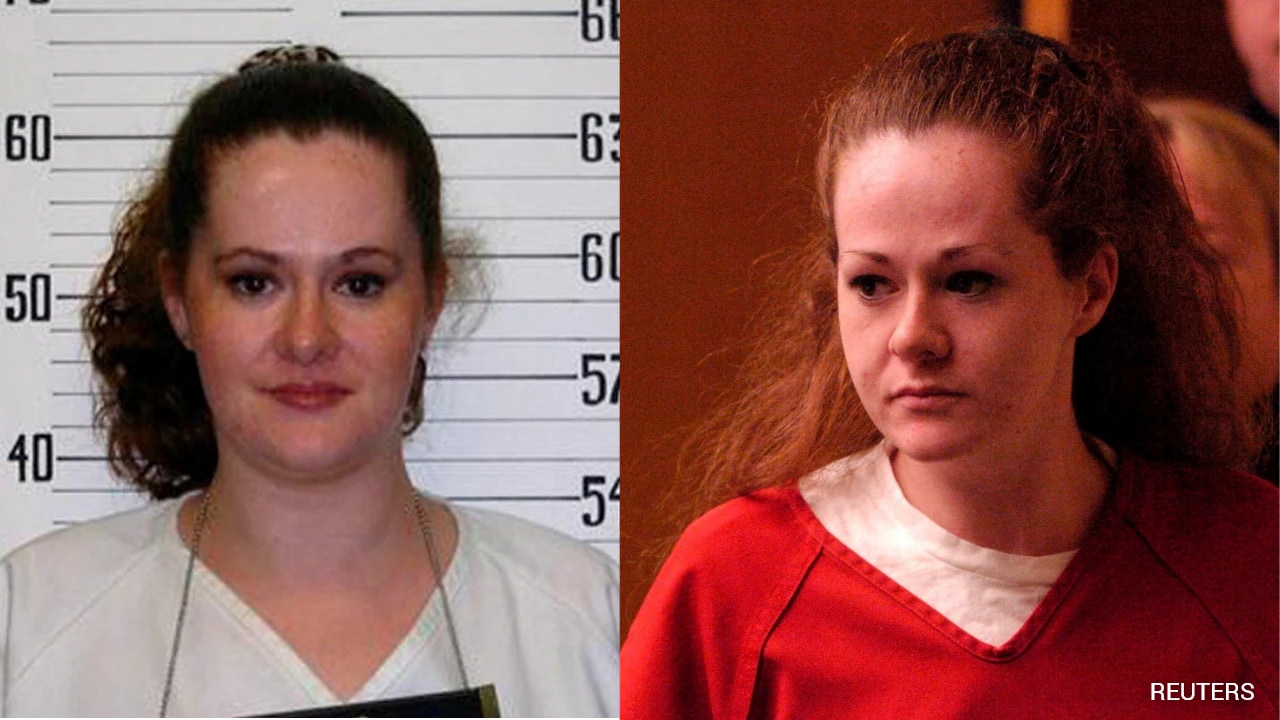
Viral headlines have a nasty habit of inventing reality out of thin air. If you've been scrolling through social media feeds lately, you've probably seen dramatic claims circulating about Christa Pike surviving a botched execution in the United States and uttering haunting first words afterward.
Let's clear the air immediately. That story is false.
Christa Pike has not undergone a failed execution. She hasn't been strapped to a gurney in an execution chamber, she hasn't survived a lethal injection, and she didn't speak those viral words after cheating death. In reality, she remains alive on Tennessee's death row at the Debra K. Johnson Rehabilitation Center in Nashville, caught in the slow-moving gears of the American appellate court system.
It's wild how fast misinformation spreads when true crime meets algorithmic clickbait. People see a dramatic quote attached to a notorious name, hit share without checking a single court docket, and suddenly a fabricated event becomes accepted internet lore. To understand why this rumor caught fire—and what's actually happening with the only woman currently on Tennessee's death row—you have to look at the grim facts of her 1995 crime, the legal battles delaying her execution date, and the very real history of botched executions that make these fake stories sound plausible.
Where the Failed Execution Rumor Came From
Clickbait farms thrive on ambiguity. When a high-profile death row inmate gets an execution date set, or when the Tennessee Supreme Court issues a ruling on their case, bad-faith websites immediately spin up sensationalized stories to harvest ad revenue.
In late 2024 and throughout 2025, Christa Pike's name returned to mainstream headlines because Tennessee state officials pushed to schedule her execution following years of legal gridlock. At the exact same time, the broader national conversation around capital punishment was dominated by real, horrifying stories of botched lethal injections in states like Alabama, Oklahoma, and Idaho.
Content mills mashed those two separate news cycles together. They took the genuine legal updates surrounding Pike's death warrant and merged them with dramatic tropes from actual failed executions—like Alabama's infamous attempts to find a vein on Kenneth Eugene Smith or Alan Eugene Miller. Out popped a fictional quote—"Don't know why I survived"—attributed to Pike as if she had just walked out of the death chamber.
Honestly, it's frustrating to watch. Real capital punishment cases involve enough genuine legal horror, constitutional debate, and human tragedy without writers fabricating fake execution chamber transcripts. When you invent fake survival stories, you completely obscure the actual legal arguments happening inside Tennessee courtrooms right now.
Who Is Christa Pike and Why Is She on Death Row
To grasp why her case still draws intense public fascination three decades later, you have to look back at January 1995 in Knoxville, Tennessee.
Christa Gail Pike was just 18 years old at the time. She was enrolled in the Job Corps program, a federal vocational training initiative for young adults, where she met 19-year-old Colleen Slemmer. Pike became convinced—largely without basis—that Slemmer was trying to steal her 17-year-old boyfriend, Tadaryl Shipp.
What followed wasn't a sudden burst of rage. It was a calculated, prolonged, and extraordinarily brutal murder.
On the night of January 12, 1995, Pike, Shipp, and an 18-year-old friend named Shadolla Peterson lured Slemmer into an isolated wooded area near the University of Tennessee campus under the pretense of smoking marijuana and making peace. Instead, Pike and Shipp attacked Slemmer. Over the course of roughly 30 to 45 minutes, they beat her, slashed her throat with a box cutter, carved a pentagram into her chest, and ultimately crushed her skull with a chunk of asphalt.
Pike didn't try to hide her involvement afterward. She kept a piece of Slemmer's skull in her jacket pocket and showed it off to classmates at the Job Corps center, bragging about what she had done.
Within days, investigators arrested all three teens. During the 1996 trial in Knox County Criminal Court, prosecutors laid out the physical evidence, Pike's own recorded confession, and testimony from terrified classmates. A jury convicted Pike of first-degree murder and conspiracy to commit murder, sentencing her to death. At just 20 years old when the sentence was handed down, she became the youngest woman on death row in the United States.
Her co-defendants received vastly different outcomes. Tadaryl Shipp, because he was 17 at the time of the murder, was legally ineligible for the death penalty and received a life sentence with the possibility of parole. Shadolla Peterson testified against Pike in exchange for probation.
Why She Hasn't Been Executed Yet
If Pike was sentenced to death in 1996, why is she still alive in 2026? People outside the legal system often assume a death sentence means an execution happens within a few years. In practice, capital punishment in America moves at a glacial pace, and Pike's case hits several major constitutional speed bumps.
The Age and Brain Science Argument
Pike committed her crime when she was 18 years and 10 months old. Had she been two months younger, the U.S. Supreme Court's 2005 ruling in Roper v. Simmons would have automatically barred her execution, since the Court outlawed the death penalty for offenders under 18.
Her defense attorneys have spent years arguing that the hard cutoff at 18 is scientifically arbitrary. Modern neuroscience shows that the human prefrontal cortex—the region governing impulse control, risk assessment, and emotional regulation—continues developing well into a person's mid-20s. Pike's legal team has repeatedly petitioned courts to extend Roper protections to youthful offenders aged 18 to 20, arguing that executing someone whose brain was functionally indistinguishable from a juvenile's violates the Eighth Amendment's ban on cruel and unusual punishment.
Severe Mental Illness and Childhood Trauma
Beyond her age, Pike's post-conviction lawyers uncovered extensive medical evidence that her original trial attorneys failed to present effectively. Neuroimaging and psychiatric evaluations conducted years after her conviction revealed that Pike suffers from severe bipolar disorder, post-traumatic stress disorder, and organic brain damage likely linked to fetal alcohol spectrum disorder.
Her childhood was a documented nightmare of extreme physical and sexual abuse, neglect, and instability. Under U.S. Supreme Court precedent, juries must be given a complete picture of a defendant's background and mental health before deciding between life and death. Pike's appellate team has fought relentlessly to prove that her trial counsel's failure to investigate her neurological deficits deprived her of a fair sentencing hearing.
Tennessee's Lethal Injection Protocol Moratorium
Even when an inmate's appeals run dry, a state can't carry out an execution without a legally vetted protocol. And Tennessee has had a massive problem with its lethal injection procedures.
In May 2022, Tennessee Governor Bill Lee abruptly halted all scheduled executions after an independent investigation revealed serious failures in how the Tennessee Department of Correction tested its lethal injection drugs. Officials had skipped mandatory testing for bacterial endotoxins—substances that can cause excruciating pain and pulmonary edema during an execution—on multiple occasions.
That moratorium froze every active death warrant in the state for more than two years. While state officials worked to rewrite their execution manual and switch to a single-drug pentobarbital protocol, Pike's case sat in administrative limbo. No one was taking her to the execution chamber because the chamber was effectively closed for business.
What Actually Happens During a Botched Execution
The reason fake quotes like "Don't know why I survived" fool so many readers is that real failed executions actually do happen in the United States. According to data tracked by the Death Penalty Information Center, lethal injection has the highest rate of botched procedures of any execution method used in modern American history.
When an execution fails in real life, it rarely looks like a dramatic Hollywood miracle. It usually looks like medical incompetence inside a sterile room.
Take the case of Kenneth Eugene Smith in Alabama in November 2022. Executioners strapped Smith to a gurney for nearly four hours, repeatedly stabbing his arms and collarbone with needles in a failed attempt to establish an intravenous line before his death warrant expired at midnight. He survived the night, though Alabama later executed him in January 2024 using nitrogen hypoxia—another procedure witnesses described as visibly agonizing.
Or look at Romell Broom in Ohio in 2009. Technicians poked Broom 18 times over two hours without finding a usable vein. At one point, Broom was actually sitting up on the gurney crying and trying to help the medical team locate a vein in his own arm before the governor finally called off the attempt. Broom remained alive on death row for another 11 years before dying of COVID-19 complications in 2020.
In those real cases, survivors did give statements to their attorneys afterward describing the physical agony, the coldness of the room, and the psychological terror of being strapped down while staff panicked. Clickbait writers routinely lift the emotional cadence of those real testimonies and paste them onto whichever high-profile inmate is trending that week.
Why True Crime Misinformation Is Getting Worse
You've probably noticed that fake crime stories are flooding Facebook, TikTok, and YouTube Shorts faster than ever. There's a specific financial ecosystem driving this trend, and understanding how it works makes you much harder to fool.
Most of these viral posts originate from overseas content farms or automated publishing networks that scrape legitimate news wire reports. When the Associated Press publishes a dry, factual update—such as "Tennessee Attorney General Requests Execution Date for Christa Pike"—automated scripts rewrite the headline to maximize emotional outrage or morbid curiosity.
They follow a predictable formula:
- Invent a direct quote: Putting quotation marks in a headline boosts click-through rates dramatically because readers assume they're getting an exclusive, raw human moment.
- Imply finality or shock: Words like "survived," "failed," "miracle," or "last words" trigger immediate curiosity gaps that force people to click before thinking.
- Exploit paywalls: Because reputable local outlets like the Knoxville News Sentinel or The Tennessean often sit behind subscription paywalls, casual readers rely on free, unverified aggregator sites that face zero editorial accountability when they publish fiction.
If you want to verify any breaking news about a death row inmate, skip the viral social media graphics entirely. Check primary sources instead. The Death Penalty Information Center maintains accurate, real-time databases of scheduled executions, stays, and clemency rulings across every state. You can also check official press releases directly from the relevant state's Department of Correction or Supreme Court clerk's office.
Where Christa Pike's Case Stands Right Now
Strip away the fabricated quotes and viral rumors, and the actual reality of Christa Pike's life is stark enough on its own.
She has spent nearly three decades in solitary confinement or restrictive housing because Tennessee only had one woman on death row for years, meaning prison officials kept her isolated from the general female prison population. In 2024, she won a significant legal settlement with the Tennessee Department of Correction that finally allowed her out-of-cell time, communal meals, and interaction with other inmates at the Debra K. Johnson Rehabilitation Center.
Meanwhile, her legal battle over her death sentence remains active. Tennessee is also notable for being one of the few states where inmates sentenced before 1999 can still choose electrocution over lethal injection—a grim detail that periodically resurfaces in news coverage whenever her execution date is debated.
Until the Tennessee Supreme Court sets a final execution date, all appeals are exhausted, and the governor denies clemency, Christa Pike remains inside her prison facility awaiting the next court ruling. She hasn't survived a trip to the death chamber, and she hasn't delivered any dramatic post-execution speeches. When you see those headlines pop up in your feed, recognize them for what they are: cheap fiction built on top of a very real, very tragic case.