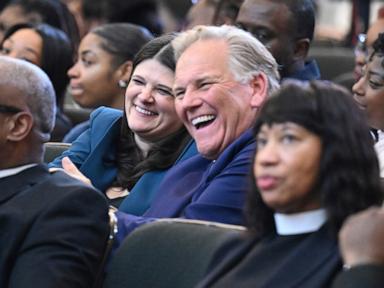
The fluorescent lights of a diner in Oakland County hum at a frequency you only notice when the room goes quiet. Imagine a retired autoworker—let’s call him Arthur, a hypothetical composite of thousands of union voters across southeastern Michigan—stirring black coffee at 6:00 AM, folding back the morning paper to find a headline that makes his spoon stop mid-air. Democratic Representative Haley Stevens has endorsed Republican candidate Mike Rogers in the Michigan U.S. Senate race.
Shock.
That single syllable captures the tremor running through Michigan’s political fault lines when a sitting Democratic congresswoman crosses the aisle to back a former Republican congressman and intelligence committee chair. In an era where Washington operates like two rival stadiums separated by a moat, a cross-party endorsement in a pivotal Senate battleground isn't just a press release—it is a flare shot into a foggy night, illuminating the shifting loyalties, economic anxieties, and pragmatic survival instincts of the modern Midwest.
To understand why this moment carries so much weight, you have to step away from cable news panels and stand on the shop floors and suburban cul-de-sacs between Detroit and Grand Rapids. Here, politics isn't an abstract sport; it is measured in shift schedules, grocery receipts, and whether the plant down the road stays open through the next decade.
The Architecture of an Unlikely Alliance
On paper, Haley Stevens and Mike Rogers belong to opposing political tribes. Stevens built her career in the Obama administration’s auto task force before winning a suburban Detroit congressional seat in 2018, championing manufacturing jobs, labor unions, and Democratic legislative priorities. Rogers, a former FBI special agent and seven-term Republican congressman from Brighton, spent years leading the House Intelligence Committee and running as a traditional national-security conservative.
Yet, according to statements surrounding the endorsement, the bridge between them was built on shared regional pragmatism rather than ideological conversion. Political analysts and local party observers point out that both figures have long framed their public identities around Michigan’s industrial security, supply-chain resilience, and opposition to foreign manufacturing dominance—particularly concerning electric vehicle supply chains and defense production.
Think of American partisanship like an old brick wall held together by brittle mortar. For years, national strategists have insisted that every brick must stay strictly on its designated side. When a figure like Stevens steps out to endorse Rogers, she isn't pretending the mortar doesn't exist; she is arguing that the house itself—Michigan’s economic and strategic standing in Washington—needs reinforcement that transcends the color of the jersey.
Supporters of the move describe it as a rare instance of putting state interests ahead of national party orthodoxy. Critics within the Democratic base, however, view it through a much sharper lens, arguing that endorsing a Republican in a tightly contested U.S. Senate race risks handing Senate control—and decisive votes on judicial appointments, healthcare, and reproductive rights—to the GOP.
What Voters Actually Hear at the Kitchen Table
If you have ever watched a family dinner turn tense over an election cycle, you know that political endorsements rarely land the way consultants predict. In Oakland and Macomb counties—the historic bellwether suburbs where national elections are routinely won or lost by fractions of a percentage point—voters have grown deeply skeptical of scripted loyalty.
Consider a hypothetical small-business owner in Troy, Michigan—let’s name her Elena—who runs a mid-sized tool-and-die shop supplying parts to both traditional automakers and defense contractors. Elena doesn't care about partisan scorecards. She cares about interest rates, energy costs, and whether her senators understand how a tariff or a federal procurement rule affects her thirty-two employees. When Elena hears that a Democratic representative she knows from local business roundtables is backing a Republican Senate candidate, her reaction isn't outrage. It is curiosity.
That curiosity is precisely what makes cross-party endorsements potent in swing states. Historical patterns in Midwestern politics show that independent and ticket-splitting voters—while fewer than in previous decades—still hold the balance of power in statewide races. When a familiar local representative vouches for an opponent's temperament or focus on state-specific issues, it lowers the psychological barrier for undecided voters considering crossing party lines themselves.
At the same time, political scientists note that endorsements carry real limits. Voters today have access to vast amounts of information, and a single endorsement rarely overrides deeply held convictions on core national issues. For progressive voters in Ann Arbor or Detroit, Stevens’s decision reads less like statesmanship and more like a fracture in coalition discipline at a moment when party unity is treated as an existential necessity.
The Invisible Stakes in the U.S. Senate
Why does a single Senate seat in Michigan command so much national oxygen? Because the U.S. Senate operates less like a fast-moving legislature and more like a heavy flywheel—slow to turn, immense in momentum, and decisive in determining the direction of the entire federal government.
Every committee chairmanship, every federal appellate judge, and every cabinet confirmation hinges on which party holds the majority gavel. For Michigan, the stakes are even more concrete:
- Automotive and Energy Policy: Decisions made in the Senate determine federal subsidies, emissions standards, and trade protections that directly shape investment in Michigan’s factories.
- National Security and Defense Manufacturing: With major defense installations and engineering hubs across the state, Senate oversight of defense appropriations affects thousands of high-skilled jobs.
- Great Lakes Protection: Federal funding for invasive species prevention and water infrastructure relies heavily on bipartisan coordination within the Senate delegation.
By backing Rogers, Stevens signaled to voters that she views his background on intelligence, national security, and bipartisan negotiation as an asset for Michigan’s representation in that chamber. Meanwhile, Democratic leaders and aligned advocacy groups have emphasized that Senate majorities are binary—there is no half-control—and have urged voters to weigh the broader legislative consequences of the race.
Living Through the Friction of Transition
Anyone who has lived in Michigan over the past twenty years knows what economic transition feels like in your bones. You see it in the vacant lots where stamping plants once stood, and you feel it in the anxious optimism surrounding new battery facilities and research corridors. There is a particular vulnerability that comes with living in a state perpetually told it is at a crossroads.
Sometimes, the political choices offered to voters feel genuinely confusing—even disorienting. You are asked to choose between competing visions of security: economic security, national security, personal rights, and community stability. When political leaders break from expected alignments, it mirrors the very real ambivalence many residents feel inside the voting booth.
Does a cross-party endorsement signal a healthier, more cooperative future in American politics, or is it an isolated exception in an era of rigid polarization? Honestly, nobody can say with certainty. Political history offers examples of both: moments when bipartisan bridges reshaped state coalitions for a generation, and moments when party loyalties snapped back into place the morning after Election Day.
The Echo Beyond Michigan
What happens in Michigan rarely stays in Michigan. Strategists in Pennsylvania, Wisconsin, and Ohio watch every tremor in the Great Lakes basin for clues about how working-class and suburban voters are recalibrating their allegiances.
If Rogers benefits from Stevens’s backing among moderate suburbanites and union households, expect candidates across the industrial Midwest to rethink how they build coalitions—leaning harder into regional identity and personal credibility rather than national talking points. Conversely, if party polarization holds firm and voters prioritize national control of the Senate over local endorsements, the episode will be remembered as a bold, unconventional gamble against the prevailing political tide.
Back in that Oakland County diner, the coffee pot empties and gets refilled. Arthur folds his newspaper, leaves a few dollars beside his mug, and steps out into the crisp Michigan morning, where the streetlights are just flickering off against a gray dawn.


