The morning air in Tacubaya smelled of scorched butter, pulverized sugar, and approaching violence. It was 1838. Inside a modest bakery, Monsieur Remontel surveyed a scene of utter devastation. Rioters had trampled his ovens, smashed his display cases, and consumed or ruined vast quantities of his delicate pastries. To a French diplomat sitting comfortably in Paris, half a world away, a ruined croissant might have registered as a minor municipal nuisance. To the French monarchy under Louis-Philippe, it was a casus belli.
History rarely turns on grand philosophical treatises. Sometimes, it pivots on a bill for brioche.
When France dispatched warships to blockade the ports of Veracruz, demanding six hundred thousand pesos in reparations for a baker's broken sweets, they were acting out a performance of imperial vanity. But beneath the absurdity of the so-called Pastry War lay a deeper, more volatile truth. France and Mexico were two nations speaking entirely different languages of power, pride, and survival. One was an ancient European titan obsessed with form, ledger books, and global prestige. The other was a bleeding republic, barely seventeen years old, clawing its way out from under three centuries of Spanish colonialism, trying to figure out what it meant to exist.
This was the opening salvo of a two-hundred-year dance. It was a relationship written in equal parts champagne and gunpowder, high-culture adoration and bloody intervention.
To understand this erratic alliance, you have to look past the treaties signed in mahogany-paneled rooms and listen to the human friction on the ground. Consider what happened just two decades after the pastry shops quieted down. In the 1860s, Napoleon III gazed across the Atlantic and saw an opportunity to check the rising power of the United States. He envisioned a client state in the heart of North America, a Catholic empire that would glitter under French influence.
Enter Maximilian of Habsburg and his wife, Charlotte of Belgium.
Imagine stepping off a ship onto the humid shores of Veracruz in 1864, wrapped in heavy European wool, carrying the delusions of absolute monarchy into a country that had spent decades executing kings and dictators alike. Maximilian was not a monster; he was a romantic, a botanist who preferred collecting hummingbirds to executing rebels. He fell in love with the dramatic topography of the Mexican highlands, redesigning the Paseo de la Reforma so he could ride his horse from Chapultepec Castle straight to the heart of Mexico City. He wore indigenous motifs woven into his royal garments. He tried to belong.
Yet, he was a ghost haunting a stage that belonged to someone else.
While Maximilian planted gardens and dreamed of liberal reforms, the real Mexico—rugged, unyielding, and led by Benito Juárez—was fighting a brutal guerrilla war for its very soul. The French expeditionary force, initially greeted by conservative elites as saviors, found themselves bogged down in a nightmarish theater of mud, yellow fever, and fierce resistance. By 1867, the financial and human costs became too steep. Paris pulled its support. Charlotte sailed back across the Atlantic, desperately pleading with European courts for help, only to descend slowly into madness in a Belgian castle.
Maximilian stayed behind. He chose his fate with a strange, aristocratic dignity. On a dusty June morning in Querétaro, on the Hill of Bells, a firing squad raised their muskets. When the smoke cleared, the dream of a French-backed American empire lay dead in the dirt.
The painter Édouard Manet captured the execution with chilling detachment, his canvas broadcasting the failure of European ambition to the salons of Paris. You might think this bloody chapter would permanently sever the bond between the two countries. You would be wrong.
Human fascination rarely follows the rules of logic. Even as French bullets tore through Mexican flesh, Mexican intellectuals, artists, and elites remained utterly captivated by the cultural gravity of Paris.
By the late nineteenth century, under the long dictatorship of Porfirio Díaz, Mexico City underwent a radical metamorphosis. The government looked at Haussmann’s Paris—with its grand boulevards, ornate ironwork, gas lamps, and neoclassical facades—and decided to reinvent the capital in its image. Mansard roofs sprouted above colonial plazas. Fine dining establishments began importing French wines and culinary techniques. To be sophisticated in Mexico City meant to read French poetry, dress in Parisian couture, and view the world through a European lens.
It was a cultural seduction, entirely voluntary and deeply intoxicating.
Yet, the street ran both ways. When the Mexican Revolution erupted in 1910, tearing the country apart and sending shockwaves through the established order, Paris became the ultimate sanctuary for the displaced, the radical, and the visionary. Diego Rivera walked the damp streets of Montparnasse, absorbing the cubist experiments of Picasso and Braque, before taking those European tools back home to paint colossal murals of indigenous history on public walls. Frida Kahlo's unfiltered, bleeding emotional landscapes found a home in the French capital, where André Breton declared Mexico to be the surrealist country par excellence, simply because reality there was stranger than any dream.
Octavio Paz spent years as a Mexican diplomat in Paris, sitting in smoky cafes, debating philosophy, and writing prose that bridged two distinct worlds. He understood the paradox intimately. Mexico looked to France to find a mirror for its own artistic ambition, while France looked to Mexico for the raw, untamed vitality it felt it had lost in the mechanized slaughter of the twentieth century.
Today, walking through the neighborhoods of Roma or Condesa in Mexico City, you can still feel the lingering residue of this historical romance. It is baked into the sourdough of local bakeries, whispered in the architectural flourishes of turn-of-the-century mansions, and preserved in the quiet solidarity of generations of expatriates, refugees, and artists who found safe harbor on both sides of the ocean.
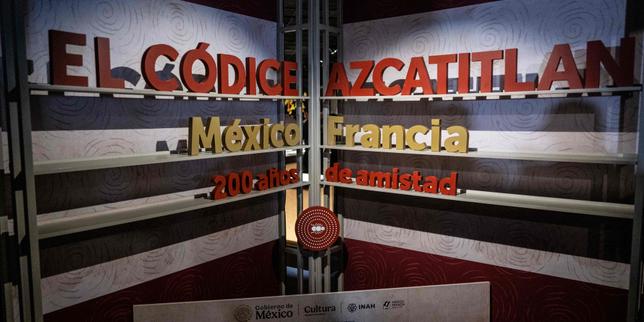
Two centuries have passed since those first tentative diplomatic notes were exchanged. The cannons of Veracruz are silent. The bakers have long since closed their shops. What remains is something far more resilient than trade agreements or geopolitical calculations. It is a shared obsession with style, a mutual respect for defiance, and an enduring recognition that two very different worlds can spend two hundred years colliding, breaking, and remaking one another into something entirely new.