The coffee grows cold on the corner of the mahogany desk. Outside the glass tower, the autumn wind whips through the concrete canyons of New Jersey, but inside, the air is dead. Priya stares at the blinking cursor on her monitor, watching it pulse with a rhythm that feels entirely too much like a dying heartbeat.
Ten years. Three promotions. Two master's degrees earned while working seventy-hour weeks on projects that power half the financial infrastructure of the East Coast. And yet, tonight, Priya is not thinking about code architecture or database scaling. She is thinking about a piece of green card paper that exists only as a phantom limb—felt everywhere, possessed nowhere.
Then the notification pings.
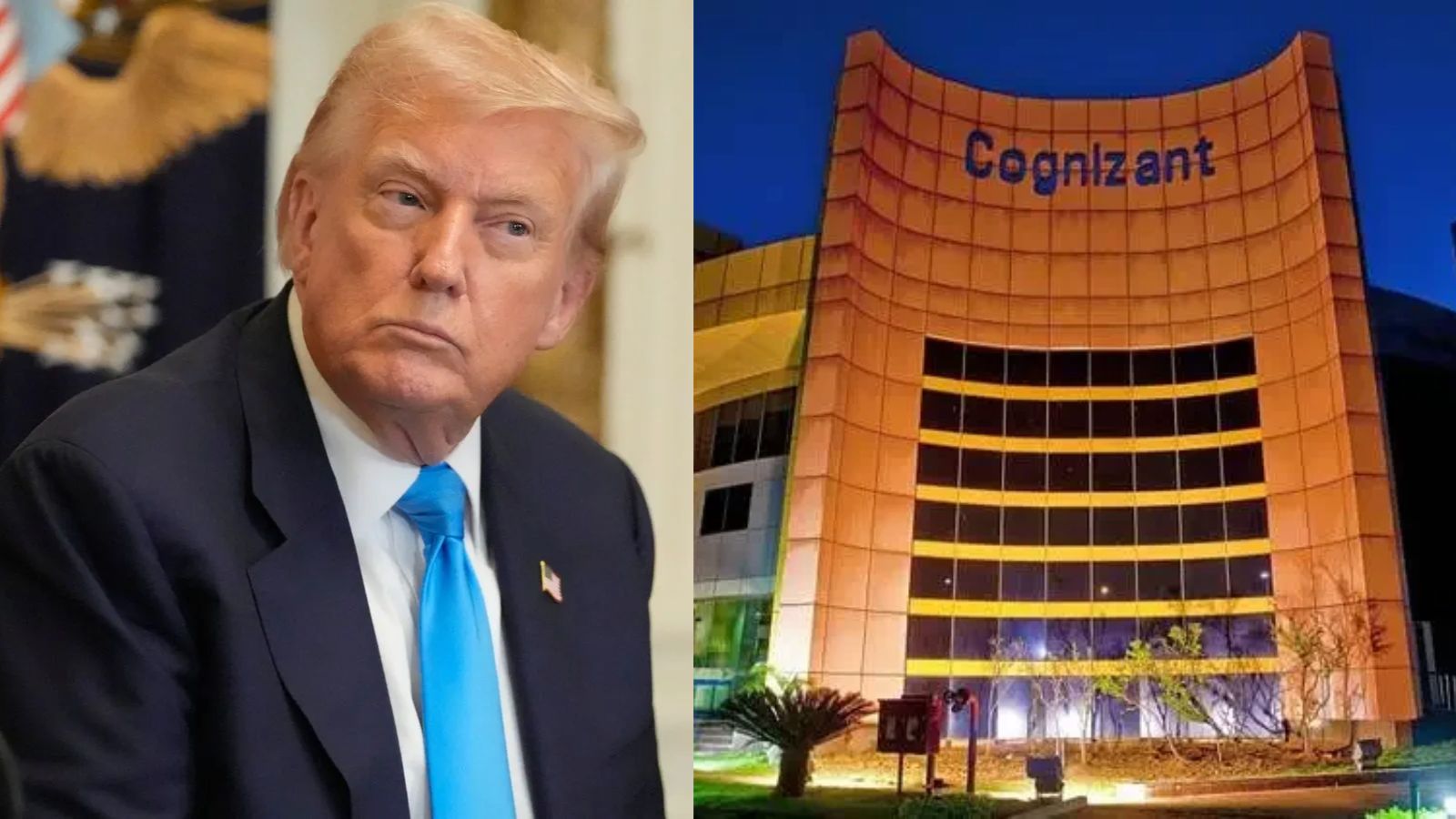
It is an internal email from immigration counsel, marked with a quiet urgency that sends a cold shriek down her spine. The Department of Labor has slammed the brakes. The permanent labor certification filings for Cognizant, one of the titan consultancies driving the American technology engine, are paused. Suspended. Put into an indefinite deep freeze over allegations of PERM recruitment process non-compliance.
Priya leans back, closing her eyes. She is not a statistic on a spreadsheet. She is a person who has built a home in a country that treats her residency like a temporary lease on a car she is forced to maintain with her own blood.
To understand why the United States suspended Cognizant’s permanent labor certification filings, you have to look past the dry legalistic language of federal audits and compliance reviews. You have to look at the machinery of modern migration.
Every year, thousands of foreign nationals sponsored by major IT and consulting firms enter a grueling bureaucratic triathlon. Step one is the H-1B visa, a lottery-ticket entry that grants temporary work authorization. Step two is the PERM process—Program Electronic Review Management. This is the crucible. Before a company can sponsor an employee for a green card, it must prove through a rigorous, highly choreographed advertising campaign that no qualified, willing, and able American worker is available for the job.
It is a legal ritual. Companies post job ads in local newspapers and online boards. They review resumes. They sign affidavits. It is designed to protect domestic labor. But when an enterprise the size of Cognizant processes thousands of these applications simultaneously, the machinery strains under its own weight.
Federal regulators began sniffing around after uncovering patterns that suggested systemic deviations from the strict recruitment protocols required by the Department of Labor. Rumors of internal audits turned into formal inquiries. Were the job openings truly accessible to local applicants? Were the requirements tailored too closely to the existing visa holders already sitting in those seats? Did the recruitment mirror a genuine search for talent, or was it simply a procedural box-checking exercise designed to usher an already employed worker toward permanent residency?
For the government, these are questions of regulatory integrity. For the worker, they are the difference between planting roots and packing bags.
Consider the human cost of a suspension.
Imagine living your life in three-year increments. Every time your visa stamp nears its expiration date, you hold your breath while human resources files paperwork. You cannot buy a house without calculating the mortgage penalty if you are forced to self-deport. You cannot plan for a child’s future schooling in the district you love because tuition rules for non-immigrants can shift on a whim. You hesitate to start a business, to plant a garden, to adopt a rescue dog, because all of it rests on the fragile scaffolding of an employer-sponsored status.
When a corporate giant like Cognizant gets sidelined by the Department of Labor, the tremors shake thousands of living rooms across Texas, California, New Jersey, and beyond. People who have paid taxes for a decade, whose children speak English with local accents and have never seen their parents' birth countries, suddenly find their futures frozen in amber.
The controversy is not merely about whether a specific filing procedure followed every microscopic rule in the Code of Federal Regulations. It is about a system that ties a human being's fundamental right to stay in their home to the administrative compliance of a massive corporate employer. When the company stumbles, the worker falls.
There are those who argue that such suspensions are necessary corrections. They point to the original intent of the immigration code: protecting domestic workers from displacement, ensuring that foreign labor is only imported when genuine shortages exist, and maintaining transparency in hiring. Critics of large outsourcing and consulting firms have long claimed that the PERM process is too easily gamed, transformed into a conveyor belt that privileges company loyalty over genuine labor market testing.
From this perspective, the government's crackdown is a long-overdue assertion of rule of law. If a corporation cuts corners in its recruitment advertisements, if it buries job listings where local candidates cannot find them, then accountability must follow. The system must have teeth, or it ceases to protect anyone.
Yet, punishing the corporation often means collateral damage for the individual.
Priya does not care about the corporate boardroom battles or the regulatory penalties levied against her employer. She cares about her priority date—the digital timestamp that determines when she might finally escape the visa backlog. Every month that her PERM application remains stalled is a month added to a queue that already stretches across decades for nationals from high-volume countries.
She opens her laptop again. The glowing screen reflects her tired face. She has two choices: she can panic, or she can keep typing. She is an engineer, trained to solve intractable problems by breaking them down into manageable pieces. But there is no script for this, no syntax error she can fix with a patch, no debugging tool that will force the Department of Labor to clear the backlog overnight.
Outside, the wind dies down. The quiet of the New Jersey night presses against the glass, heavy with the weight of unwritten tomorrows. Priya sips her cold coffee, touches the keyboard, and waits for the world to decide if she is allowed to stay.