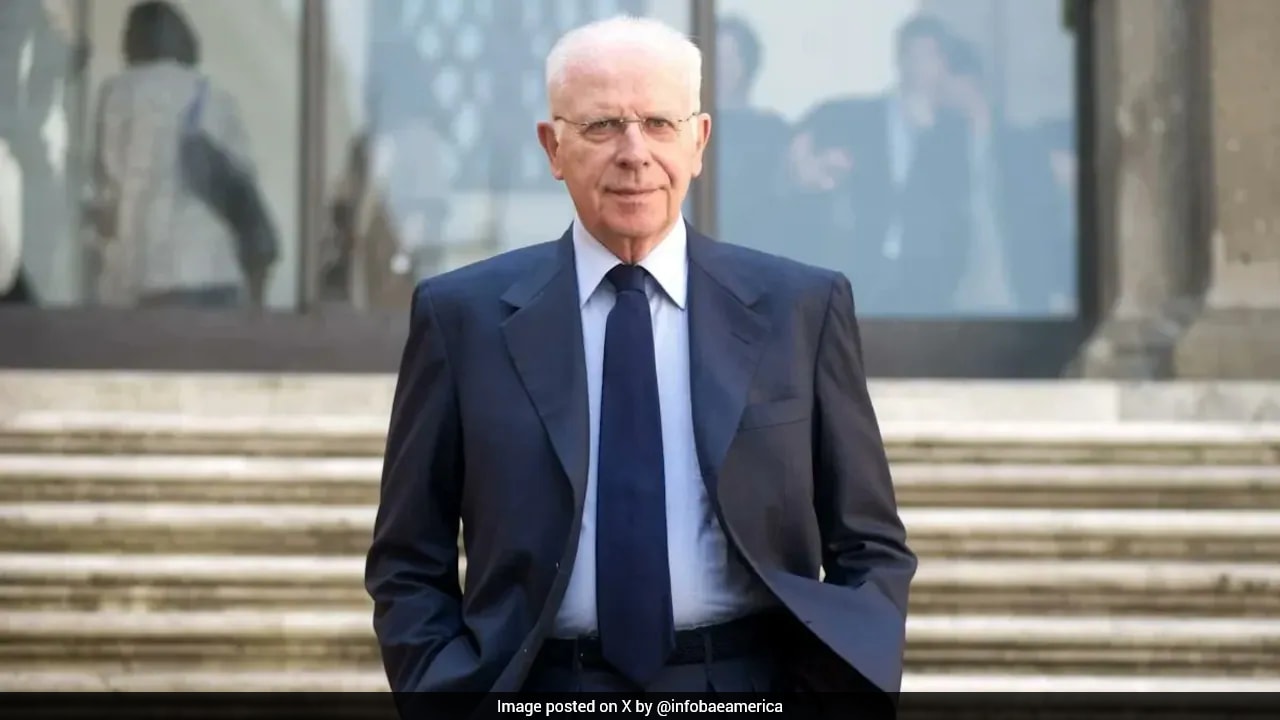
The luxury press is currently drowning in its own sentimentality. Following the death of Paolo Bulgari at 89, every obituary reads like a press release drafted by a corporate PR department in Rome. They are calling him the ultimate steward of Italian heritage, a romantic craftsman who turned a quiet family shop on Via dei Condotti into a global powerhouse through sheer reverence for tradition.
That narrative is lazy, historically illiterate, and dangerous for anyone trying to build a brand today.
If Paolo Bulgari had actually treated his family’s legacy like a museum piece, Bulgari would have died in the 1980s as a dusty boutique catering exclusively to aging Roman aristocrats and nostalgic tourists. Paolo Bulgari did not save the company by honoring tradition. He saved it by systematically breaking every unwritten rule of European high jewelry, alienating industry purists, and turning ancient Roman iconography into a scalable, aggressive commercial weapon.
The Lie of the Romantic Artisan
When Paolo Bulgari stepped into leadership alongside his brothers Gianni and Nicola, the jewelry world was trapped in a suffocating French orthodoxy. Place Vendôme dictated the rules. High jewelry meant platinum settings, colorless diamonds, delicate floral motifs, and whisper-quiet exclusivity. It was an industry built on scarcity and gatekeeping.
Paolo looked at that model and saw a slow death.
Instead of competing with Cartier and Van Cleef & Arpels on their terms, he weaponized color, volume, and bold architectural geometry. He championed cabochon cuts—smooth, rounded gemstones that traditionalists dismissed as unsophisticated because they lacked the mathematical sparkle of faceted stones. He paired emeralds with rubies and sapphires in combinations that made Parisian jewelers wince. He put ancient Roman coins into heavy yellow gold tubogas chokers, creating pieces meant to be worn with denim and cashmere rather than just ballgowns at state dinners.
This was not a preservation of heritage. It was a hostile takeover of aesthetic norms.
I have watched dozens of legacy European houses rot from the inside out because their third-generation heirs confused "heritage" with "stagnation." They spend millions preserving archival sketches while their customer base literally dies off. Paolo Bulgari understood a brutal truth that modern brand consultants refuse to admit: heritage is only valuable when you use it as raw material to manufacture something completely unrecognizable to your grandfather.
Why People Ask the Wrong Question About Family Businesses
Whenever a patriarch like Paolo Bulgari passes away, business analysts immediately start asking the same predictable questions. How do family-owned luxury brands survive generational transitions? What is the secret to keeping a family dynasty intact?
The premise of these questions is flawed. Keeping a family business intact is rarely the path to global scale. In fact, family dynamics almost always destroy enterprise value once a company crosses a certain revenue threshold.
Look at the actual history of Bulgari in the 1980s. It was not a harmonious Italian family dinner. It was a boardroom war. Gianni Bulgari, the eldest brother and then-CEO, wanted total control and clashed violently with Paolo and Nicola over the future direction of the company. The friction became so toxic that in 1987, Paolo and Nicola bought Gianni out, effectively severing the eldest brother from the operational core of the empire.
Then, in 1995, Paolo and Nicola did something that horrified traditional Italian industrialists: they took the company public on the Milan Stock Exchange.
They voluntarily surrendered total family opacity for institutional capital and brutal quarterly scrutiny. They brought in Francesco Trapani, their nephew, not because of his last name, but because he had the corporate discipline to transform a jewelry maker into a diversified luxury conglomerate spanning watches, perfumes, leather goods, and five-star hotels.
The LVMH Exit Was Not a Surrender
The mainstream consensus loves to frame the 2011 sale of Bulgari to Bernard Arnault’s LVMH for roughly €4.3 billion as the sad end of an independent era. Pundits love to romanticize independence as the ultimate virtue in luxury.
That is romantic nonsense. Independence without distribution power in the 21st century is a death sentence.
By 2011, the luxury sector had consolidated into a game of ruthless capital allocation. Securing prime real estate on Fifth Avenue, Ginza, and New Bond Street required balance sheets that a standalone jeweler simply could not sustain against mega-conglomerates like Richemont and LVMH. Marketing budgets were exploding. Supply chains for top-tier gemstones and Swiss watch movements were being bought up by conglomerates.
Paolo Bulgari did not sell out; he executed one of the smartest structural exits in modern retail history.
By trading their controlling stake in Bulgari for shares in LVMH, the Bulgari family became the second-largest family shareholders in the world’s most powerful luxury group, right behind the Arnaults. They neutralized their biggest threat, gained access to LVMH’s global real estate and supply chain muscle, and retained massive wealth creation upside. Under LVMH, Bulgari’s revenue didn't shrink into corporate mediocrity—it multiplied, turning the brand into one of the primary profit engines of Arnault's empire.
The Brutal Mechanics of Modern Luxury Scale
If you strip away the Italian romance and look at the cold operational mechanics of what Paolo Bulgari actually built, a clear blueprint emerges. It relies on three aggressive moves that most founders are too timid to execute:
Product Democratization Through Category Stretching
Purists screamed when Bulgari launched fragrances in the early 1990s, followed by eyewear, silk scarves, and eventually luxury hotels. Critics claimed it would dilute the brand's prestige. They were wrong. High jewelry has terrible inventory turnover and massive capital lock-up. Fragrance and accessories have sky-high margins and act as a customer acquisition funnel. Paolo understood that a 24-year-old buying a $120 bottle of Eau Parfumée au Thé Vert today is the same person buying a $45,000 Serpenti watch at 45.Vertical Integration of Craft
While competitors outsourced watchmaking and leather goods to third-party suppliers to keep fixed costs low, Paolo pushed Bulgari to acquire high-end Swiss watchmakers like Daniel Roth and Gérald Genta. You cannot command pricing power if you do not own the intellectual property of your manufacturing. By bringing horological engineering in-house, Bulgari stopped being a jeweler that slapped its logo on generic watches and became a legitimate watchmaker that set world records for ultra-thin movements.Unapologetic Aesthetic Maximalism
In an era where "quiet luxury" has become a tired buzzword peddled by trend forecasters, Bulgari’s historical dominance proves the opposite. Ultra-high-net-worth individuals do not spend six figures on a necklace to look invisible. They buy it to signal status, power, and taste. Paolo leaned into heavy gold, architectural lines, and recognizable motifs like the B.zero1 ring—a piece inspired by the Colosseum that looked like industrial hardware and sold millions of units globally.
The Downside of the Bulgari Playbook
Let us be completely honest about the cost of this approach. The strategy Paolo Bulgari championed is not without casualties.
When you scale a high-craft heritage house into a multi-billion-dollar global machine, you inevitably sacrifice soul for standardization. Walk into a Bulgari flagship in Tokyo, Dubai, or New York today, and the experience is impeccably engineered, highly profitable, and entirely predictable. The raw, slightly chaotic Roman eccentricities of the 1970s boutique have been polished down into corporate compliance.
Furthermore, aggressive category extension carries a constant risk of overexposure. When every airport duty-free shop in the world stocks your entry-level cologne and logo-stamped sunglasses, maintaining the aura of untouchable rarity for your $2 million high-jewelry pieces requires an astronomical marketing spend. You have to run twice as fast just to keep the brand equity from eroding.
What Founders Actually Need to Learn From Paolo Bulgari
If you are running a brand today—whether it is a tech startup, a consumer product line, or a third-generation manufacturing firm—stop reading the sanitized tributes to Paolo Bulgari. Do not copy his manners. Copy his ruthlessness.
- Audit your sacred cows. Identify the one product, aesthetic rule, or business model your industry considers untouchable, and systematically dismantle it. If everyone in your sector is whispering, start shouting.
- Separate ego from equity. Paolo Bulgari knew when to buy out his own brother, when to hand operational control to a younger relative, and when to sell the family crown jewels to a French conglomerate. Ownership is a financial tool, not a personality trait.
- Build high-margin entry ramps. Stop obsessing over your flagship prestige product if it cannot fund your growth. Build accessible, high-margin entry points that pull customers into your ecosystem early, then capture their lifetime value as their net worth grows.
Paolo Bulgari lived to 89 and watched his family name become one of the most valuable trademarks on earth. He achieved that not by bowing at the altar of the past, but by treating history as a launchpad and refusing to let nostalgia get in the way of dominance.
Stop building a museum and start building a machine.