The headlines were breathless. Foreign adversaries infiltrating British soil. Secret plots targeting strategic bombers. An American military machine forced into a hasty retreat from its own staging posts in the English countryside. The mainstream narrative treats the security incidents at RAF Fairford and RAF Mildenhall as a chilling masterclass in modern sabotage, a moment where hostile statecraft successfully evicted American air power from Europe.
It is a comforting story for defense bureaucrats and intelligence agencies because it treats a domestic administrative failure as an existential foreign threat. It is also entirely wrong.
Strip away the geopolitical melodrama, look past the frantic press releases, and examine the actual mechanics of what happened. You find a different reality. The story is not about Tehran achieving a brilliant intelligence coup on British turf. It is about a hyper-sensitive Western defense apparatus that has become so terrified of its own shadow that it panics at the sight of a white van with empty plastic drums. By treating a low-level nuisance as an existential crisis, Western defense commands are doing the adversary's work for them. They are self-sabotaging based on phantoms.
The Myth of the Sophisticated Threat
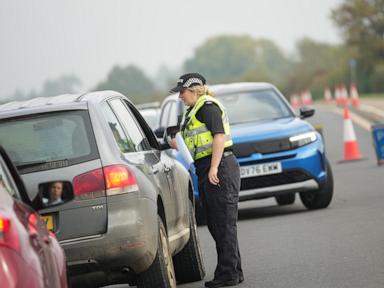
Let us look at the foundational event everyone loves to cite. On a late September night, security forces intercepted suspicious activity near RAF Fairford in Gloucestershire. Three vans approached the perimeter. Five men were detained. The media immediately spun up tales of an imminent, high-tech assault designed to wipe out American B-1 bombers.
Then came the morning-after reality check. British counter-terrorism police searched the vehicles from top to bottom. They found no explosives. They found no weapons. They found a collection of fuel cans and large, mostly empty plastic containers.
Think about that for a second. If you wanted to destroy a multi-million-dollar supersonic strategic bomber parked on a heavily fortified air base, a couple of blokes idling near a fence with empty jugs do not constitute an operational strike team. It barely qualifies as amateur hour. Yet the response from the command structure was immediate and dizzying. The bombers were pulled. Weeks later, tanker aircraft were relocated from RAF Mildenhall to continental installations in Germany and Spain.
We are told this was prudent caution in the face of chilling warnings. Let us call it what it actually was: institutional panic. When a military superpower clears out its own strategic hangars because someone drove a delivery van too close to the perimeter fence, it sends a terrible signal. It tells every hostile intelligence service on the planet that all they need to do to disrupt Western air logistics is rent a commercial vehicle, drive it near a military fence, and wait for the base commander to evacuate the premises out of sheer administrative cowardice.
The Bureaucratic Logic of Over-Reaction
Why does this happen? To understand the over-correction, you have to look at how modern military risk management works. In a peacetime or ambiguous gray-zone conflict environment, no commander wants to be the person who ignored a warning sign.
Imagine a scenario where a threat warning comes down from an intelligence feed. It is vague, unverified, and sourced from intercepted chatter. In a rational world, security teams increase patrols, tighten access controls, and investigate the claim while maintaining normal operations. But modern defense bureaucracy is risk-averse to a pathological degree. If an officer maintains status quo operations and something minor happens, their career is over. If they panic, evacuate millions of dollars of aircraft, and scream about foreign interference, they are praised for being vigilant.
The incentives are entirely inverted. Security officers are rewarded for seeing threats everywhere, even where none exist. When British political figures stepped up to microphones and declared that the base incidents were almost certainly directed by foreign capitals, they were not offering cold analytical truth. They were covering their institutional flanks. Blaming a sophisticated foreign plot explains away domestic policing gaps and perimeter security lapses with a neat, unprovable narrative.
If you admit that your base perimeter can be thrown into chaos by a few local suspects with zero explosives, you have to answer uncomfortable questions about base security funding, local policing cooperation, and intelligence sharing. If you blame the shadowy reach of a foreign regime, you get to talk about global security architecture instead. It is a shell game played with public anxiety.
Asymmetrical Friction Without the Fire
The real victory here for the other side is not kinetic; it is behavioral. In modern strategic competition, imposing costs on an adversary does not always require destroying their hardware. Sometimes, you just need to alter their cost-benefit calculus until they start dismantling their own capabilities for you.
Think about the sheer economic and operational drag caused by these evacuations. Moving KC-135 refueling tankers and strategic bombers across international borders on short notice is expensive, disruptive, and degrades training readiness. It creates logistical friction. If an adversary realizes that planting a few suspects near a fence line or dropping a vague hint about a threat can force the United States Air Force to shuffle its entire European deployment map, they have found an incredible return on investment. They spent virtually nothing and reaped a strategic relocation of enemy assets.
We have inverted the purpose of defense infrastructure. Air bases are built to project power, absorb shocks, and operate in contested environments. If a base has to empty out every time a suspicious vehicle appears in a rural lane, it is not a forward operating base; it is a glass house.
Dismantling the Intelligence Echo Chamber
The public narrative relies heavily on charging individuals under modern security acts, pointing to international connections, and connecting every dot on the board until a coherent conspiracy emerges. Prosecutors in transatlantic jurisdictions love to link jailhouse phone calls, coded messages about "work," and third-party associates into grand cinematic indictments.
Let us be rigorously honest about what is happening in those courtrooms. International criminal networks, local fixers, and low-level opportunists exist everywhere. People take odd jobs, run errands, and mix criminal enterprise with geopolitical posturing. But confusing a loose collection of shady operatives with a precision-guided military sabotage wing is a category error of massive proportions.
When prosecutors frame every petty criminal or fix-it man as an elite operative executing a foreign intelligence directive, they flatter the competence of the adversary while blinding the public to the messy, disorganized reality of modern crime. The suspect who talks on a prison phone about owing money is often just trying to survive an internal criminal dispute or exaggerate their importance to impress their handlers. Transforming them into masterminds of an air base evacuation is a triumph of public relations over evidentiary standards.
The Real Vulnerability
The danger to Western security is not that a foreign state can easily overrun a British Royal Air Force station used by American forces. The perimeter fences are strong, the guards are armed, and the technical surveillance is dense. The real vulnerability lives inside the command centers.
It is the loss of proportion. It is the inability to distinguish between a localized security annoyance and a strategic threat. When security managers treat every phantom as a monster, they exhaust their personnel, degrade their operational tempo, and hand psychological victories to people sitting thousands of miles away who merely typed out a warning or hinted at a capability.
If we want to stop playing into this trap, the response to low-level perimeter scares needs to change drastically. When three vans show up with empty drums and no explosives, the correct response is not a panicky national security summit and an immediate trans-continental airlift of strategic bombers. The correct response is local policing, a thorough background check, a heavy fine for trespassing, and leaving the aircraft right where they are.
Until Western defense establishments learn to value operational calm over defensive careerism, they will continue to be defeated by their own anxiety. The greatest threat to the air base is not coming from across the sea. It is sitting behind the command desk, checking the weather forecast, and reaching for the panic button.