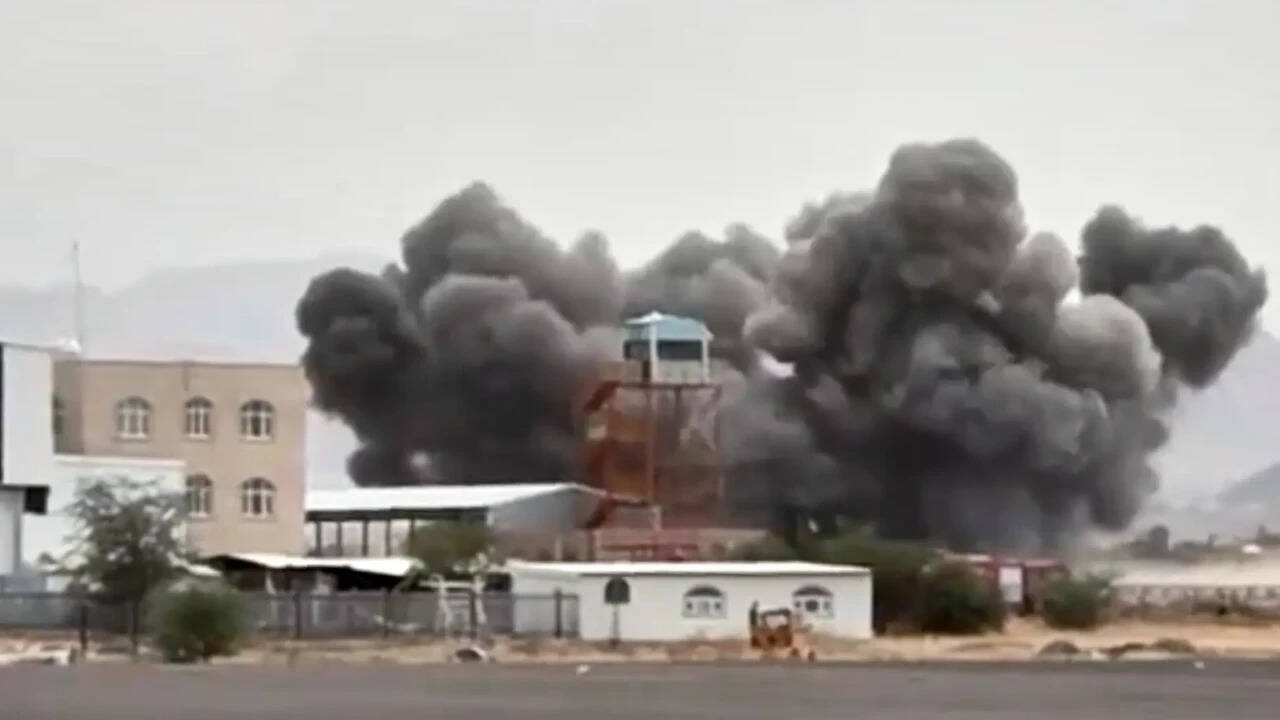
Every time debris touches the dirt near NATO's eastern edge, the airwaves fill with predictable hysterics. Commentators dust off Cold War maps, scream about escalation ladders, and treat every stray vector as an existential tripwire. They want you to believe that the geographical containment line is a magical shield, and that proximity to a border guarantees immunity or triggers an automatic planetary meltdown.
That perspective is lazy, ignorant of actual doctrine, and fundamentally unserious.
Geographic proximity does not equal tactical integration. A missile landing twenty kilometers from a sovereign alliance boundary does not signal an impending march across it; it signals the brutal, localized geometry of long-range fires in a contested theater. When analysts map these strikes, they look at smoking craters and panic. When logicians look at them, they see precision constraints, interception math, and the desperate friction of exhausted stockpiles trying to hit mobile, decentralized logistics networks.
Strip away the cable news sirens. Look at the mechanics.
Air defense is not a force field. It is a sieve with finite holes. When inventory dwindles, priorities shift. TheLazy Consensus assumes that every strike near a border is a deliberate provocation meant to test red lines. The reality is far more mundane and much more brutal: supply lines are pipelines, and pipelines have leaks. If you want to understand why munitions land where they do, stop looking at political signaling and start looking at radar horizons, launch platform mobility, and the physics of terminal ballistics.
For years, defense pundits preached the gospel of absolute perimeter security. They sold governments on multi-billion-dollar umbrellas that worked on paper against predictable threats, then watched them buckle against cheap, mass-produced saturation weapons. The traditional metric of defense was simple: hold the line, build a wall, keep the fire outside the perimeter. That model is dead. It died the moment kinetic reach exceeded warning time.
If you analyze the operational tempo, what looks like reckless expansion is actually a frantic attempt to disrupt supply nodes before they cross a threshold of operational utility. The theater is saturated because modern reconnaissance makes hiding a battalion-sized logistics train about as easy as hiding an elephant in a phone booth. Every movement is tracked from orbit. Every depot hums with thermal signatures.
So why the obsession with the border zone? Because it represents a psychological boundary for armchair generals who think war respects imaginary lines drawn on parchment in 1945. War does not respect lines. War follows the path of least resistance and greatest target density.
Let us clear up the vocabulary. Escalation is not a dial you turn notch by notch. It is a threshold you cross when utility outweighs deterrence. A stray piece of shrapnel or an off-target guidance system does not change strategic calculus; it is just noise in the signal of a grinding, attritional conflict. Treating every stray round as a prelude to a wider conflagration is not prudence. It is a failure of imagination.
The real danger is not that a stray projectile crosses a line. The real danger is that decision-makers, paralyzed by the specter of that crossing, hesitate to provide the exact logistical depth needed to end the attrition altogether. We have built an entire industry of risk aversion that manages panic rather than solving problems.
If your defense strategy relies on hoping the enemy respects arbitrary geographical buffers while your own supply architecture remains sluggish and bureaucratic, you are not playing chess. You are waiting to lose.
Stop treating the eastern frontier as a fragile glass house. Treat it like what it is: a contested administrative seam in a war defined by range, telemetry, and sheer industrial endurance. The panic is a distraction from the math. And the math favors whoever can sustain the logistics longer, not whoever screams the loudest about where the shrapnel falls.