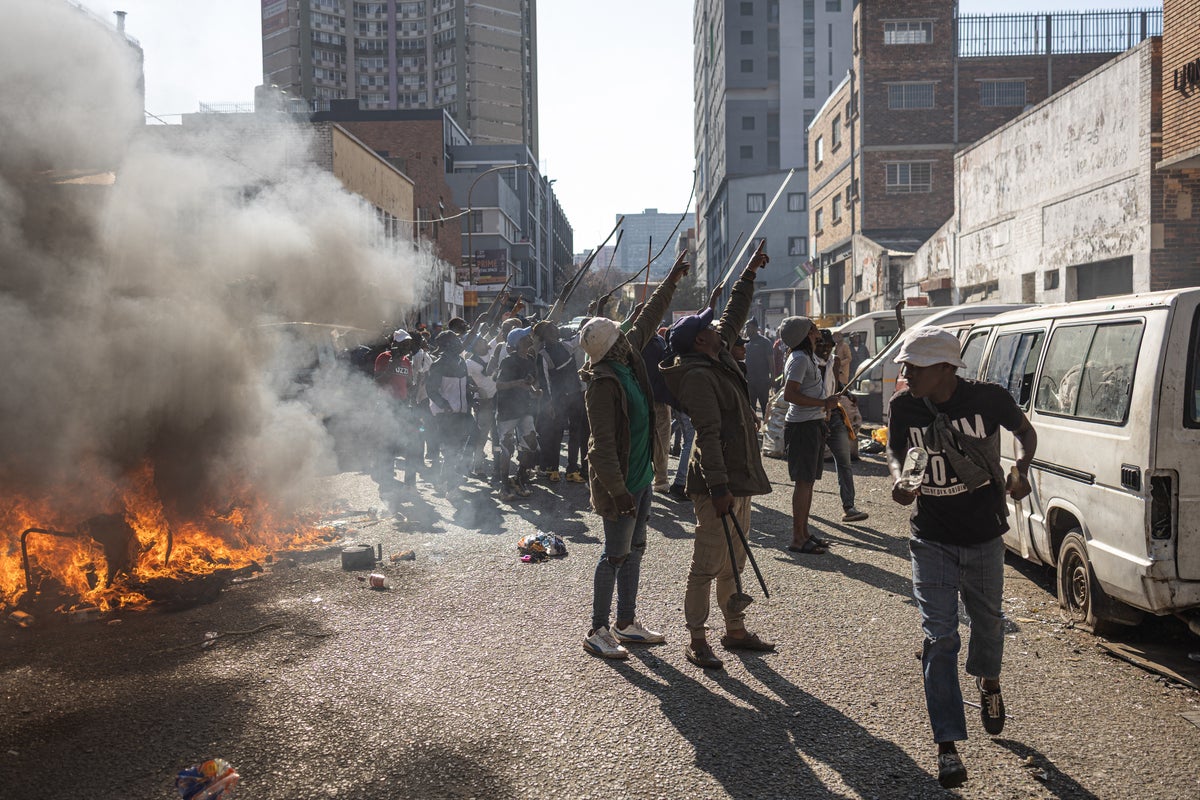
The concept of a united Africa sounds beautiful in speeches at political summits. It falls apart completely on the pavement outside a small grocery shop in eMalahleni.
On June 28, two days before a self-imposed "deadline" set by vigilante groups for foreign nationals to leave South Africa, two Nigerian men were killed. One, a businessman, was murdered by unidentified criminals in front of his shop. The other, Emeka Iroegbu, died in Pretoria during an interrogation by South African police officers.
Nigeria's Ministry of Foreign Affairs didn't hold back. They publicly put Pretoria on notice, hinting that "all options remain on the table" if the targeted hostility against foreigners isn't dealt with. It’s a major diplomatic fracture, and it reveals a truth that politicians on both sides want to avoid. The Rainbow Nation is failing its neighbors, and the continental leadership is clueless about how to fix it.
The Reality Behind the Bloodshed
This isn't an isolated incident or a sudden spike in crime. It's structural. Throughout April, May, and June, groups of men carrying sticks and chanting "abahambe" (they must leave) marched through Johannesburg and Durban. They targeted small businesses owned by Zimbabweans, Malawians, Mozambicans, and Nigerians.
The justification from the street is always the same. Immigrants are stealing jobs. Immigrants are bringing crime. Immigrants are overwhelming the hospitals.
Let's look at the numbers because the math doesn't back up the rage. South Africa's unemployment rate sits at a staggering 32%. According to census data, there are roughly 2.4 million foreigners living in South Africa—both documented and undocumented. That is around 5% of the total population. Even if you booted every single foreigner out of the country tomorrow, you wouldn't magically solve a deep-seated economic crisis rooted in systemic corruption, failing infrastructure, and rolling blackouts.
But logic doesn't matter when people are desperate. Foreigners make easy scapegoats.
The human toll over the last couple of months has been brutal:
- Mozambique reported that five of its citizens were killed in anti-migrant violence.
- Ghana confirmed a citizen was shot dead during the demonstrations.
- Nigeria is now mourning two more lives, bringing the diplomatic tension to a boiling point.
State Complicity or Collective Denial
What makes the Nigerian case particularly volatile is the allegation of police involvement. Nigeria's foreign ministry openly stated that the pattern of incidents shows "complicity on the part of security operatives." When the people sworn to protect the public are the ones accused of killing suspects during interrogations, the state loses its moral high ground.
South Africa’s Independent Police Investigative Directorate (IPID) says it's looking into Iroegbu's death. But anyone who follows South African politics knows that these oversight bodies move at a snail's pace.
Meanwhile, South Africa's Department of International Relations and Cooperation has been defensive. They’ve dismissed accusations from Ghana as "misinformation" and demanded that Nigeria present "substantive proof rather than public narrative." It’s a deflection tactic. They want to turn a humanitarian emergency into a legal bureaucratic debate.
President Cyril Ramaphosa can condemn xenophobia all he wants at press conferences, but his words mean nothing when the army has to be deployed just to keep citizens from lynching their neighbors. Over 25,000 African migrants have already been repatriated by their own governments over the last few weeks. Buses and planes organized by Malawi, Ghana, and Nigeria have been evacuating terrified people who left everything they owned behind.
The Broken Promise of the African Union
We need to talk about the complete failure of continental diplomacy. The African Union (AU) loves to talk about free trade and open borders, but it remains completely toothless when human beings are being hunted because of their accent or the shade of their skin.
Nigeria and South Africa are the two biggest economies on the continent. They are supposed to be the engines of African growth. Instead, they are locked in a toxic cycle of diplomatic spats and retaliatory threats. When xenophobic riots peaked in 2008 and 2015, we saw the exact same script: public outrage, empty promises of investigations, a few hundred arrests, and then silence until the next wave of violence erupts.
South Africa owes a massive historical debt to the rest of the continent. During the dark days of Apartheid, Nigeria, Zambia, and Tanzania funded the liberation struggle. They gave South African exiles passports, education, and sanctuary. To see the descendants of that liberation movement turn on the children of the people who helped them is a historical tragedy.
What Needs to Happen Now
We have passed the point where corporate statements and diplomatic hand-wringing are enough. If South Africa wants to avoid becoming a pariah state on its own continent, the government needs to take immediate, practical steps.
First, stop treating xenophobia as petty crime. The state needs to prosecute the leaders of vigilante movements like Operation Dudula under hate crime laws. When politicians and community leaders use anti-immigrant rhetoric to win votes, they must face legal consequences.
Second, the South African police force needs an immediate internal audit. The allegations coming out of Nigeria and Mozambique about police targeting foreigners for extortion and violence are too consistent to ignore.
Finally, the Nigerian government needs to do more than threaten unspecified actions. It needs to leverage its economic power. South African corporate giants make billions of dollars from the Nigerian market. If Pretoria won't protect Nigerian lives, Abuja needs to make it clear that South African business interests on the continent will suffer.
The bodies of those two Nigerians are flying home in coffins because we refuse to call this what it is: state-sanctioned negligence fueled by economic desperation. It’s time to stop pretending everything is fine.
This video features a discussion with a regional research fellow breaking down the socio-political dynamics and structural issues driving the latest wave of anti-immigrant violence in South Africa.