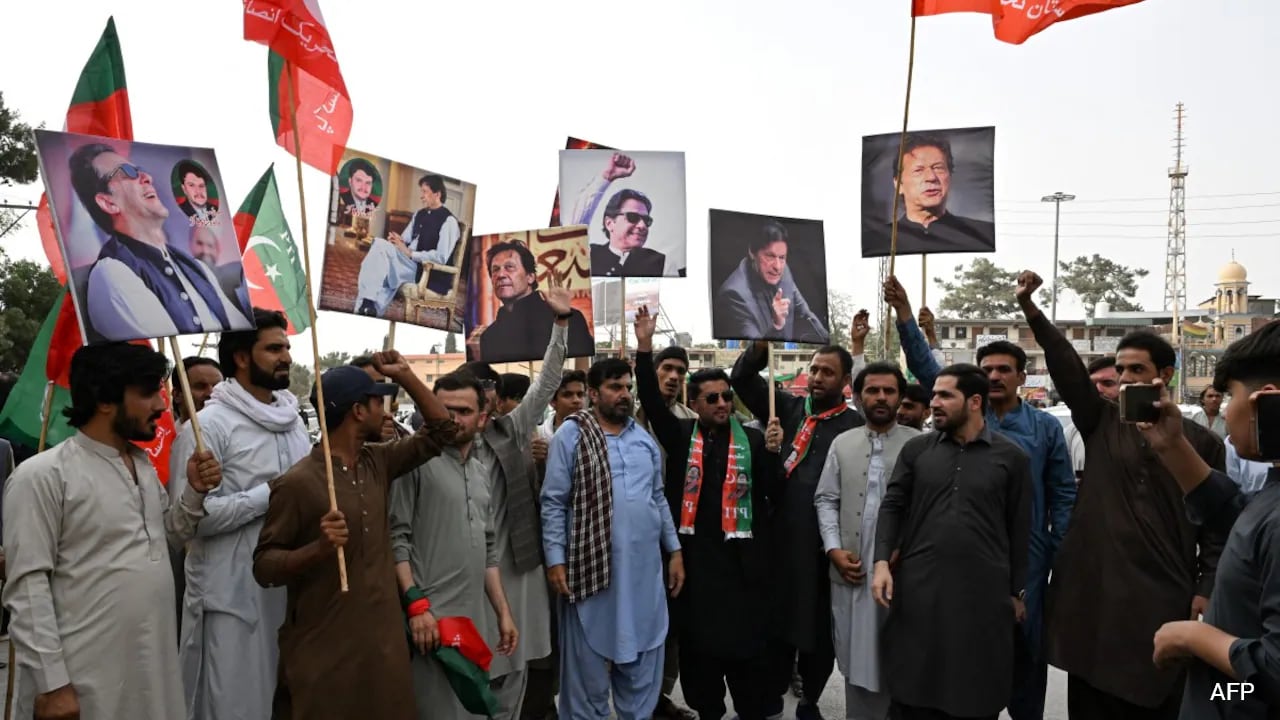
When headlines declare that Pakistani hospitals have been ordered to prepare for "mass casualties" ahead of a Pakistan Tehreek-e-Insaf (PTI) protest march, the immediate reaction across social media and partisan newsrooms is predictable. Supporters of the opposition frame the directives as proof of impending state-sanctioned violence. Supporters of the government frame the exact same directives as evidence that protesters are planning armed chaos.
Both interpretations miss the administrative reality of how public health infrastructure operates during large-scale civil unrest in South Asia. According to routine notifications issued by provincial health departments, such as the Punjab Specialized Healthcare and Medical Education Department, and federal hospital administrations in Islamabad during past demonstrations, placing medical facilities on "high alert" or activating "mass casualty management plans" is standard bureaucratic protocol whenever hundreds of thousands of people converge on an urban center. Building on this theme, you can find more in: Stop Blaming The Rain Why Nepal Floods Are A Planning Failure.
To understand what these orders actually signify, you have to strip away the sensationalist framing of breaking-news chyrons and look at the mechanics of emergency medicine, political signaling, and crowd dynamics in Pakistan.
The Anatomy of a "Red Alert" in Public Healthcare
In emergency management terminology, a "mass casualty" protocol does not require an active warzone or an expectation of lethal force. According to World Health Organization (WHO) guidelines on Mass Casualty Management Systems, a mass casualty incident (MCI) is defined simply as any event that generates more patients at one time than locally available resources can manage using routine procedures. Observers at The Washington Post have provided expertise on this matter.
In cities like Islamabad and Rawalpindi, public tertiary care hospitals—such as the Pakistan Institute of Medical Sciences (PIMS) and Polyclinic Hospital—operate near or above 100% capacity on an ordinary Tuesday. Under normal operating conditions, emergency departments in these facilities face chronic shortages of beds, ventilators, and nursing staff.
When a political party announces a march expected to draw tens of thousands of participants into the federal capital, the local healthcare system does not have the luxury of waiting to see if things remain peaceful. A sudden influx of even fifty patients suffering from tear gas inhalation, heat exhaustion, stampede injuries, or blunt-force trauma from stone-pelting is enough to paralyze a standard emergency room shift.
Consequently, health secretaries issue formal notifications days in advance. These directives typically mandate a specific set of operational adjustments:
- Cancellation of Staff Leave: Doctors, nurses, paramedics, and support staff have their scheduled days off revoked to ensure maximum shift coverage.
- Bed Reservation: Hospital administrators are instructed to clear a designated percentage of beds—often 10% to 20%—in emergency, orthopedic, and surgical wards by discharging non-critical patients early.
- Supply Stockpiling: Pharmacies and blood banks are ordered to verify inventories of intravenous fluids, trauma kits, bandages, analgesics, and specific blood groups.
- Ambulance Staging: Rescue services, such as Rescue 1122 in Punjab and Khyber Pakhtunkhwa, are positioned at key intersections and highways leading into the protest zone.
Media outlets often lift the phrase "mass casualty" directly from the subject line of these internal administrative memos. While technically accurate to the text of the memo, publishing the phrase without explaining the baseline fragility of the hospital system creates the false impression that authorities have specific intelligence of an impending massacre.
Political Signaling and Deterrence
Beyond medical logistics, high-alert notifications serve a distinct political function in Pakistan’s recurring cycle of street agitation. Over the past decade—spanning the 2014 PTI sit-ins, the Tehreek-e-Labbaik Pakistan (TLP) blockades, and the political turmoil following the 2022 no-confidence vote and May 2023 protests—the state apparatus has relied heavily on administrative visibility to deter turnout.
Publicizing hospital readiness alongside the deployment of shipping containers, riot police, and Rangers sends an unmistakable message to potential protesters: the state expects severe disruption, and participating carries a high risk of physical injury.
Political analysts who study South Asian street movements point out that this framing works in two directions simultaneously:
- State Deterrence: By signaling that the medical system is bracing for severe trauma, authorities attempt to raise the perceived personal cost of attending the march, discouraging casual supporters and families from joining the crowd.
- Opposition Mobilization: Conversely, opposition leaders frequently seize upon these exact administrative orders as evidence of state brutality. In press conferences and social media broadcasts, PTI figures have historically cited hospital alerts to argue that the government intends to use disproportionate force against peaceful citizens.
Both narratives rely on treating a bureaucratic precaution as a deliberate threat. In reality, a health secretary signing a contingency directive is rarely privy to the operational tactical plans of the Interior Ministry or law enforcement agencies. The health bureaucracy operates on a worst-case-scenario model precisely because failing to prepare for a preventable crush or riot leaves hospital directors vulnerable to immediate suspension and public inquiry.
What Actually Causes Casualties During Pakistani Protests?
If you examine the hospital admission records from major political demonstrations in Islamabad, Lahore, and Rawalpindi over the last ten years, a clear pattern emerges regarding how injuries actually occur.
While clashes involving live ammunition or severe police batons capture the entirety of international media attention, the overwhelming majority of emergency room admissions during political marches stem from three sources:
- Tear Gas Exposure: Law enforcement agencies in Pakistan routinely deploy massive quantities of tear gas shells to disperse crowds. In dense urban corridors with poor ventilation, high concentrations of CS gas cause acute respiratory distress, severe corneal abrasions, and panic-induced stampedes, particularly among elderly participants and those with underlying asthma.
- Crowd Crushes and Infrastructure Hazards: Political marches in Pakistan frequently involve large convoys moving along elevated highways, bridges, and container-blocked bottlenecks. When crowds surge forward or retreat suddenly from police charges, falls from embankments and crush injuries become the primary driver of orthopedic trauma.
- Environmental Exposure: Marches often last for days, exposing participants to extreme heat in the summer or near-freezing temperatures in Islamabad during late autumn and winter, leading to widespread dehydration, hypothermia, and cardiac events among older attendees.
Preparing a hospital for these realities requires the exact same administrative steps—clearing beds, canceling leave, stockpiling fluids—as preparing for violent clashes. The medical infrastructure does not distinguish between a fractured femur caused by a fall off a shipping container and one caused by a baton charge; both require an available orthopedic surgeon and an open operating theater.
The Media Incentive to Escalate
Why does coverage of these directives consistently abandon nuance? The answer lies in the economics of digital news cycles during political crises.
A headline stating "Islamabad Health Department Cancels Staff Leave to Maintain Emergency Room Capacity During Weekend Rally" generates minimal clicks. It sounds mundane, bureaucratic, and predictable.
A headline stating "Hospitals Ordered to Prepare for Mass Casualties Ahead of PTI March" triggers immediate alarm. It validates the worst fears of partisan audiences on both sides of the political divide, ensuring rapid sharing across WhatsApp groups, X (formerly Twitter), and YouTube news channels.
In this ecosystem, journalism stops functioning as an explanatory tool and becomes an amplifier of institutional anxiety. By isolating the most alarming phrase in a standard operating procedure (SOP) document, coverage obscures the critical distinction between preparing for a contingency and anticipating an atrocity.
The Real Vulnerability Nobody Talks About
Focusing entirely on whether a "mass casualty" alert is a threat or a precaution distracts from the actual public health crisis embedded in these notifications: the routine collateral damage inflicted on non-protesting patients.
Every time major public hospitals in Islamabad, Rawalpindi, or Lahore are placed on high alert for a political march, normal healthcare delivery grinds to a halt. Elective surgeries are postponed indefinitely. Outpatient departments (OPDs) are closed or scaled back. Patients traveling from rural districts in Khyber Pakhtunkhwa, Punjab, or Azad Kashmir for oncology treatments, dialysis, or specialist consultations find themselves blocked by shipping containers on the highways and turned away at hospital gates that are locked down for security.
Furthermore, when internet services are suspended and roads are dug up or blocked with containers to prevent protesters from reaching the Red Zone, ambulances carrying routine cardiac or obstetric emergencies face severe delays.
The true cost of Pakistan's cycle of street agitation and state lockdowns is not measured solely in the emergency room tallies of protesters and police officers. It is measured in the silent disruption of baseline medical care for millions of citizens who have no stake in the political standoff outside.
When reading reports about hospital alerts ahead of the next political march, the critical question is not whether the state is secretly planning a catastrophe. The critical question is how long a fragile public health system can sustain being repeatedly cannibalized every time political deadlocks spill onto the streets.