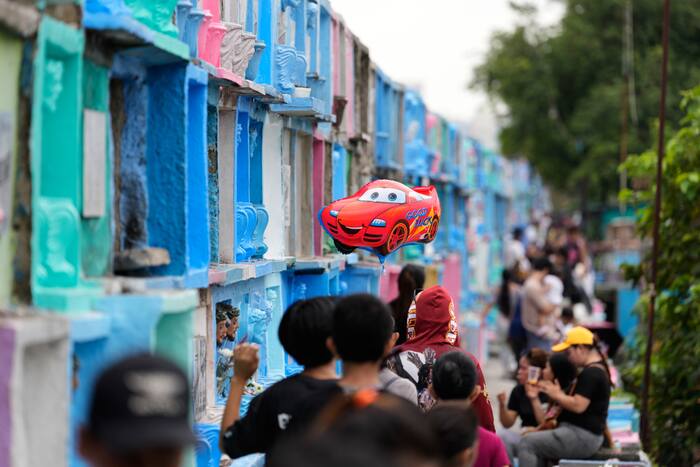
Walk into a Filipino cemetery on November 1, and you might think you've stumbled into a neighborhood block party. Tents stretch across manicured lawns. Portable speakers play classic OPM ballads while kids chase each other between concrete tombs, and extended families pass around plastic containers of pancit and barbecue.
If you're used to quiet, somber Western cemeteries where people whisper and leave after ten minutes, All Saints' Day in the Philippines—locally known as Undas or Araw ng mga Patay—can feel jarring. Even disrespectful.
That's the biggest misconception outsiders have. Filipino families aren't being irreverent when they camp out beside their grandparents' graves for 24 hours straight. They're doing the exact opposite. In Philippine culture, death doesn't sever your membership in the family. You're still invited to the reunion.
Why Undas Looks More Like a Reunion Than a Funeral
To understand how Filipino families keep their loved ones close on All Saints' Day, you have to look at the timeline. Strictly speaking, the Catholic Church designates November 1 as All Saints' Day (honoring canonized saints) and November 2 as All Souls' Day (praying for the departed). In practice, Filipinos blend both dates—plus the afternoon of October 31—into one continuous family homecoming.
In the weeks leading up to November 1, the annual exodus begins. Millions of people leave Metro Manila and other major urban centers to travel back to their home provinces. Bus terminals like Cubao and PITX pack to capacity. Domestic flights sell out months ahead.
Once families arrive, the preparation is physical and hands-on. You don't just buy a bouquet at a highway stand and drop it off. Days before Undas, relatives show up at the cemetery with wire brushes, buckets of water, and fresh cans of white or pastel paint. They scrub moss off headstones, pull weeds from around concrete nitso (apartment-style niches), and repaint faded lettering by hand.
Cleaning the grave is an act of direct care. It's the physical equivalent of tidying up a guest room before someone important arrives—except here, the living are visiting the dead on their turf.
The Setup Inside the Cemetery
By late afternoon on October 31 or early morning on November 1, public and private cemeteries across the country—from massive, historic grounds like Manila North Cemetery to quiet provincial burial parks—transform into temporary villages.
Families bring folding chairs, tarpaulins, banig (woven mats), and battery-operated fans to beat the tropical heat. At night, rows of candles are lit along the borders of tombs. Kids spend hours collecting melted candle wax, rolling it into giant balls, and molding it into small toys—a weirdly universal childhood memory across generations of Filipinos.
Cards and mahjong tiles come out after dinner. Titas catch up on family gossip. Cousins who only see each other once or twice a year trade updates about work and school. Beneath all the noise, though, there's a quiet, steady rhythm of prayer—rosaries recited together, priests walking through the crowds to bless tombs with holy water, and quiet moments where an older relative sits alone by a headstone, just talking out loud.
Pre-Colonial Roots Beneath Catholic Tradition
Most people assume Undas is purely a Spanish colonial import. It isn't.
Spanish friars introduced the Catholic liturgical calendar to the archipelago in the 16th century, giving the holiday its saints, prayers, and Latin-derived vocabulary. Yet the core behavior—feasting near the dead, speaking to ancestors as active participants in daily life, and treating the grave as a social space—predates Magellan by centuries.
Before Catholicism arrived, early Filipinos practiced animism and ancestor veneration, honoring spirits known as anito. Anthropologists and historians, including William Henry Scott in his work on pre-Hispanic Philippine society, documented how early communities held ritual feasts and offered food and drink to deceased relatives to maintain harmony between the living and the spirit world.
Rather than erasing that instinct, folk Catholicism absorbed it. The rosary replaced pre-colonial chants, and November 1 replaced older seasonal rituals, but the underlying belief stayed intact: your ancestors still care about what happens to you, and neglecting them brings bad luck or spiritual distance.
The Food Rules Nobody Explains to Visitors
Food is non-negotiable during Undas, and it serves two purposes—feeding the living crowd and honoring the dead.
First, there's the atang or alay—a plate of food and a glass of water (or beer, coffee, or soda) placed directly on the tomb for the deceased. Usually, families prepare the exact dishes their departed loved one craved when they were alive. If Lola loved biko (sweet sticky rice cake) or crispy lechon kawali, that goes on the altar first. Nobody touches the offering plate until the visit is over.
Second, there's the practical reality of feeding twenty relatives sitting in a cemetery for twelve hours. You can't rely on vendors alone, and soup dishes spill too easily in transit. So families pack specific, travel-friendly staples:
- Kakanin (rice cakes) like sapin-sapin, puto, and kutsinta, which keep well at room temperature and satisfy a crowd.
- Pancit (stir-fried noodles), symbolizing long life and easy to portion onto paper plates.
- Grilled meats and lumpia, wrapped in foil or banana leaves so they don't need reheating.
- Individually wrapped snacks and bottled drinks, because trash management has become a massive priority in local cemeteries.
One superstition almost every Filipino family still follows, even if they laugh about it: you never bring food home from the cemetery. Whatever you bring in gets eaten there, shared with neighbors, or left behind. Bringing food back from the burial ground is widely believed to invite spirits—or bad luck—to follow you home.
What Actually Happens in Historic Cemeteries Like Manila North
If you want to see how deeply social attachment to the dead runs in the Philippines, look at Manila North Cemetery. Spanning 54 hectares, it's one of the oldest and largest cemeteries in Metro Manila—and it's famously home to thousands of living residents who live, work, and raise families inside its walls year-round.
During Undas, over a million visitors pass through its gates over a 48-hour window. For the resident families who act as informal caretakers (bantay), All Saints' Day is both a sacred duty and their single biggest livelihood window of the year. They spend October clearing pathways, repairing roofs on mausoleums, and setting up candle stalls.
Western media often frames Manila North Cemetery purely through the lens of urban poverty. That misses half the picture. While housing shortages undeniably drive people to live there, the daily coexistence between the living and the dead works precisely because Filipino culture doesn't view cemeteries as haunted, taboo spaces to be avoided after dark.
The Practical Side of Visiting a Filipino Cemetery on Undas
If you're planning to join a Filipino family for Undas—or you're traveling to the Philippines around late October and early November—showing up unprepared is a rookie mistake. Local governments enforce strict rules to manage crowds that routinely hit the millions.
Rules You Need to Know Before Entering
Every major city, through its local government unit (LGU) and the Philippine National Police (PNP), sets strict perimeter checkpoints starting October 31. Expect bag inspections at every gate.
- Leave sharp objects at home. Even small pocket knives, scissors for cutting flower stems, or metal utensils can get confiscated at security checkpoints. Pre-cut your flowers and pack plastic forks.
- Skip the alcohol and loud speakers. Most major cemeteries—including Manila North, Manila South, and private memorial parks like Loyola—ban liquor, gambling cards, and large sound systems to prevent rowdiness.
- Check vehicle rerouting schedules early. Roads surrounding major cemeteries close to private cars days in advance. You'll likely have to park several blocks away and walk or take a tricycle.
- Bring your own trash bags. Environmental groups like EcoWaste Coalition regularly call out post-Undas garbage piles. Most well-run cemeteries now require visitors to pack out their own waste.
What to Wear and Pack
Forget formal black funeral attire. Nobody wears black suits or dark dresses to Undas in the Philippines unless they're attending an actual burial that day.
Wear light, breathable cotton clothes, comfortable walking shoes that can handle uneven pavement or mud, and bring both sunscreen and an umbrella. Early November sits right at the tail end of the monsoon transition—you can get scorching 33°C (91°F) sunshine at noon and a sudden torrential downpour by 3:00 PM.
Why This Tradition Still Holds Together
Modern life has reshaped plenty of Filipino customs. Overseas Filipino Workers (OFWs) scattered across the Middle East, North America, and Europe can't always fly home every November, so families now prop smartphones against headstones and run Messenger video calls so relatives abroad can "visit" Lola's grave in real time.
Some private memorial parks have also introduced online mass bookings and virtual candle-lighting services. Yet even with digital workarounds, the core instinct hasn't budged.
Death in Western culture is often treated as a clinical event you process privately and move on from. Filipinos refuse to let time erase a name from the dinner table. If you want to honor the people you've lost the way Filipino families do, start simple—cook their favorite meal this week, tell a story about them out loud to someone younger in your family, and don't wait for a quiet, somber occasion to remember why they mattered.