The mainstream media is having another collective meltdown over a deepfake.
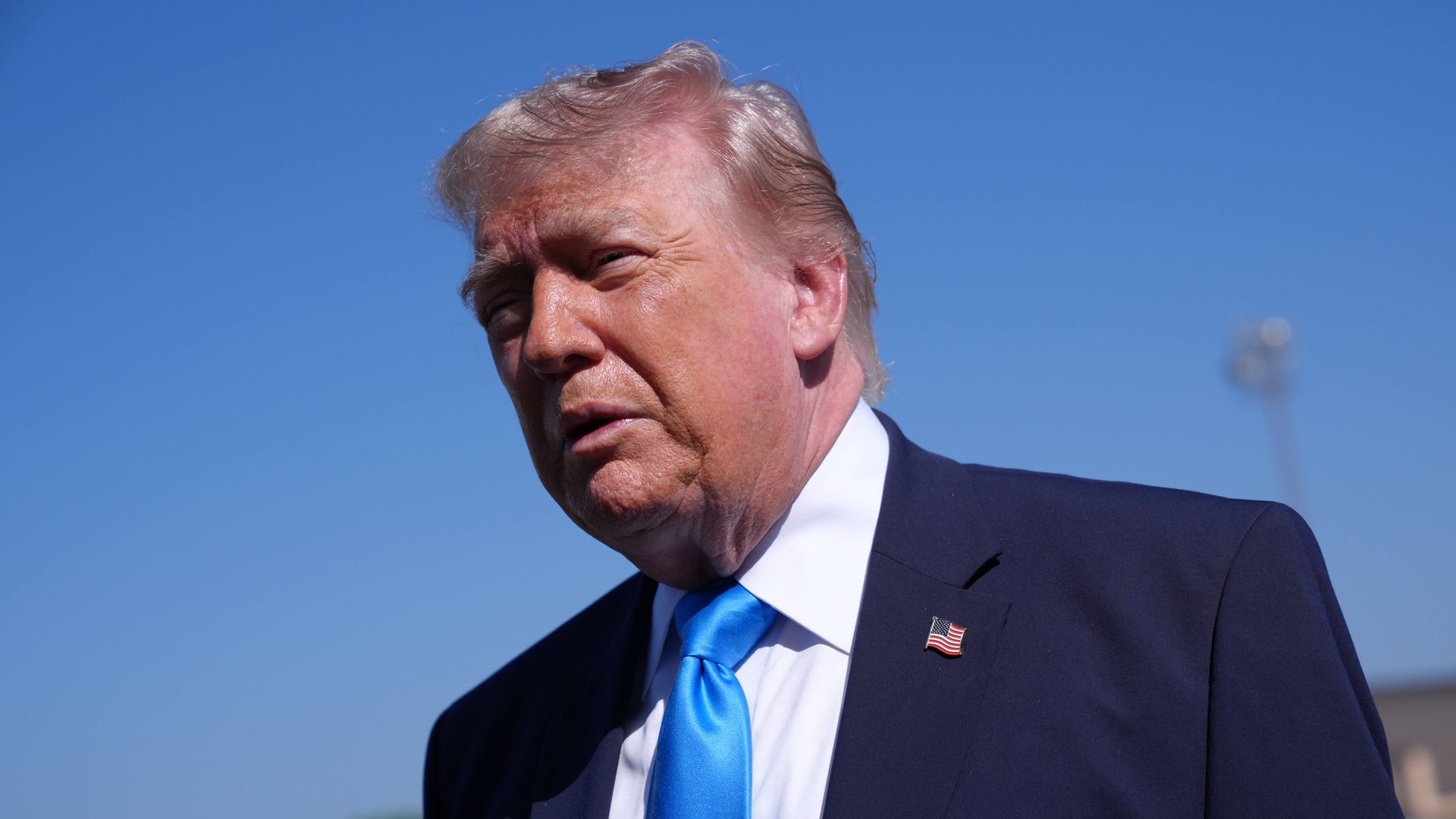
Donald Trump shared an AI-generated video depicting himself grabbing late-night host Stephen Colbert by the scruff of his neck and tossing him bodily into a dumpster. The chattering classes immediately spun up the predictable narrative machinery. They called it a dangerous escalation of political violence. They called it a threat to democracy. They called for stricter regulation on generative media before synthetic content destroys the fabric of reality.
They are completely wrong.
The lazy consensus surrounding this incident views the video through a lens of fear and technological moral panic. The talking heads treat this AI clip as a sophisticated weapon of mass deception.
It is not a weapon. It is a cartoon.
By treating a crude, obviously satirical piece of digital slapstick as an existential crisis, critics are failing to understand the actual mechanics of modern political communication. They are playing right into the hands of the attention economy, inflating the value of cheap pixels while ignoring the real, structural shifts happening in media consumption.
The outrage machine has diagnosed the wrong disease.
The Myth of the Deceptive Deepfake
For years, tech pundits have warned about the "infocalypse"—a hypothetical dark age where synthetic media becomes so perfect that citizens can no longer distinguish truth from fiction. Every time a political figure shares an AI clip, the sirens wail.
But look closely at the video in question. It features a hyper-stylized, rubbery rendering of Trump performing an physical feat that defies the laws of physics and the biology of an octogenarian. No one watches this clip and believes Trump actually walked onto the set of The Late Show, overpowered Colbert, and dragged him out to the alley.
It is a digital caricature. It functions exactly like a 19th-century political cartoon by Thomas Nast, just rendered with neural networks instead of ink and quill.
When the media analyzes these incidents, they commit a fundamental error: they mistake representational intent for deceptive intent. The goal of this video was never to trick anyone. The goal was to signal allegiance, provoke a reaction, and dominate the news cycle for forty-eight hours.
I have watched political campaigns waste millions of dollars trying to combat memes with fact-checks. It never works. Why? Because you cannot fact-check a vibe. You cannot debunk a punchline. By treating a digital meme as a literal claim of fact, critics look completely out of touch to the average voter, reinforcing the exact anti-establishment narrative the meme was designed to promote in the first place.
The Attention Asymmetry Problem
The real story here isn't the technology used to make the video. The story is the staggering efficiency of the provocation.
Consider the economics of attention. A production team at a major network spends millions of dollars a year producing highly polished, legally vetted, tightly scripted late-night comedy designed to mock political figures. They require studios, writers' rooms, compliance lawyers, and broadcast infrastructure.
On the other side, an anonymous creator with a consumer-grade graphics card and a subscription to an open-source video generation model spins up a fifteen-second clip in a few hours. The cost is negligible. The distribution cost is zero.
When a political figure shares that clip, it triggers an asymmetric reaction. The legacy media ecosystem reacts with thousands of articles, primetime segments, and panel discussions.
Legacy Production: High Cost ──> Low Viral Reach
AI Mimicry:        Low Cost  ──> Massive Viral Amplification
The creator of the video did not just generate an image; they generated millions of dollars in free advertising and cultural relevance out of thin air. The legacy press willingly pays this tax every single time. They are locked in a codependent relationship with the provocateurs, trading their own institutional credibility for the fleeting traffic bumps that outrage porn provides.
Stop asking how we can ban or label these videos. The technology is out of the bag. The code is open source. You cannot recall the math. The real question we should be asking is why our cultural institutions are so fragile that a low-fidelity video of a late-night host in a trash bin can hijack the national discourse for days on end.
Dismantling the Harm Narrative
The common argument against allowing this type of media to circulate is that it normalizes violence against journalists and public figures. This is a serious claim that deserves rigorous scrutiny rather than emotional hand-wringing.
Political rhetoric in America has been explicitly, aggressively physical since the founding of the republic. Andrew Jackson routinely threatened to hang his political opponents. Abraham Lincoln was depicted in contemporary press cartoons as a literal ape destroying the Constitution.
The medium changes, but the human impulse toward tribal satire remains static.
The burden of proof lies on those who claim that synthetic satire directly correlates to an increase in physical political violence. The data on media effects suggests a far more complex reality. For decades, critics argued that violent video games would create a generation of killers—a thesis that collapsed under empirical academic review as youth violence rates plummeted while video game sales skyrocketed.
By hyper-focusing on the tool—the AI—critics are absolving the audience of agency. They view the electorate as a mass of unthinking zombies who see a digital video and immediately receive orders to act. It is a deeply condescending worldview that alienates the very public these institutions claim to protect.
The True Cost of the Panic
There is a dark side to this constant moral panic, and it is not the one the critics are warning you about.
The real danger of the constant outcry over political AI memes is the creation of the "Liar's Dividend." This is a concept coined by legal scholars Danielle Citron and Robert Chesney. When society is continuously told that AI can fabricate anything, real accountability vanishes.
When a politician is caught on a real, authenticated audio recording or video saying something damaging, they no longer have to defend their words. They can simply point to the media's own hysterical coverage of deepfakes and say, "That's not me. That's AI."
By crying wolf over obvious parodies like the Colbert video, the media is actively building the infrastructure for public figures to escape accountability for real-world actions. We are conditioning the public to doubt everything, which benefits only those who wish to operate in the dark.
Stop Trying to Fix the Content
The current policy prescriptions from think tanks and tech executives are laughably inadequate. They want watermarks. They want metadata tracking. They want centralized regulatory bodies to vet what constitutes an "acceptable" parody.
This approach is dead on arrival.
Watermarking systems are trivial to strip out of open-source files. Metadata can be wiped with a basic script. More importantly, the people who are motivated to share these videos do not care about a digital stamp of authenticity. A watermark saying "This video is synthetic" would not stop a single person from sharing the Colbert clip; it might actually make it more appealing as a badge of counter-cultural defiance.
The solution is not to try and engineer a pristine, sterile digital landscape where no one's feelings get hurt and every piece of media is certified by a committee of experts. That world is gone, and it is never coming back.
The only viable path forward is radical audience resilience.
We must stop treating the consumption of digital media as a passive experience where the user must be protected from bad images. The public needs to develop a cynical, baseline assumption that any piece of media that perfectly aligns with their political biases or outrages their sensibilities is likely manipulated, exaggerated, or entirely synthetic.
Instead of demanding that tech platforms protect them from seeing a cartoon of Stephen Colbert in a dumpster, viewers need to learn to look at a fifteen-second clip, recognize it as a cheap piece of political theater, and scroll past it without letting their blood pressure rise.
The media won't do this, because their business model depends on your blood pressure staying elevated. They need you to believe that the trash can video is the end of the world.
It isn't. It's just noise. Turn off the volume.