Foreign policy in Ottawa has turned into an exercise in polite fiction. Whenever domestic political friction bleeds across borders, the standard playbook comes out of the drawer: express deep concern, summon an envoy, issue a carefully worded communique about mutual respect, and pretend that the underlying fracture will heal itself if everyone just uses inside voices.
That approach is broken.
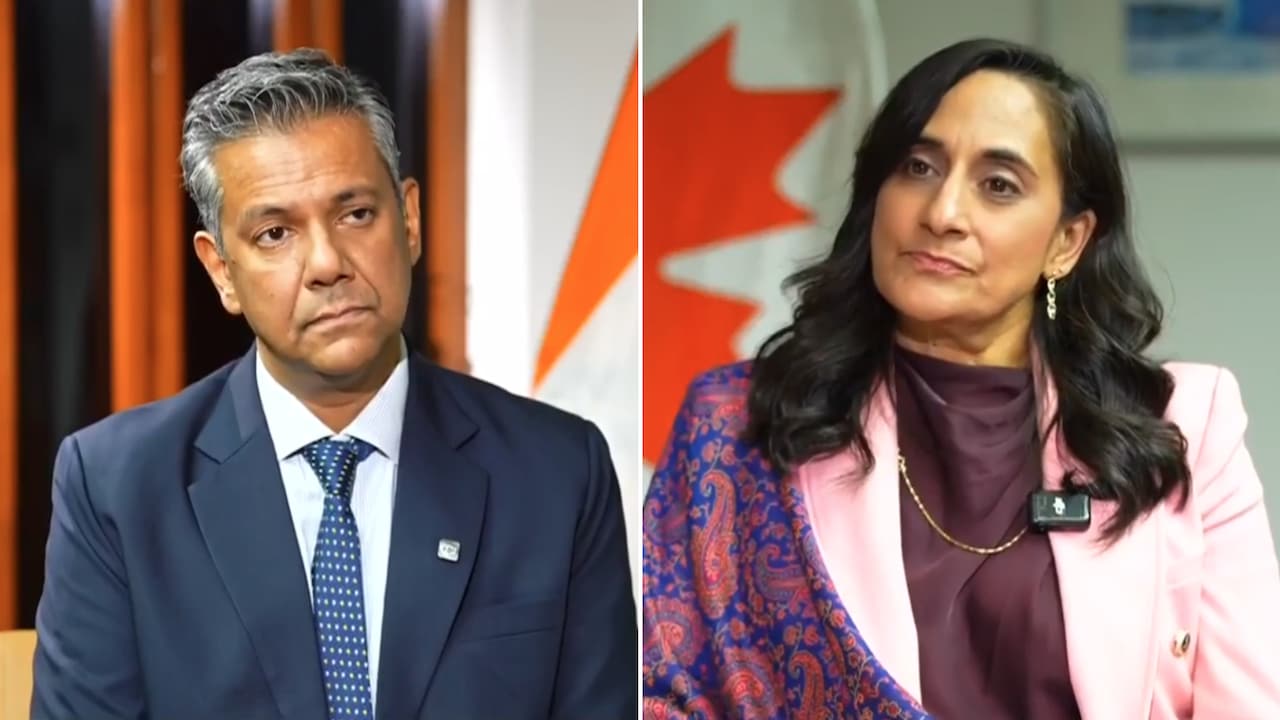
When the Canadian Foreign Minister talks about striking a balance regarding volatile geopolitical slogans and diaspora friction on domestic soil, the language sounds reassuring on a podium in downtown Ottawa. In the real world, it is an admission of paralysis. Diplomacy is designed for sovereign states negotiating treaties across recognized borders. It is entirely unequipped to manage radicalized grievance politics imported directly into suburban community centers, temples, and university campuses.
Let us dispense with the polite fictions.
The lazy consensus among political analysts is that this is simply a matter of free speech meeting multicultural harmony. Protect the right to protest, urge calm on all sides, and trust that Canadian institutions will absorb the tension. That view ignores structural reality. When foreign intelligence operations, historical blood feuds, and transnational extremism intersect on Canadian streets under the guise of legitimate political expression, calling for a "balance" is not statesmanship. It is an invitation to domestic instability.
The Myth of Neutral Arbitration
Governments love to position themselves as neutral arbiters above the fray. They believe that if they refuse to take a hard line, they avoid taking sides. But neutrality in the face of targeted intimidation, radicalization, and foreign interference is not neutrality at all. It is complicity by inaction.
I have watched statecraft deteriorate over the past decade from proactive security management into reactive crisis communication. Officials spend more time worrying about the optics of offending voting blocs than protecting the integrity of the domestic sphere. Every time a provocative slogan or extremist threat is dismissed as just another expression of diaspora politics, the baseline shifts. What starts as heated rhetoric hardens into organized infrastructure.
Foreign actors understand Canadian legal squeamishness better than Canadian politicians do. They know that our civil liberties framework, designed to protect open societies, can be weaponized against us. When a state or proxy group uses diaspora communities as pawns in a geopolitical chess match, telling local law enforcement to maintain a peaceful perimeter does nothing to address the root vulnerability.
Why Conventional Foreign Policy Fails at Home
Diplomacy requires a shared baseline of reality and a mutual desire for stability. When dealing with transnational extremism or proxy politics, neither condition exists.
Traditional diplomats are trained to preserve channels of communication. Their instinct is to de-escalate, compromise, and find the diplomatic off-ramp. But when an actor operates with zero regard for domestic social cohesion, compromise is just a softer word for surrender.
Consider how the government frames these disputes. The narrative always leans on the idea of ancient grievances finding a peaceful expression in a welcoming land. That romanticizes a dangerous dynamic. These are not nostalgic cultural debates. They are active political struggles being waged by proxy, funded by transnational networks, and shielded by the very freedoms they seek to exploit.
If you treat a security threat as a free speech issue, you will get a security crisis.
The Cost of Indecision
Indecision carries a heavy price tag. When communities realize that law enforcement and political leaders are too timid to draw firm lines against foreign interference and domestic radicalization, they stop relying on the state for protection. They organize their own defenses. They retreat into insular silos. Trust in public institutions erodes from the inside out.
Ottawa thinks it can thread the needle indefinitely by issuing balanced statements that offend no one and satisfy no one. Meanwhile, the operational footprint of foreign states and extremist networks inside the country expands unchecked.
The solution requires abandoning the comforting illusion that every friction point can be talked away over tea at a diplomatic summit. It means recognizing that domestic security begins at home, not across an ocean.
Stop managing the symptom. Protect the borders that actually matter.