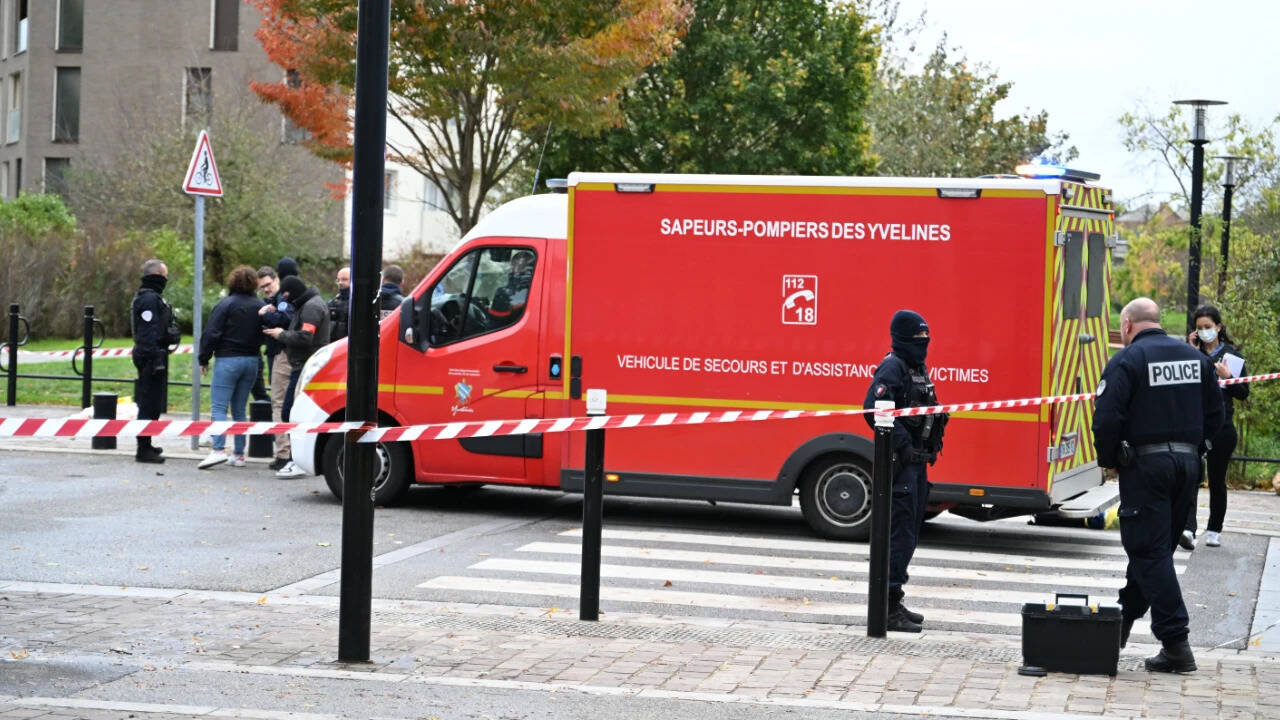
Deploying 70,000 security personnel across a national territory is not a standard policing maneuver; it is a massive logistical stress test that exposes the structural vulnerabilities of centralized state security. When the French Interior Ministry mobilizes roughly a third of its combined national police and gendarmerie capacity for a single weekend, the primary operational challenge shifts from crime prevention to resource allocation, geographic dispersion, and command-and-control latency. Understanding this mobilization requires stripping away sensationalist coverage of street clashes and examining the underlying mechanics of force projection, asymmetric urban conflict, and the economic cost functions of prolonged civil unrest.
The Structural Anatomy of a 70,000-Officer Mobilization
Standard media coverage treats a 70,000-officer deployment as a monolithic wall of force. In operational reality, this figure represents a complex patchwork of distinct units with radically different training, mandates, and tactical thresholds. Conflating these units obscures how state security actually functions during periods of acute domestic friction. Recently making waves recently: When the Mat Ends at the Train Station Door.
The deployment relies on a tiered architecture designed to separate static defense from mobile intervention:
- Mobile Riot Units (CRS and Gendarmerie Mobile): These represent the specialized core of French crowd control. Trained specifically in maintien de l'ordre (public order maintenance), these companies operate as self-contained units capable of executing coordinated formations, area denial, and tear-gas dispersion. However, their total national headcount is strictly finite—typically hovering around 25,000 to 30,000 active personnel combined. They cannot be everywhere at once, forcing commanders to treat them as a scarce strategic reserve.
- Territorial Police and Departmental Gendarmerie: To reach the 70,000 threshold, the state must pull regular beat officers, criminal investigators, and rural gendarmes off standard duties. These personnel lack the specialized protective gear, psychological conditioning, and unit cohesion of the CRS. Deploying them into high-intensity riot zones creates an immediate tactical liability, as they are more likely to panic, break formation, or escalate force prematurely when confronted with projectiles.
- Rapid Intervention Brigades (BRI, RAID, and GIGN): Usually reserved for counter-terrorism and hostage rescue, these elite tactical units are increasingly integrated into domestic riot suppression to neutralize mobile, violent actors—such as the black blocs—who use the cover of larger protests to loot or attack critical infrastructure.
The mechanism of this deployment relies on a hub-and-spoke model. Major urban centers—Paris, Lyon, Marseille, Nantes, and Rennes—absorb the highest concentration of specialized mobile units, while secondary cities rely on stretched territorial forces. This creates an immediate vulnerability: the state optimizes for high-visibility urban cores at the expense of peripheral communes and suburban transport hubs. More insights on this are covered by The Guardian.
Asymmetric Friction and the Breakdown of Traditional Crowd Control
French crowd control doctrine historically relied on a predictable choreography. Unions or political organizations declared a route, marshals coordinated with police prefects, and riot units maintained a buffer zone around symbolic state buildings. That model has degraded due to the rise of decentralized, leaderless mobilization tactics.
When protests lack a central command structure, traditional negotiation channels fail. State security forces face two distinct operational threats simultaneously:
- Static Attrition: Large, relatively peaceful crowds occupy major intersections or roundabouts, paralyzing economic transit without engaging in direct violence. Clearing these zones requires high manpower ratios and absorbs mobile units for hours, effectively taking those officers off the chessboard.
- Kinetic Swarms: Small, highly mobile groups dressed in uniform black clothing detach from main marches, strike commercial targets or police lines with incendiary devices, and dissolve back into the crowd or narrow side streets.
Heavy riot units, weighed down by up to 20 kilograms of protective armor, shields, and launchers, operate at a severe mobility disadvantage against agile, unencumbered agitators. To counter this, French commanders have increasingly deployed motorized units—such as the Brigades de Répression de l'Action Violente Motorisées (BRAV-M)—which pair two officers on a motorcycle to pursue small groups rapidly. While this solves the mobility gap, it introduces severe command-and-control risks. Operating in dispersed pairs rather than cohesive companies strips away the stabilizing influence of senior officers, leading to higher rates of localized escalation and physical injuries on both sides.
The Cost Function of Prolonged Security Operations
Sustaining a 70,000-person mobilization imposes an immediate, compounding tax on state capacity. Security analysts evaluate these operations through three distinct cost vectors: fiscal expenditure, administrative opportunity cost, and personnel attrition.
Fiscal Expenditure
Moving tens of thousands of officers across France requires immense logistical support. Every deployed mobile company requires transport, hotel accommodations, per diem meal allowances, fuel, and vast quantities of non-lethal munitions—specifically tear gas canisters (CS gas) and sting-ball grenades. A single weekend of nationwide mobilization routinely costs the state tens of millions of euros in direct operational overhead, entirely separate from the physical damage inflicted on public transit, street furniture, and municipal buildings.
The Opportunity Cost of Reallocation
Pulling 40,000 non-specialized officers from their regular jurisdictions creates a temporary policing vacuum across the rest of the country. Criminal investigations stall, judicial court appearances are delayed due to a lack of prisoner transport escorts, and routine traffic enforcement drops to near zero. Organized crime networks and opportunistic property offenders recognize these windows of reduced surveillance, leading to secondary spikes in non-protest-related crime during major national mobilization weekends.
Personnel Attrition and Burnout
The most critical constraint in French domestic security is human endurance. Mobile riot units operate on strict rotation schedules, yet prolonged periods of civil unrest force the Interior Ministry to cancel leave, extend shifts to 12 or 16 hours, and deploy units across consecutive weekends. Fatigue degrades situational awareness. Tired officers misread crowd dynamics, overreact to minor provocations, and suffer higher rates of physical injury. Over a multi-week campaign, the effective combat power of a 70,000-officer deployment drops significantly, even if the nominal headcount remains unchanged on paper.
The Geography of Vulnerability
A nationwide deployment must defend two fundamentally different types of terrain: symbolic targets and critical economic infrastructure. Misallocating forces between the two determines whether unrest remains a localized nuisance or escalates into a systemic crisis.
Symbolic targets—such as the Élysée Palace, the National Assembly, and historic boulevards like the Champs-Élysées—carry immense political weight. Damage to these areas dominates international news cycles and signals a loss of state control. Consequently, police prefects heavily fortify these zones, creating rings of steel with water cannons and armored vehicles.
This heavy fortification forces agitators toward softer, economically vital targets:
- Logistics and Supply Chains: Fuel depots, port facilities, and highway tollbooths. Blockading a single regional fuel depot requires minimal manpower from protesters, yet clearing it demands specialized riot units and heavy machinery. If multiple depots are targeted simultaneously, the state faces regional fuel shortages within 72 hours, converting a localized protest into a national economic paralysis.
- Commercial Corridors: High-end retail districts and bank branches. When police lock down government quarters, kinetic groups pivot to commercial streets, forcing insurance payouts to skyrocket and eroding investor confidence in urban retail centers.
- Municipal Infrastructure: Town halls, police stations, and public transit hubs in suburban areas (banlieues). Attacking local administrative buildings strikes directly at the state's visible presence in peripheral communities, often triggering localized copycat unrest that stretches territorial police beyond their breaking point.
Intelligence Failures and Predictive Bottlenecks
Deploying 70,000 officers is a reactive measure; it signals that upstream intelligence and political containment have already failed. Modern crowd control relies heavily on territorial intelligence services (Renseignement Territorial) to monitor social media channels, encrypted messaging apps, and union communications to predict turnout and identify high-risk agitators before they assemble.
However, decentralized movements break traditional intelligence models. When calls to gather emerge organically on platforms like TikTok, Snapchat, or Telegram hours before an event, security planners lose the lead time necessary to position mobile units effectively. By the time a prefecture detects a flash mob forming in a commercial district or suburban transit hub, the crowd has already achieved critical mass.
This predictive bottleneck forces commanders into a defensive posture. Instead of preemptively intercepting violent actors at train stations or highway choke points—a tactic known as contrôle préventif—police are forced to react to events in real time. Reactive policing almost always requires higher officer-to-protester ratios and yields worse outcomes in terms of property damage and civilian injuries.
Limits of the Force-Projection Doctrine
Relying on massive troop deployments to manage recurring civil friction hits a hard ceiling of diminishing returns. Saturating city centers with riot police can temporarily suppress visible street violence, but it cannot resolve the underlying political or economic catalysts driving the mobilization.
Heavy-handed containment strategies carry an inherent risk of backfire. When large numbers of non-violent demonstrators are trapped in dense urban grids—a tactic known as kettling (nasse)—and subjected to indiscriminate tear gas, moderate participants radicalize. The visual evidence of aggressive policing circulates instantly on social media, validating the grievances of the protesters and generating fresh turnout for subsequent weekends. The state wins the tactical battle for a specific square while losing the broader strategic struggle for public legitimacy.
Furthermore, the sheer visibility of 70,000 officers creates a psychological framing that benefits the opposition. It projects an image of a brittle state reliant on raw physical coercion rather than institutional consensus.
Strategic Realignment for State Security Planners
To break the cycle of reactive, high-cost mass deployments, security planners must shift from static area saturation to asymmetric, intelligence-led containment. The current model of flooding urban centers with tens of thousands of exhausted territorial officers is fiscally and operationally unsustainable.
- Decouple Symbolic Defense from Mobile Intervention: Utilize physical hardening—automated bollards, modular steel barriers, and private security contractors—to protect static government buildings and commercial corridors. This frees up to 30% of specialized CRS and Gendarmerie Mobile units from standing guard duty, allowing them to operate strictly as rapid-response maneuvering elements.
- Shift Interdiction Upstream: Reallocate personnel from city centers to transit choke points—regional rail hubs, highway toll plazas, and metro interchanges—hours before scheduled demonstrations. Intercepting organized kinetic groups and confiscating projectiles before they reach dense urban crowds reduces street-level violence far more effectively than deploying riot lines after the crowd has merged.
- Establish Hard Rotation Caps: Implement strict operational limits on consecutive deployment weekends for territorial police. Preserving the baseline investigative and patrolling capacity of local departments prevents the secondary crime spikes that erode public trust during prolonged periods of unrest.
- Target Infrastructure Chokepoints Preemptively: Prioritize the defense of energy depots, rail switches, and telecommunications nodes over symbolic boulevards. Maintaining the uninterrupted flow of fuel and transit denies decentralized movements the systemic economic leverage required to force state concessions.