Hunger rarely announces itself with a siren. Usually, it arrives as a low, persistent hum behind the ribs right around fourth period, when the fluorescent lights of a high school hallway start buzzing louder than the teacher's voice.
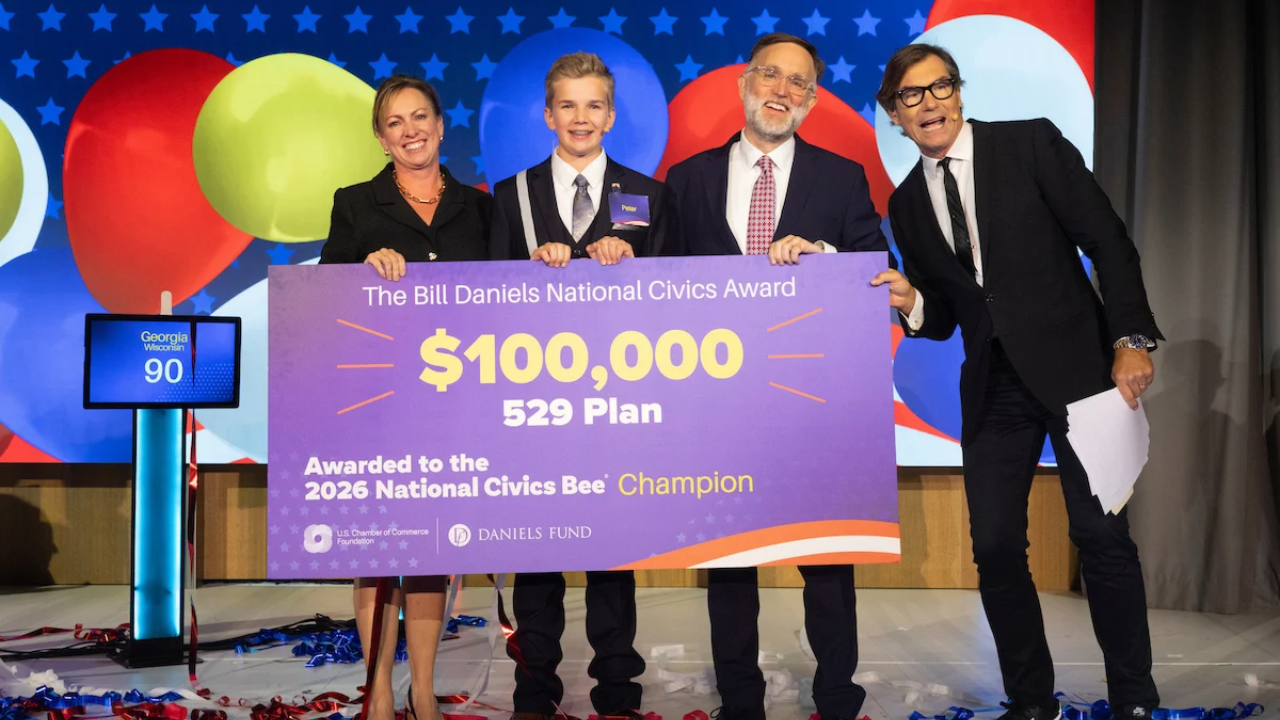
Peter Daniell, a ninth-grader from Colorado, looked at that quiet, invisible weight and decided to put words around it. Out of thousands of young writers competing across the country, his essay on food insecurity earned a $100,000 education contribution. One hundred thousand dollars. For a teenager who might still be figuring out locker combinations and algebra homework, that number carries the kind of gravity that changes the shape of a whole life.
Numbers like $100,000 make tidy headlines. A press release can list the award tier, mention the essay prompt, name the student, and move on to the next item on the news wire by noon. Yet headlines have a habit of smoothing away the jagged edges of real life. When a ninth-grader writes about food insecurity, what is he actually looking at? Is he writing from a distance, observing a statistical problem from the outside, or has he felt the chill of a refrigerator door opening onto a single carton of milk and half a jar of peanut butter?
I know what that chill feels like, though my own brush with scarcity happened years ago during a lean stretch of college when rent ate my paycheck whole and instant noodles became both dinner and geometry. Back then, I used to tell myself that being hungry was just a badge of scrappy youth. It took me a long time to admit how heavy it actually was—how hard it is to hold a thought steady when your stomach is cramping, and how embarrassing it feels to pretend you already ate when friends suggest grabbing food after class. Looking back, I wasn't romanticizing anything; I was just trying to stay upright while pretending nothing was wrong.
To see why an essay from a Colorado ninth-grader matters so much right now, we have to look past the prize check and trace what food insecurity really does to a young person's day.
The Quiet Math of a Half-Full Fridge
Hunger is often mistaken for an empty plate at a single meal. In reality, food insecurity is a slow erosion of certainty. Families can have food on Monday and run short by Thursday. Parents can stretch groceries across five days by eating smaller portions themselves, skipping breakfast, or trading fresh produce for shelf-stable calories that fill a belly cheaply without fueling a growing brain.
Consider what happens next when a student walks into a classroom under those conditions. A teenager's brain is under construction—rebuilding neural pathways, pruning connections, burning massive amounts of glucose just to keep pace with daily life. Ask a hungry brain to solve a quadratic equation or analyze a primary source document, and it behaves like a phone running at two percent battery. Screen dims. Apps freeze. Everything takes twice as much effort.
To make this concrete, let us step into a hypothetical scenario—a composite picture drawn from real patterns teachers and counselors see every week in American schools. Call her Maya. Maya is fifteen, sharp-tongued in the hallway, and usually quiet in first-period biology. On mornings when her family's pantry runs thin before payday, Maya doesn't sit at her desk looking tragic. She sits looking tired. Her head rests on her forearm. When the teacher asks a question, she blinks a beat too late. To someone keeping score on a gradebook, Maya looks unmotivated. Nobody sees the quiet math she ran at 6:30 a.m. when she decided to save the last granola bar for her younger brother so he wouldn't get dizzy at track practice.
That is the invisible stake inside almost every conversation about youth hunger. We judge students by how loudly they show up, without asking what they had to swallow—or leave behind—before walking through the front door.
Why a Teenager's Voice Hits Different
Adults love panels, white papers, and policy briefs. We write reports full of percentages and sub-clauses, then wonder why half the room checks their phones. When a ninth-grader steps up to write about food insecurity, the dynamic shifts immediately. There is no corporate polish. There is no rehearsed political hedging. Just a young person looking straight at a problem that touches peers sitting three desks away.
Writing a winning essay isn't just about stringing together pretty sentences or hitting a word count. It requires seeing a pattern clearly enough to make strangers care. In competitions that award major education contributions—like a $100,000 scholarship or education fund—judges aren't just grading grammar. They are looking for moral clarity, lived observation, and the ability to connect a personal truth to a wider public issue.
Let's pause and be honest about something here. Sometimes, when a young person wins a big award for tackling a serious social issue, a cynical voice in the back of our heads wonders whether the essay is a genuine spark or just another polished resume line in the hyper-competitive world of youth achievement. I have felt that skepticism myself. We live in an age where almost everything can be packaged, optimized, or turned into personal branding.
Still, you cannot fake urgency when you are writing about people not having enough to eat. Whether a student writes from direct experience, from watching a neighbor's family struggle, or from noticing how quiet the lunch line gets when pride keeps kids away, naming the problem out loud takes nerve. Most teenagers spend their energy trying to fit in. Writing an essay that exposes an uncomfortable truth takes the opposite posture: standing slightly apart from the crowd and saying, Look here. This matters.
Education and Hunger Share the Same Root
Why tie a food insecurity essay to a $100,000 education contribution in the first place?
On the surface, food and school funding can look like two separate buckets. One fills cupboards; the other pays for textbooks, tuition, or trade training. Yet in everyday life, they are braided together so tightly you can barely pull them apart without fraying both.
Think of education as a ladder and steady nutrition as the ground beneath it. If the ground shifts or gives way halfway up, climbing becomes a gamble. A student who can focus in class has a better shot at graduating, landing scholarships, learning a skilled trade, or entering college prepared. Years later, that education shapes job stability, income, and the odds that their own household will ever face food shortages.
Historically, communities have understood this link in fits and starts. School lunch programs grew out of a recognition that children cannot learn on empty stomachs, and neighborhood food banks rose up whenever economic shifts stretched working families past their breaking point. Yet charity alone has limits. A box of canned beans on a Saturday helps get through the weekend, but long-term security depends on opportunity—access to good schools, higher education, vocational training, and living wages.
When Peter Daniell's essay earned a $100,000 education contribution, the award did two things at once. It recognized his insight into food insecurity, and it invested directly in his own educational runway. In a practical sense, that kind of support removes friction from a student's future—whether it goes toward college tuition, books, housing, or career preparation down the road. Fewer financial landmines ahead means more room to build something durable.
What Most People Miss About Food Insecurity
If you haven't lived near food insecurity, it is easy to picture it as a caricature—someone standing in a long line in the rain, holding a cardboard sign. Most of the time, it doesn't look like that at all.
Food insecurity hides in plain sight. It looks like a student skipping the cafeteria because they don't want classmates to see a reduced-price meal pin or hear a low balance beep at the register. It looks like a parent buying bulk pasta and white bread because fresh berries spoil in two days and cost three times as much per calorie. It looks like a teenager coming home from school to an empty kitchen because both parents are working extra shifts just to keep the lights on.
Stigma does half the work of keeping hunger quiet. Nobody likes admitting they are stretched thin. Even adults—people with mortgages, credit cards, and years of life experience—feel a sharp sting of shame when groceries become the flexible line item in a tight budget. For a ninth-grader, that shame is magnified tenfold. High school is already a pressure cooker of social comparison; needing help with something as basic as lunch can feel like wearing a spotlight you never asked for.
That is why stories written by young people carry such weight. A ninth-grader knows the hallway language. They know the jokes kids make to cover up embarrassment, the excuses people give for turning down an invitation to get pizza, and the quiet ways friends look out for one another without making a scene.
Turning Attention Into Real Momentum
Awards fade quickly if all they do is generate applause for a week. A $100,000 education contribution is a remarkable milestone for Peter Daniell, and it shines a bright light on an issue that too often stays in the shadows. The real test of any story like this is what happens after the congratulations settle.
Do readers walk away feeling a brief burst of warm sentiment, only to forget food insecurity by the time they close their browser? Or do they start noticing the subtler signals right in their own neighborhoods—how local pantries are stocked, how school meal programs are funded, and how young people are talking about the pressures their generation faces?
We don't all have a six-figure check to hand out, and we don't all write award-winning essays. Most of us have smaller levers: what we support in our local school districts, which community food initiatives we back with time or money, and how we listen when young people tell us what daily life actually feels like from their side of the desk.
There is something quietly electric about a ninth-grader forcing adults to pay attention. Not with a speech full of jargon, not with a lecture, just with clear eyes and honest words about a problem that shouldn't exist alongside abundance.
Somewhere in a Colorado classroom, a student who once sat down to write an essay about people going without enough to eat suddenly has $100,000 pointed toward his education—and proof that a teenager's voice can move a room full of strangers.


