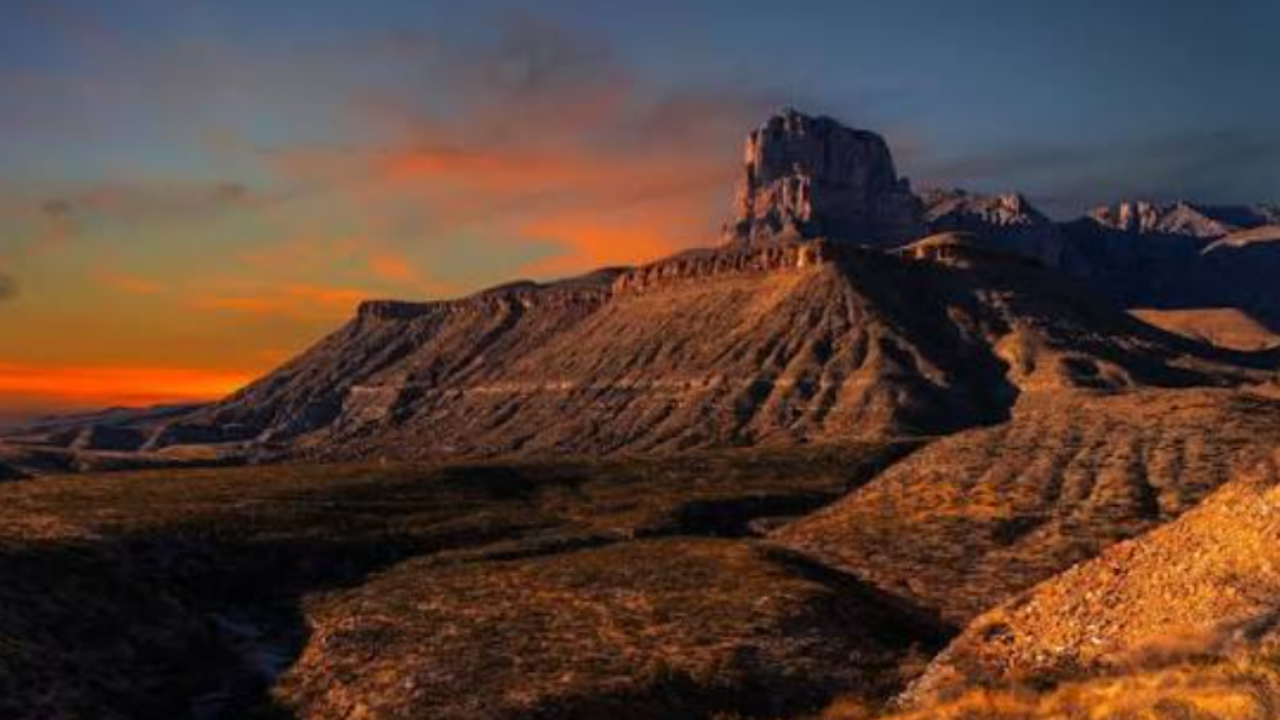
Drive through West Texas today and you will see miles of harsh scrub, flat desert floor, and relentless limestone flats baking under a brutal sun. It looks like the last place on earth anyone would seek solitude or beauty. Yet, more than a century ago, a visionary oil geologist saw something completely different hidden within the folds of the earth. That single encounter changed the trajectory of American conservation and gifted public access to one of the most stunning autumn destinations in the Southwest.
Stumbling Across a Desert Mirage in 1921
The Skeptical Geologist Meets Judge Drane
Back in 1921, Wallace Everette Pratt was working as the very first professional geologist hired by Humble Oil and Refining Company, which later evolved into ExxonMobil. Pratt was a man who understood rocks at a molecular level. He had spent his early career studying the earth not from a comfortable office, but out in the raw elements.
Pratt traveled to Pecos, Texas, alongside two oil-lease brokers to secure property rights for his company. While waiting for meetings with local landowners, a Pecos attorney named Judge Drane approached him with a bold claim. Drane promised to show Pratt the most beautiful spot in all of Texas.
Pratt was naturally skeptical. West Texas in the 1920s was rugged, dry, and unforgiving. He assumed Drane was talking about another pile of sun-bleached rocks rising out of the desert dust. But he agreed to the excursion, hopping into a car to see what the fuss was about.
A Shocking Ecological Anomaly
As they drove deeper into the backcountry near the Guadalupe Mountains, the surroundings grew harsher. Pratt expected nothing more than typical arid brush. Then, they slipped past the outer limestone walls and entered McKittrick Canyon.
The transformation was absolute and staggering.
Inside the canyon walls, protected from the baking winds of the Chihuahuan Desert, sat a vibrant, thriving riparian oasis. A clear, free-flowing stream wound its way across the canyon floor, feeding a dense forest of bigtooth maples, chinquapin oaks, walnut trees, and madrones. Miniature waterfalls cascaded over travertine dams built up by mineral-rich waters. Desert cacti and agaves grew just feet away from lush woodland foliage.
Pratt was utterly captivated. He later remarked that his early professional life had been spent communing with rocks, noting that rocks never let you down. But this canyon offered something far rarer than a promising oil reservoir. It offered raw, untouched sanctuary.
Judge Drane mentioned on the drive back that parts of the canyon were actually owned by a local rancher and available for purchase. Pratt didn't hesitate. He bought a quarter interest in the McCombs Ranch right then and there. When the Great Depression hit in 1929 and his partners wanted out, Pratt bought out their shares. By 1930, he held the major acreage of the canyon, calling his new holding Manzanital Ranch.
Building Retreats in the Wilderness
The Stone Cabin Inside the Canyon Walls
Owning a piece of paradise meant figuring out how to enjoy it without destroying it. By 1931, Pratt and his first wife, Pearl Stuckey, decided to construct a family getaway right inside the mouth of McKittrick Canyon.
They hired architect John Staubs to design a rustic stone structure. Pratt insisted on using materials pulled directly from the site. Stonemasons gathered limestone blocks from the canyon walls, fitting them together so precisely that very little chisel work was required. Heavy pine timbers were shipped in from East Texas to support the roof.
Pratt always called the structure his simple stone cabin, refusing to use the word "lodge" because he had grown up in Kansas and never quite learned what a lodge was supposed to be. During sweltering Houston summers, the Pratt family escaped to this canyon retreat. It had no electricity from a municipal grid, no phone lines, and no modern distractions. Water came straight from the stream, and evenings were spent reading by oil lamps while cool canyon breezes swept down from Guadalupe Peak.
Ship on the Desert and Modernist Architecture
Tragedy struck in 1940 when Pearl passed away. A year later, Pratt married Iris Calderhead, a brilliant activist and prominent leader within the women's suffrage movement.
With a new chapter underway, Pratt realized that living deep inside a narrow canyon had practical drawbacks. Flash floods routinely threatened low-lying structures. Looking for a safer vantage point on higher ground, the couple selected a site just outside the mouth of the canyon to build a permanent home.
They turned to Elizabeth and Newton Bevin, architects from New York City, to design something entirely unprecedented for the West Texas desert. Completed in 1943 during the height of World War II, the resulting house was a masterclass in early modernist architecture.
Locals quickly nicknamed the striking structure "Ship on the Desert." The moniker was entirely fitting. Standard Oil had recently named a massive ocean-going oil tanker the SS Wallace E. Pratt in 1937, a vessel that would go on to complete ninety-three perilous transatlantic voyages carrying fuel to Allied forces. The desert home mirrored that maritime aesthetic with its long, low horizontal lines, expansive flat roofs, and clean geometric profiles.
Iris added her own powerful political statement to the design. She painted the front door a vibrant, striking purple. Purple served as one of the defining colors of the National Woman's Party and the broader suffrage movement she had fought for. Inside, the walls were lined with heavy bookshelves reflecting their shared intellectual passions. They built a private airstrip nearby so Pratt could fly his plane to business meetings in Carlsbad, New Mexico. Yet, true to their desire for detachment, the house remained completely free of telephones and television sets.
From Private Sanctuary to National Park Legacy
Why Wallace Pratt Walked Away From Ownership
For decades, the canyon remained a closely guarded secret shared only with family, close friends, and occasional visiting geologists. But Pratt possessed a broader vision. He understood that places of profound natural beauty like McKittrick Canyon should not remain locked behind private gates forever.
As the 1950s drew to a close, Pratt began making preparations to leave West Texas. Health concerns prompted him and Iris to plan a final relocation to Tucson, Arizona. Instead of selling his beloved ranch to private developers or commercial interests, Pratt initiated a conversation with the federal government.
Beginning in 1959, he made a series of extraordinary land donations. He handed over 4,942 acres of pristine wilderness, including Ship on the Desert and the surrounding canyon floor. Over the next two years, he added hundreds more acres, bringing his total contribution to more than 5,600 protected acres.
This act of remarkable generosity provided the vital anchor needed to establish Guadalupe Mountains National Park. Without Pratt preserving the canyon through decades of private ownership and then gifting it outright, the area could easily have fallen victim to commercial exploitation or restricted access.
Experiencing the Canyon Today
Wallace Pratt passed away on Christmas Day in 1981 at the age of ninety-six in Tucson, Arizona. True to his lifelong bond with the land, his family carried his ashes back to West Texas, scattering them across the soil of McKittrick Canyon right alongside the ashes of his wife Iris.
Today, anyone visiting Guadalupe Mountains National Park can walk the very trails that Pratt once explored. The canyon is managed primarily as a day-use area to protect its fragile ecosystem. Hiking the four-mile trail to Pratt Cabin reveals a remarkably well-preserved stone building standing quietly beneath towering limestone cliffs.
If you visit during mid-to-late October or November, you'll witness why Pratt fell in love here. The bigtooth maples turn a brilliant, fiery crimson and gold, creating a blinding contrast against the stark white limestone and dark green evergreens. It feels entirely out of place in West Texas, which is precisely why it remains so magical.
Protecting land of this caliber takes immense foresight. Pratt saw past the harsh desert facade into the soul of the canyon, guarding it when few others cared about conservation in the oil-rich basins of Texas. Walk quietly past the stone cabin, listen to the wind moving through the canyon oaks, and remember the geologist who saw a hidden masterpiece and chose to share it with the world.