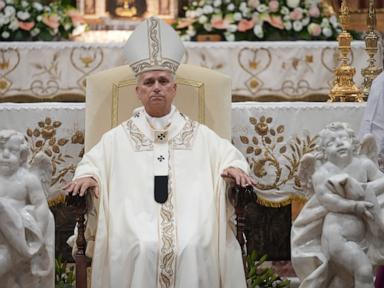
Every lazy analysis of Pope Leo XIV's journey to Paris defaults to the exact same tired narrative. Pundits love to frame the visit as a high-stakes cultural collision: the leader of an ancient, dogma-bound institution walking straight into the fortress of laïcité, France's fiercely guarded state secularism.
The lazy consensus claims that a strictly secular republic and Catholic teaching on human life are fundamentally incompatible, locked in an eternal culture war where one side must eventually crush the other.
This framing is entirely wrong. It completely misunderstands modern European spiritual dynamics and misdiagnoses what is actually happening on the ground in France.
The False Binary of Laïcité
To understand why the mainstream commentary fails, you have to look past the surface-level political theater between the Élysée Palace and the Vatican. Commentators treat French secularism as an aggressive, militant atheism that seeks to purge all moral vocabulary from the public square.
That interpretation ignores how laïcité actually operates as a legal and cultural framework. Conceived by the historic 1905 law separating church and state, French secularism was designed to guarantee freedom of conscience, not to outlaw metaphysical debate. When journalists hyperventilate about Catholic moral teachings clashing with French laws on life, bioethics, or family structures, they assume that a secular state cannot tolerate moral friction.
In reality, a secular state requires moral friction to survive. Laïcité was never meant to produce a moral vacuum; it was built to ensure that no single religious body dictates civil law.
When Pope Leo XIV stepped onto French soil, he did not treat the republic as an enemy territory to be conquered or converted back to the Ancien Régime. Instead, he engaged the foundational tension of modern European identity: the paradox of a society trying to build human rights, universal fraternity, and ethical boundaries while actively severing itself from the theological roots that gave those concepts birth.
The Demographic and Conversational Blind Spot
The mainstream narrative also completely misses the actual demographic ground shift happening inside French churches. Pundits love to look at empty rural parishes and declare Western Europe post-Christian. They ignore the surging wave of adult baptisms—particularly among urban professionals and young adults.
I have seen countless analysts look at church attendance numbers while ignoring the qualitative transformation of who is walking through those doors. The people filling metropolitan pews or seeking out sacraments in Paris are not nostalgic traditionalists sleepwalking through inherited habits. They are deliberate converts and young seekers choosing an alternative to hyper-materialist nihilism.
When a society reaches peak secular saturation, institutional non-belief stops looking like liberation and starts looking like an existential void. The cultural exhaustion with pure technocratic rationalism creates an opening for a rigorous, counter-cultural moral framework. Catholic teaching on the sanctity of life does not alienate modern Europeans because it is counter-cultural; it resonates precisely because it is counter-cultural in a landscape starving for objective boundaries.
The Real Battleground is Not Politics, It is Anthropology
Framing the papal visit through the lens of political policy changes or culture-war talking points misses the deeper philosophical earthquake. The friction between the Vatican and modern France is not about legislative statutes. It is an anthropological dispute over what a human being actually is.
On one side stands the technocratic state, viewing human life through the lens of utility, efficiency, biometric data, and managed existence. On the other stands a traditional theological anthropology that insists human dignity is inherent, unearned, and inviolable from conception to natural death.
Pope Leo XIV did not travel to France to lobby parliamentarians on specific bills. He went to challenge the underlying anthropology of a continent that is sleepwalking into automated dehumanization—a point he underscored with his warnings regarding artificial intelligence and the protection of human agency.
Stop looking at France through the outdated prism of a 20th-century culture war. The fault lines have shifted. The real story is not about a pope clashing with a secular state; it is about an ancient church offering a coherent vocabulary for human worth to a civilization that forgot how to talk about the soul.