You can tell a political administration is losing control of the narrative when the Secretary of the Treasury goes on national television to defend his lunch order.
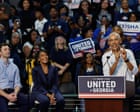
That's not a hypothetical. On October 28, 2026, Barack Obama walked onto a rally stage in metro Atlanta to campaign for Senator Jon Ossoff and gubernatorial candidate Keisha Lance Bottoms. Just days earlier in Ohio, Obama had tossed off a throwaway line about Donald Trump's lavish, gold-plated White House renovations, joking that the building looked like "Saddam Hussein opened a Cheesecake Factory".
The White House didn't brush it off. They didn't ignore it. They launched what Obama accurately described to a roaring Georgia crowd as a "whole-of-government response to that joke".
"The Saddam Hussein thing didn't bother him," Obama told voters in Clayton County. "But he was very upset about the Cheesecake Factory."
If you only read the surface-level news coverage, you might think this was just another round of late-October cable news banter. It wasn't. Watching how both sides played this exchange reveals the exact psychological and strategic divide that shaped the 2026 midterm elections—and why distraction politics eventually hits a wall when grocery bills keep climbing.
How a Throwaway Punchline Became a Cabinet-Level Crisis
Let's look at the timeline of how absurd this actually got.
During an October 24 campaign stop in Ohio, Obama took aim at Trump's massive, reported $900 million White House renovation project—an overhaul complete with heavy gold accents and a proposed ballroom larger than the residence itself. Comparing the aesthetic to an Iraqi dictator's palace crossed with a suburban mall restaurant was classic Obama: slightly sarcastic, visually specific, and designed to stick in a voter's head.
Instead of pivoting back to the economy, Trump and his allies took the bait immediately. At a rally in Mississippi, Trump argued that Obama "wouldn't understand" the work of the artisans renovating the White House. Right-wing commentators and Republican officials quickly tried to spin the line as coastal elitism, claiming the former president was looking down his nose at a beloved middle-class chain restaurant.
Then came the part that made political strategists do a double take. Treasury Secretary Scott Bessent appeared on Fox Business, attacking Obama's presidential museum as looking like "Darth Vader's tomb" before reassuring viewers that he personally frequents the Cheesecake Factory and always orders the French dip.
Think about that for a second.
With less than a week left before the November 3 midterm elections, while voters were hammering lawmakers over inflation, tariffs, and rising gas prices, the top economic official in the United States government spent airtime validating his casual dining credentials.
Obama saw the opening from a mile away. When he arrived in Georgia on Wednesday night alongside Ossoff, Bottoms, and Senator Raphael Warnock, he didn't walk the joke back. He weaponized the reaction.
"They mobilized a whole-of-government response to that joke—not to inflation, but to that joke," Obama said. "The White House even called the Secretary of the Treasury."
He also dismantled the "elitism" angle in about ten seconds flat. Pointing out that he raised two daughters, Obama asked the crowd, "Do you think I could have survived their childhood without going to the Cheesecake Factory?"
The Strategy Behind the "Okey-Doke"
I've watched enough campaign cycles to know when a politician is genuinely rattled versus when they're executing a deliberate pivot. Obama's Atlanta speech was a masterclass in turning an opponent's thin skin into a referendum on competence.
Most political coverage treats rally speeches as disconnected soundbites. One clip gets shared for laughs; another clip gets buried in a policy roundup. If you actually look at Obama's remarks as delivered in Atlanta, the Cheesecake Factory bit wasn't the punchline—it was the setup.
Obama pointed out something crucial that got lost in the media noise: while the administration spent days furiously defending the Cheesecake Factory, they never once disputed his core economic accusations.
- They didn't deny that tariffs were driving up household costs.
- They didn't challenge his claim that administration policies were directly fueling higher prices.
- They stayed completely silent on his accusations of unprecedented self-enrichment and trading policy favors from the Oval Office.
In his speech, Obama called this tactic the "okey-doke"—a relentless stream of phony outrage, culture-war skirmishes, and cable news spectacles designed to keep voters looking anywhere except their own bank statements.
"These are not serious people," Obama told the Georgia crowd. "They don't have solutions to actual problems."
That line landed so hard because it connected a silly story about a restaurant chain to a very real anxiety. When families are paying more for gas, groceries, and healthcare, watching government officials obsess over interior decorating and chain-restaurant slander feels insulting.
Why Georgia Was the Real Target
You can't separate Obama's rhetoric from the geography of where he delivered it. Showing up in Clayton County—a critical, heavily Black suburban stronghold south of Atlanta—just two days before early voting ended in Georgia wasn't accidental.
Georgia in late 2026 was ground zero for two radically different theories of how to win a midterm election.
On one side, Donald Trump had made two separate appearances in Georgia within two weeks, choosing deep-red congressional turf like Dalton to rally his base. During those stops, Trump repeated false claims that Jon Ossoff's previous election was illegitimate and leaned heavily into grievance politics.
On the other side, Georgia Democrats were running a tightly coordinated, economically populist message tailored specifically to metro Atlanta's working and middle-class voters.
Jon Ossoff's Contrast on Cost and Conflict
Senator Jon Ossoff, facing Republican challenger Mike Collins, didn't waste breath defending restaurant metaphors. Throughout the autumn, Ossoff hammered the administration on two concrete fronts: the pocketbook pain of broad tariffs and the geopolitical fallout of an unpopular conflict with Iran that sent oil and gas prices surging. By framing the administration's foreign and trade policies as reckless choices that hit Georgia families directly at the pump, Ossoff gave swing voters a tangible reason to check the White House.
Keisha Lance Bottoms and the "Out-of-Touch" Frame
Former Atlanta Mayor Keisha Lance Bottoms, running for governor against Republican healthcare executive Rick Jackson, used the exact same contrast. Bottoms tied Jackson directly to Trump, labeling them "two out-of-touch billionaires who want to keep getting rich on the backs of taxpayers". When Obama mocked a $900 million gold-trimmed White House renovation on the exact same stage, it reinforced Bottoms's core argument without her having to say another word.
Raphael Warnock's Moral Framing
Senator Raphael Warnock brought the emotional weight that balanced Obama's humor. Warnock framed the election around national character and basic decency, telling the crowd, "This is about who we are and whether we are here for one another".
Together, the four speakers covered every angle—humor, economic urgency, local accountability, and moral clarity. Honestly, it's rare to see a state party ticket sync up that cleanly in the final stretch of a campaign.
What Most Pundits Get Wrong About Political Humor
There's a lazy assumption in political media that voters hate it when politicians crack jokes during tough economic times. Consultants always warn candidates to stay "grave" and "serious" when inflation is high.
That advice is dead wrong, and the 2026 Georgia rally proved why.
Humor only backfires when it punches down at regular people or makes a candidate seem detached from reality. When humor punches up—exposing vanity, insecurity, and misplaced priorities—it becomes one of the sharpest weapons in politics.
Think about the contrast Obama created on that stage:
- The Setup: A president spending hundreds of millions on gold-plated renovations and a giant ballroom while Americans struggle to afford a night out.
- The Reaction: Cabinet secretaries scrambling onto TV to defend a casual dining chain instead of explaining how they plan to bring down grocery prices.
- The Takeaway: Voters didn't need a 40-page white paper to understand who was focused on their problems and who was focused on their own ego.
As The Guardian reported from Atlanta, Obama even tied the administration's obsession with spectacle back to television, telling the crowd, "We got to keep reality TV on Bravo. We don't need it in the White House."
The crowd ate it up—and more importantly, they showed up. Within days of that rally, Black voting power and suburban turnout in counties like Clayton and DeKalb helped push Ossoff to victory over Mike Collins and fueled Democratic momentum across the state.
How to Spot Distraction Politics Before You Fall for It
Whether you follow campaigns closely or only tune in during election season, the "Cheesecake Factory" episode is a textbook case study in how political outrage cycles are manufactured. Next time a bizarre controversy dominates your feed for 72 hours, run it through three quick filters before you engage:
- Check who is defending what. When high-ranking officials spend days arguing about cultural slights, decor, or celebrity feuds, look at the policy issue they are avoiding. Outrage is almost always a smokescreen for an unpopular economic or legislative reality.
- Follow the resource allocation. Pay attention to where leaders actually spend their time and political capital. As Obama pointed out, a government that mobilizes faster for a bruised ego than for household affordability is telling you its true priorities.
- Separate the symbol from the substance. Politicians love turning metaphors into literal fights—like pretending a joke about gilded decor is an attack on chain-restaurant diners. Strip away the fake offense and ask whether the underlying critique about power, money, or competence holds up.
Politicians will always try to pull your attention toward the loudest, silliest fight in the room. Don't give them the satisfaction—keep your eyes on the receipts, the policy results, and who is actually doing the work.
To hear the exchange and the crowd's reaction firsthand, watch Obama accuses Trump team of ignoring economy to focus on Cheesecake Factory joke, which captures his exact remarks on why the Saddam Hussein comparison went ignored while the restaurant line triggered a full-scale administration response.