Numbers are terrible things when they grow too large.
We see them on screens. Two thousand. Then two thousand and one. We read them over morning coffee, between the weather report and the sports scores, flattening human skin and bone into clean digits that fit neatly inside a standard text column.
Statistics do not bleed. They do not cough in the dark, or reach blindly for a cool cloth, or leave behind a pair of small rubber sandals by the doorway of a dirt-floor kitchen in the eastern provinces of the Democratic Republic of Congo.
To understand what happened when the Ebola death toll crossed that grim threshold during the fastest-growing outbreak on record, you have to stop looking at the graph. You have to step past the epidemiological maps and the red thermal zones. You have to shrink the world down to the size of a single room, a single breath, and a single village trying desperately to remember how to trust.
Consider what happens next.
In Beni, the air smells of woodsmoke, wet earth, and raw panic.
It is the rainy season. The mud sticks to the soles of boots like old cement. Down a narrow alleyway where corrugated tin roofs drip steady rhythms into the dust, a family sits in the yard. They are not weeping anymore. They have moved past tears into that hollow, flat-eyed country where shock lives.
A hypothetical mother—let us call her Amina, though her face belongs to a dozen women whose names were written on clipboards and then burned for safety—stands ten paces away from her younger brother. He is lying on a woven mat under the eaves. His fever is a living thing inside him, turning his skin slick with sweat, pulling the breath from his ribs in harsh, shallow hitches.
She wants to touch his forehead. She has spent her entire life touching him. When they were children, she carried him on her hip through the cassava fields. When he cut his knee running from a stray goat, she pressed her palm against the wound to stop the blood.
Now, her palm is a weapon.
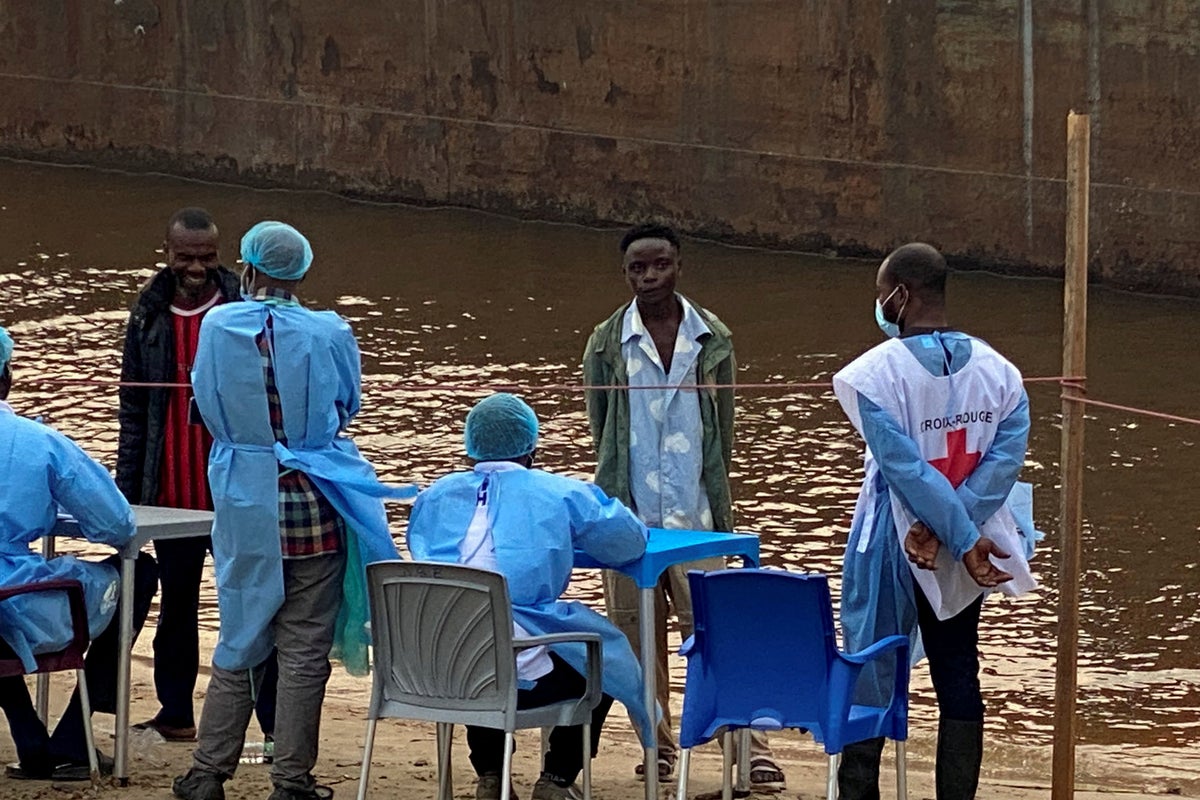
A man in a yellow plastic suit and a full-face respirator approaches the mat. He moves with stiff, robotic caution. To Amina, he does not look like a savior. He looks like a creature from another planet, dropped into her yard to steal her brother away to a place from which no one returns alive.
"Step back, mama," the man says. His voice is muffled, metallic, flattened by the rubber filter.
She does not move. Every instinct she possesses—every cultural rhythm etched into her bones by generations of mothers before her—screams at her to pull him into her arms, to wash his body with warm water, to hold him as the fever breaks or the breath gives out. To abandon him to strangers in yellow suits feels like a betrayal deeper than death. It feels like damnation.
This is the invisible war.
Epidemiology textbooks talk about R-naught values, transmission chains, and viral shedding. They use clinical language to describe a catastrophe. But the war against the Zaire strain of the Ebola virus is fought in the human heart. It is fought in the friction between medical necessity and the sacred rituals of grief. When you tell a community that they cannot wash their dead, that they cannot hold their dying, you are asking them to rewrite what it means to be human.
And when they refuse—when they hide their sick beneath beds, when they slip out the back door before the burial teams arrive—they are not acting out of malice. They are acting out of love.
We must be honest about our own confusion here.
To the outside world, the resistance met by medical workers in North Kivu and Ituri often looked stubborn, irrational, or even violent. Outposts were attacked. Treatment centers were pelted with stones. Convoys carrying protective gear and chlorine sprayers were forced to turn back.
It is easy to sit behind a glowing screen thousands of miles away and shake our head at the backwardness of it all. It is easy to demand compliance.
Let us dismantle that arrogance.
Imagine living in a region where the state has historically meant two things: neglect and violence. For decades, armed militias have swept through these hills, burning homes and looting crops while distant politicians in Kinshasa remained silent. Hospitals lacked aspirin, let alone advanced therapeutics. Schools had no roofs.
Then, suddenly, men and women in high-tech containment suits arrive in white Land Cruisers. They bring millions of dollars in international aid. They spray chlorine on doorways. They take the sick away to fenced-off compounds. And they declare a state of emergency.
If you have never trusted the government, why would you trust the men in the spacesuits? If history has taught you that outsiders only ever arrive with bad news, every instinct tells you that the disease isn't the only threat in the room. Rumors fill the vacuum. Some whispered that the virus was brought by the medics themselves to depopulate the land. Others whispered that the blood of the dead was being harvested for dark markets.
These rumors sound absurd to a virologist in Geneva. But in a village where survival has always depended on suspicion of the stranger, they are entirely logical conclusions.
Trust is not a switch you can flip with a public health poster. Trust is a currency earned slowly, coin by coin, through listening before speaking.
Slowly, the tide began to turn—not because of the bleach, but because of the tea.
Dr. Jean-Jacques Muyembe, who helped discover the virus back in 1976, understood this better than anyone. He knew that you cannot fight a microscopic enemy if you are at war with the macro-level human landscape.
In treatment centers across the zone, a quiet revolution took place. Instead of armed guards at the gates, local elders were brought inside. Survivors—those who had walked into the red zone and walked back out on their own two feet—were hired as frontline counselors.
Imagine a young man named Kambale. Six months ago, his wife died in an isolation ward. He spent weeks curled in a ball of rage and grief, convinced the doctors had killed her. But an elder sat with him day after day under a mango tree, drinking sweet black tea, answering his screaming questions with quiet, unbroken patience.
Eventually, Kambale put on the yellow suit.
Now, when a newly infected patient arrives at the gates, thrashing and screaming in terror, it is not a distant foreign doctor who greets them. It is Kambale.
He takes off his mask just far enough for them to see his face—a face that looks like theirs, speaks their dialect, and shares their sorrow. He leans down and whispers through the plastic shield.
"I was in that bed," he says. "I walked out. Look at me. I am here."
That single sentence does more work than a thousand barrels of chlorine. It breaches the wall of terror. It translates abstract medical survival into tangible, breathing proof.
Yet, crossing the mark of two thousand dead remains a brutal indictment of our collective timing.
This outbreak was the second-largest in recorded history, trailing only the West African crisis of 2014 to 2016. But unlike that earlier epidemic, this one unfolded in an active war zone. Over a hundred armed groups clashed in the very provinces where health workers tried to trace contacts. Medics dodged crossfire to vaccinate nursing mothers. Laboratories were bombed.
Every single digit in that terrible tally of two thousand represents a failure of peace.
It represents a child who should have grown up to harvest coffee in the highlands. It represents a mother whose song will never again rise above the evening cooking fire. It reminds us that disease does not strike in a vacuum; it targets the cracks in our collective foundations, the places where poverty, war, and institutional abandonment have already left the door half-open.
The statistics will update tomorrow. The number will climb again, creeping upward toward the next milestone, ticking forward while the world scrolls past to the next headline.
Back in Beni, the rain has stopped. The red dust of the courtyard is settling into a thin, damp crust.
Amina is sitting on her porch. Her brother is gone—carried away, treated, and buried according to the safe, sterile protocols designed to keep the living from joining the dead. The yard is quiet. The rubber sandals are still by the door.
She looks out over the banana trees toward the hills where the mist is beginning to lift, revealing the sharp, indifferent green of the mountains. She reaches down, picks up a small smooth stone from the path, and turns it over and over in her palm until her knuckles turn white.
The mountain stays where it is. The wind moves through the leaves. And the world keeps turning, weighted down by the ghosts we refused to look at until the numbers grew too large to ignore.