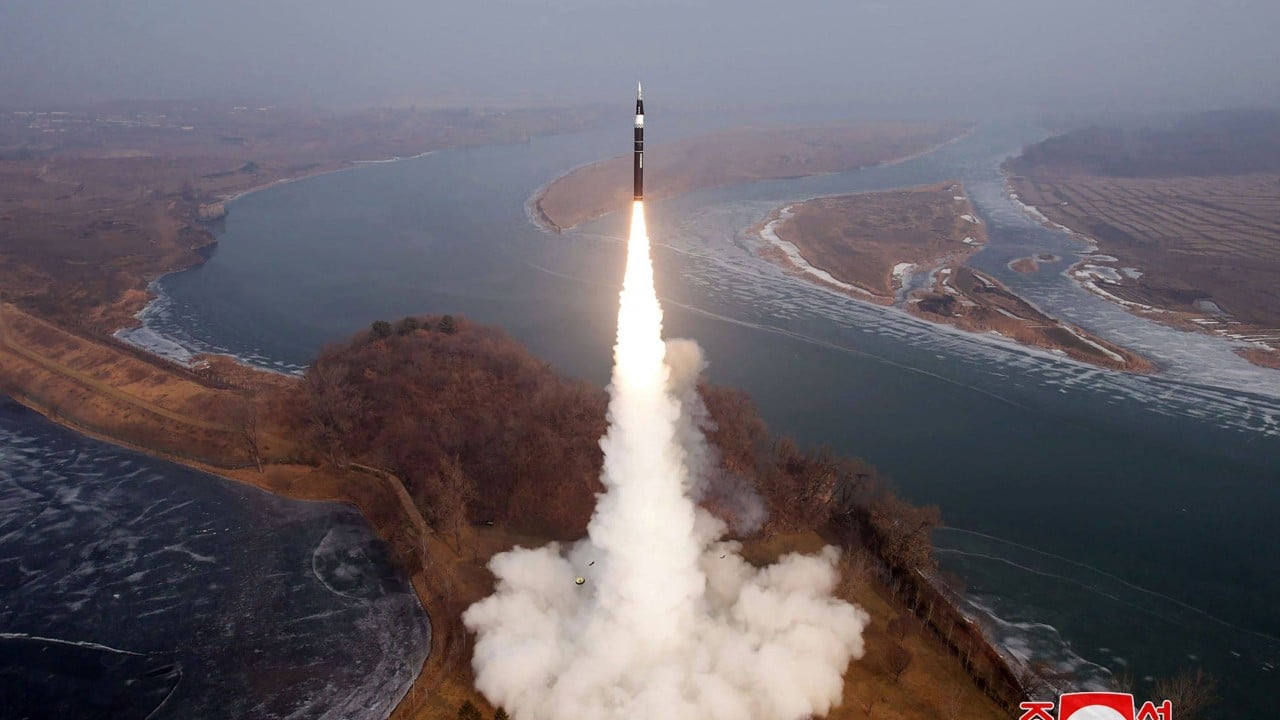
The foreign policy establishment is having a collective nervous breakdown. If you open any legacy news outlet today, you’ll find the same recycled panic: the fear that "reckless" diplomacy and "destroy-and-deal" tactics will set the Korean Peninsula on fire. They call it chaos. I call it the first honest assessment of geopolitical value we’ve seen in forty years.
The "lazy consensus" among the Ivy League set is that North Korea is a problem to be "managed" through incremental sanctions and polite disapproval. They view Kim Jong Un as a rogue actor and any unconventional approach as a dangerous gamble. They are wrong. Pyongyang isn't a problem to be solved; it is a market participant with a massive, untapped valuation. The real risk isn't "reckless" deal-making—it’s the continued adherence to a failed status quo that has allowed a nuclear arsenal to grow under the guise of "strategic patience."
The Myth of the Madman
Let’s dismantle the biggest lie first: the idea that the North Korean leadership is irrational. I have watched analysts waste decades treating the Kim regime like a ticking time bomb of pure ego. In reality, they are the most disciplined value-investors in the world of geopolitics.
They have spent seventy years building a single asset—sovereign survival—at the cost of everything else. When a leader uses "destroy-and-deal" tactics, they aren't being erratic. They are performing a stress test on the existing world order to see who is actually willing to pay for peace.
Conventional diplomacy fails because it treats the nuclear program as a moral failing. A sharp industry insider treats it as a distressed asset. You don't "manage" a nuclear-armed state; you either buy out their position or you accept that they own a seat at the board of directors.
Stability is a Sunk Cost
The establishment screams about "stability" as if the current situation is a win. It isn't. We have been subsidizing a stalemate that costs billions in military readiness while North Korea iterates on its delivery systems.
Imagine a scenario where a CEO refuses to pivot because the current factory—which produces nothing but debt—looks "stable" from the outside. That is exactly what the U.S. foreign policy machine has done for decades. They are terrified of a "reckless" move because it forces them to admit their previous "careful" moves resulted in a nuclear-armed adversary.
The "destroy-and-deal" approach is essentially a hostile takeover. You break the existing, failing agreement to force a new valuation of the assets. It’s messy. It’s loud. It makes the neighbors complain. But it’s the only way to find out what the floor price actually is.
The Real Price of Denuclearization
Everyone asks, "How do we get them to give up the nukes?"
Wrong question. They aren't giving them up for a "pathway to peace" or "reintegration into the international community." Those are vague, low-value returns. They will only trade their nuclear leverage for something of equal or greater value: absolute regime security guaranteed by the very powers trying to disarm them.
- The Status Quo Logic: Sanction them until they are so poor they trade their only defense for a sandwich. (Has never worked).
- The Disrupter’s Logic: Acknowledge the leverage. Price the risk. Offer a massive, verifiable upside that makes the nukes look like a liability compared to the potential for state-led wealth.
Why Brutality is a Feature Not a Bug
The media loves to use the word "reckless" because it sells subscriptions. But in the boardroom of global power, predictability is a weakness. If the other side knows exactly how you will react—which sanctions you’ll trigger, which UN resolutions you’ll pass—they can price your response into their business model.
When you introduce an element of the "unpredictable," you destroy the adversary's ability to hedge their bets. By threatening to "destroy" the current framework, you create a vacuum that only a "deal" can fill. It’s the "Madman Theory" updated for a 24-hour news cycle, and it works because it forces the opponent to recalculate their survival odds every single hour.
The China Factor Everyone Ignores
The competitor's view usually focuses on the North/South dynamic. That’s amateur hour. North Korea is the ultimate buffer state, a strategic shield for Beijing. Any move that disrupts the peninsula is actually a move against Chinese regional hegemony.
A "reckless" U.S. approach isn't just about Pyongyang; it’s about signaling to China that the old rules of engagement are dead. If the U.S. is willing to walk away from a seventy-year-old alliance or flip the script on a regional conflict, China loses its ability to predict American behavior. That is the highest form of leverage.
The Cost of Being "Careful"
I’ve seen plenty of organizations die because they were too "careful." They prioritized consensus over results. They hired consultants to tell them what they wanted to hear. The foreign policy establishment is just a massive consulting firm that has been billing the American taxpayer for a North Korea strategy that has a 0% success rate.
Admitting that "destroy-and-deal" might work is an admission that the last four decades of "careful" diplomacy were a waste of time and lives. That’s why the blowback is so fierce. It’s not about the safety of the world; it’s about the reputation of the people who failed to keep it safe.
The Bottom Line
Stop asking if a leader is being "reckless." Ask if they are changing the math.
The Korean Peninsula is a frozen market. You can wait for it to thaw naturally—which usually results in a flood—or you can take a sledgehammer to the ice and see what's underneath. Yes, you might get wet. Yes, the neighbors will yell. But you’ll finally be moving.
If you want to win in a high-stakes environment, you don't play by the rules that led to your current deficit. You break the rules, revalue the assets, and force the other side to negotiate on your terms or face the void. Anything else is just expensive stalling.
The era of "strategic patience" was just a polite way of saying "professional cowardice." If the choice is between a controlled explosion today or a nuclear catastrophe tomorrow, I’ll take the man with the matches every single time.
Stop playing for a draw. Play to close the deal.



