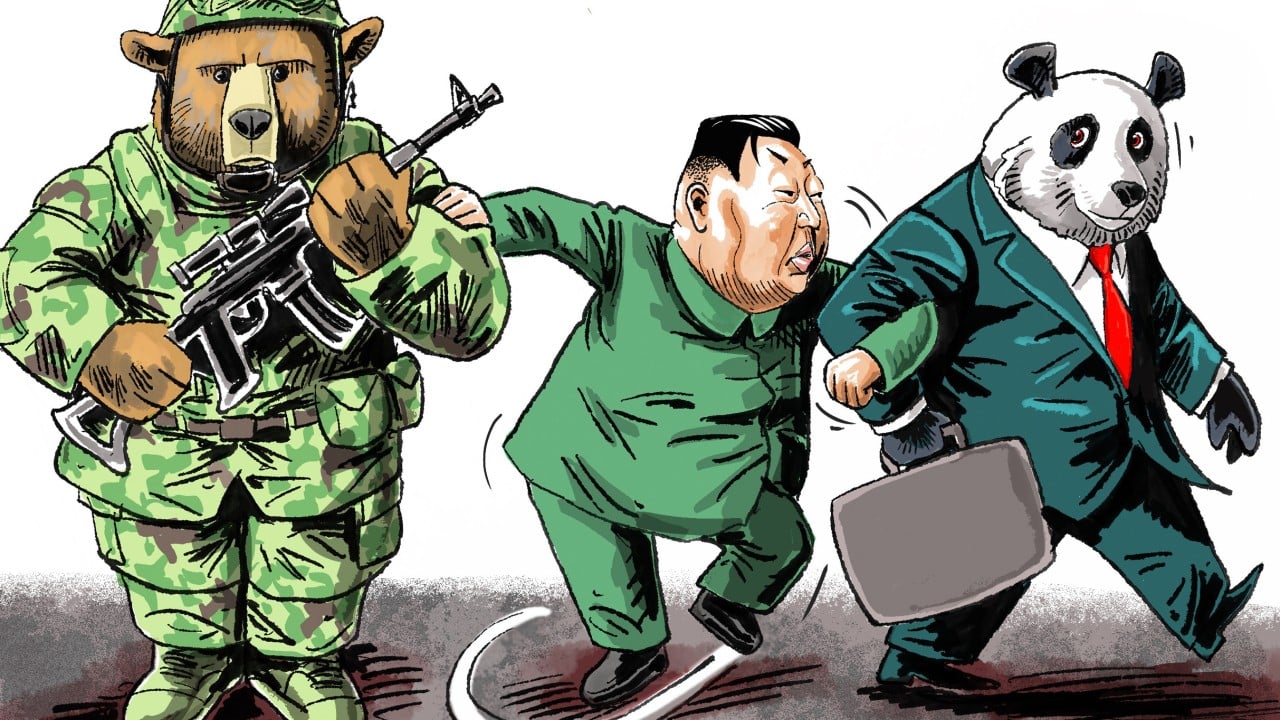
The prevailing narrative on North Korean diplomacy is stuck in 1953. Pundits see a meeting in Pyongyang or a trade bump in Dandong and immediately scream about a "rekindled alliance." They point to "lips and teeth" rhetoric as if Mao Zedong is still calling the shots from a crystal coffin. It is a comforting fiction. It suggests a predictable world where the East is a monolithic bloc.
It is also dead wrong.
What you are witnessing isn't a rekindling. It is a cold, transactional hostage situation where both parties hate the rope. To understand the DPRK-China friction, you have to stop looking at them as ideological partners and start viewing them as two bitter neighbors forced to share a structural wall while one of them experiments with amateur chemistry in the basement.
The Myth of the Strategic Buffer
The most exhausted trope in foreign policy circles is that China protects North Korea because it needs a "buffer zone" against US-aligned South Korea. This logic is decades past its expiration date.
In the era of hypersonic missiles and cyber warfare, the physical geography of the Yalu River matters significantly less to Beijing than the massive economic liability of a nuclear-armed rogue state on its doorstep. China’s primary goal is regional stability to ensure its own "Belt and Road" dominance and internal economic growth. A North Korea that constantly tests ICBMs and draws US carrier groups into the Yellow Sea is not a buffer. It is a magnet for the very American presence China wants to expel.
Xi Jinping doesn't want Kim Jong Un to succeed. He wants Kim to stay quiet. The "rekindling" people see is actually Beijing tightening the leash after Kim spent years trying to pivot toward a direct deal with Washington. Remember the Hanoi Summit? That was China’s nightmare. A North Korea that cuts a deal with the US is a North Korea that China can no longer control. Beijing’s recent warmth is a defensive maneuver to prevent Kim from going rogue, not a sign of genuine camaraderie.
The Dependency Trap
If you think China has total leverage because it provides 90% of North Korea’s trade, you don't understand the "weak state" advantage. North Korea has perfected the art of being "too broken to fail."
Pyongyang knows that if its economy truly collapses, the resulting refugee crisis floods Northeast China. They know that if the regime falls, the nukes go missing or fall into South Korean/US hands. Kim Jong Un uses his own instability as a weapon against Xi.
I’ve watched analysts track ship-to-ship oil transfers and conclude that China is "helping" North Korea bypass sanctions. Look closer. These transfers are often the bare minimum required to keep the lights on so the state doesn't implode. It is the geopolitical equivalent of paying protection money to a guy who threatens to blow up the building you both live in.
Breaking the Trade Data
Let’s dismantle the "rising trade" argument with some reality:
- The Base Effect: Comparing 2024 or 2025 trade volumes to the COVID-era "hermit" years is a statistical trick. Of course the numbers are up; the border was literally welded shut for three years.
- Quality vs. Quantity: North Korea isn't importing high-tech machinery or investment capital. They are importing hairpieces, clock parts for assembly, and basic foodstuffs. This isn't an "emerging partnership." It’s a subsistence-level supply chain.
- Debt and Default: North Korea is the only country in the world that treats sovereign debt as a suggestion. Chinese state-owned enterprises (SOEs) have been burned repeatedly by North Korean partners. The "rekindling" isn't sparking new Chinese investment because no sane Chinese CEO wants to touch a Pyongyang contract without a state-backed guarantee.
The Russia Problem
The real reason China is suddenly "kind" to North Korea is because Vladimir Putin started playing in China's backyard.
The DPRK-Russia munitions deal—trading millions of artillery shells for satellite technology and food—sent shockwaves through Beijing. For decades, China was the only game in town for the Kim family. Now, Kim has a second suitor. This creates a bidding war.
Beijing is terrified of a Russia-North Korea-Iran axis that it doesn't lead. If North Korea gets advanced military tech from Moscow, it becomes even harder for China to manage. Xi’s recent diplomatic overtures are a frantic attempt to remind Kim who the "Big Brother" really is. It’s not about friendship; it’s about monopoly.
Why You’re Asking the Wrong Questions
People ask: "How can the US convince China to stop North Korea?"
This assumes China can stop them.
The reality is that North Korea has successfully achieved "strategic autonomy" through nuclear blackmail. They have neutralized China’s ability to exert pressure without risking a catastrophic collapse.
Another flawed question: "Will North Korea adopt the Chinese economic model?"
No. Kim Jong Un saw what happened to the Soviet Union and what is happening to China’s aging population and debt-ridden property sector. He knows that economic liberalization leads to a middle class, and a middle class leads to questions about why a 40-year-old in a Mao suit is a living god. The Kim regime chooses poverty because poverty is easier to police.
The Insider Truth about Dandong
If you spend any time on the border in Dandong, you don't see a "rekindling." You see mutual suspicion.
Chinese businessmen there will tell you off the record that dealing with the North Koreans is a nightmare of "loyalty fees," sudden border closures, and vanishing contacts. The North Korean agents in the border hotels aren't there to build bridges; they are there to ensure not a single cent of hard currency escapes the regime's grasp.
The infrastructure on the Chinese side of the "New Yalu River Bridge" sat largely unused for years—a multi-million dollar monument to a partnership that exists only on paper. The bridge didn't open because of "solidarity"; it opened because China finally decided it needed to recoup some of the sunk costs by forcing a bit of regulated traffic through.
The Nuclear Paradox
The status quo benefits nobody, yet everyone is terrified of changing it.
- China hates the nukes but loves the status quo more than a unified, US-aligned Korea.
- North Korea hates the dependence on China but loves the nukes more than prosperity.
- The US hates the nukes but has no appetite for the "forever war" a regime collapse would trigger.
Stop looking for a "solution" or a "rekindled alliance." There isn't one. There is only a series of temporary, awkward truces.
The next time you see a photo of Xi and Kim smiling, don't look at their hands. Look at their eyes. Xi is looking at a liability he can't dump. Kim is looking at a patron he intends to betray the moment he finds a better deal.
That isn't an alliance. It's a standoff.
Stop treating the DPRK-China relationship as a romance. It’s a bad marriage where both partners are only staying together because they can't afford the legal fees of a divorce and neither one wants the other to get the house.
Every cent China pours into North Korea is a hedge, not an investment. Every shipment of coal or grain is a bribe to keep the peace for one more quarter. If you want to understand the future of Asia, stop reading the communiqués and start looking at the maps. China isn't "rekindling" anything; it's frantically trying to keep a wildfire from crossing its own border.
The fire is already burning. Beijing is just trying to control the wind.


