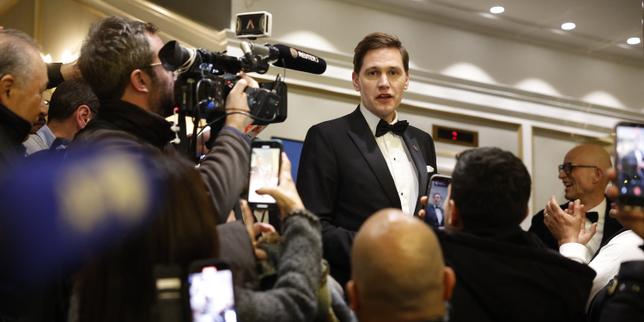
We treat the Nobel Peace Prize like an immutable moral compass carved into Scandinavian granite. When Jorgen Watne Frydnes steps into the spotlight as the chair of the Norwegian Nobel Committee, media outlets scramble to profile him as the quiet guardian of global conscience. They paint a picture of a solemn bureaucrat safeguarding a sacred trust against a darkening geopolitical backdrop.
It is a comfortable narrative. It is also entirely detached from how power actually functions. You might also find this similar article useful: The Sound of Glass Breaking in a Quiet Street.
The lazy consensus says the prize is an objective barometer of global virtue, carefully calibrated to reward the bravest champions of peace. That worldview belongs in a history textbook from fifty years ago. Today, the committee operates in a pressure cooker of statecraft, soft power, and institutional self-preservation. Pretending otherwise does not protect the prize; it blinds us to why the institution struggles to maintain relevance in an era of asymmetric warfare and unchecked authoritarianism.
Let us look at the mechanical reality of how this apparatus functions. As discussed in recent articles by NPR, the effects are worth noting.
The Nobel Committee does not sit in a vacuum of pure ethical contemplation. It consists of five individuals appointed by the Norwegian parliament. That single fact strips away the illusion of pristine, international neutrality. The committee is a political reflection of a small Western European democracy trying to navigate storms it cannot control. When they hand out a medal, they are signaling. They are signaling to Washington, to Brussels, to Beijing, and most importantly, to their domestic audience that Norway still holds a megaphone in international affairs.
Critics love to point out the glaring historical whiffs. Henry Kissinger and Le Duc Tho sharing the prize for a ceasefire that did not hold. Barack Obama receiving it months into his presidency before his administration expanded drone warfare. These choices are often dismissed as unfortunate anomalies, momentary lapses in judgment by well-meaning scholars.
They are not anomalies. They are structural symptoms.
When you tie an award intended for global peace to a rigid calendar year and a mandate to influence current events, you force the committee into the realm of political speculation. They are trying to incentivize future behavior or validate fragile political moments. Peace is not a treaty signed in Geneva or an election won in a fractured state. Peace is a grinding, unglamorous process of institution-building and conflict containment that rarely fits neatly into a television broadcast. By chasing dramatic, headline-grabbing laureates, the committee rewards the optics of diplomacy over the grueling mechanics of stability.
I have watched organizations burn millions of dollars chasing public relations victories that mirrored this exact dynamic. They mistake visibility for impact. They invest in the ceremonial ribbon-cutting while the foundation rots beneath their feet. The Nobel apparatus suffers from this exact institutional vanity.
Consider the criteria everyone assumes are paramount: courage, self-sacrifice, measurable reduction of violence. If you apply those metrics rigorously, the list of snubs becomes staggering. Countless local mediators, underground journalists, and logistical masterminds prevent wars every single day in regions the Norwegian press barely covers. They do not get medals. They do not get a ticker-tape parade in Oslo. They get buried in unmarked graves or silenced by state surveillance because their work is too quiet for television.
The committee's defenders argue that the prize creates a protective shield for dissidents, thrusting them into an international spotlight that keeps governments from quietly eliminating them. Sometimes that works. Aung San Suu Kyi was a celebrated laureate before her political trajectory forced the international community into an agonizing cognitive dissonance. That fallout exposed the fatal flaw of hero worship: when you pin the hopes of an entire movement onto a single human being, you ignore the messy, decentralized reality of human rights work.
We need to stop asking who deserves the next medal and start asking whether the medal itself still carries structural weight.
The traditional media wants you to believe that a committee room in Oslo holds the moral keys to the kingdom. They want a neat story about good versus evil, orchestrated by wise men and women who rise above the fray. The truth is much colder. It is a high-stakes geopolitical lottery where the house wins by keeping everyone talking about the nominees rather than the systemic failures that make peace so rare in the first place.
Stop treating the prize like an oracle. Start treating it like what it is: a historical artifact struggling to stay relevant in a multipolar world that has outgrown it.