The zip-ties make a specific sound when they cinch. It is a sharp, plastic zirp—the sound of a door locking that has no key. On a Tuesday night in New York City, that sound repeated itself over a hundred times. Among the wrists being bound was a woman who knows the weight of iron bars better than almost anyone else in the American consciousness.
Chelsea Manning was back in custody.
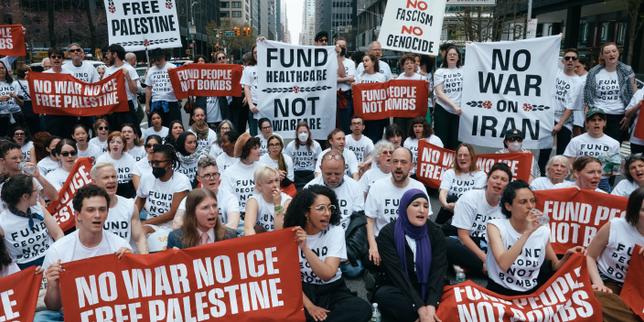
The scene wasn't a battlefield or a high-security government facility. It was the concrete labyrinth of the Brooklyn-Battery Tunnel. There, a phalanx of protesters had brought the mechanical heartbeat of the city to a grinding halt. They didn't come with weapons. They came with banners, their bodies, and a demand for a ceasefire in Gaza.
The Echo of the Past
For Manning, the sensation of cold metal or hard plastic against her skin isn't just a legal consequence. It’s a sensory trigger. Years ago, she sat in a military brig, then a federal prison, for leaking the largest cache of classified documents in U.S. history. She has spent more time in solitary confinement than most people spend on a college degree. When she stepped into the fray on the bridge that connects the boroughs, she wasn't just a "propalestinian militant" as some headlines dryly claimed. She was a living symbol of the cost of dissent.
The air smelled of exhaust fumes and the salt spray of the East River. It was cold. Protesters sat cross-legged on the asphalt, their voices rising in chants that bounced off the tunnel’s tiles. The NYPD moved in with the practiced, weary efficiency of an army that has done this a thousand times.
Consider the optics: a woman once pardoned by a president, now sitting on a dirty road because she believes the world is looking away from a tragedy.
Why This Manifestation Felt Different
Most protests in New York are a choreographed dance. The activists march, the police watch, the permits are checked, and everyone goes home for dinner. But this was different. This was an intentional rupture. By blocking the tunnel, these activists weren't just asking for attention; they were forcing a city built on momentum to experience a moment of forced stillness.
The "militants"—a word often used by the press to strip away the humanity of the protesters—were teachers, students, and veterans of the long game of activism. They represent a growing fracture in the American psyche. On one side, the institutional support for an ally’s military campaign; on the other, a visceral, agonizing rejection of the resulting human toll.
The stakes are invisible until you see the bodies being hauled into vans. For the commuters stuck in their cars, the stake was a missed dinner or a late arrival. For the people in the tunnel, the stake was their very freedom. They traded their evening of safety for a night in a cell, betting that the disruption would be loud enough to reach the halls of power.
The Logic of Disruption
Metaphorically, the tunnel represents the narrow vision of modern life. We move through it, focused only on the light at the end, ignoring everything above or below us. By clogging this artery, the protesters forced the "above" and "below" back into the conversation.
The NYPD reported that approximately 150 people were taken into custody. These weren't just numbers. Each arrest involves a processing center, a background check, and a permanent mark on a record. For many, it’s a terrifying first brush with the law. For Manning, it was a return to a familiar, albeit smaller, cage.
Her presence changed the narrative weight of the event. When a high-profile figure joins the rank and file, the "dry facts" of a protest evaporate. It becomes a story about the continuity of conviction. You can disagree with her politics, but it is impossible to ignore her commitment to the act of speaking out, regardless of the consequences.
The Mechanics of an Arrest
The process is grueling. First, the warnings. The police use a Long Range Acoustic Device (LRAD) that emits a piercing, metallic voice telling you to disperse or face arrest. Then comes the wait. The tension thickens like the smog in the tunnel. When the line breaks, it’s a flurry of activity.
There is a specific kind of bravery required to remain seated when a line of blue uniforms approaches. It’s a quiet, internal choice. You have to decide that your message is worth the physical discomfort of the "transport bus"—a vehicle with hard benches and narrow windows that smells of old sweat and floor cleaner.
The night didn't end when the tunnel reopened. As the cars began to flow again, the protesters were being processed in precinct basements across the city. The news cycle began to churn, stripping the grit and the emotion out of the event, turning a night of raw human conviction into a series of bullet points and statistics.
The Invisible Stakeholders
Think about the families of these protesters. Think about the phone calls made from jail at 3:00 AM. Activism isn't a hobby for these people; it’s an urgent, often painful necessity. They are reacting to a world they see as fundamentally broken, and they are using the only tool they have left: their own presence.
We often talk about "militants" as if they are a separate species. But they are our neighbors. They are people like Manning, who have already seen the darkest corners of the state and decided they still have something left to give. The "militancy" here wasn't violence. It was the stubborn refusal to move.
The true cost of the evening wasn't the overtime pay for the police or the lost revenue from the toll. It was the deepening of the lines drawn in the sand. Every arrest, every zirp of a zip-tie, makes those lines more permanent.
The tunnel is clear now. The cars move at sixty miles per hour, oblivious to the fact that just hours ago, a hundred people stood there and tried to stop the world. Chelsea Manning is back on the outside, for now. But the silence that followed the protest isn't a peaceful one. It’s the heavy, expectant silence that precedes the next storm.
In the end, the city forgot the disruption by the time the morning commute began. But for the 150 people who spent the night in the fluorescent glare of a holding cell, the world remains exactly as loud and as broken as it was when they first sat down on the cold, dark road.
The plastic ties are cut off with shears at the end of the night, leaving red, angry welts on the wrists. Those marks fade in a day or two. The conviction, however, tends to scar.