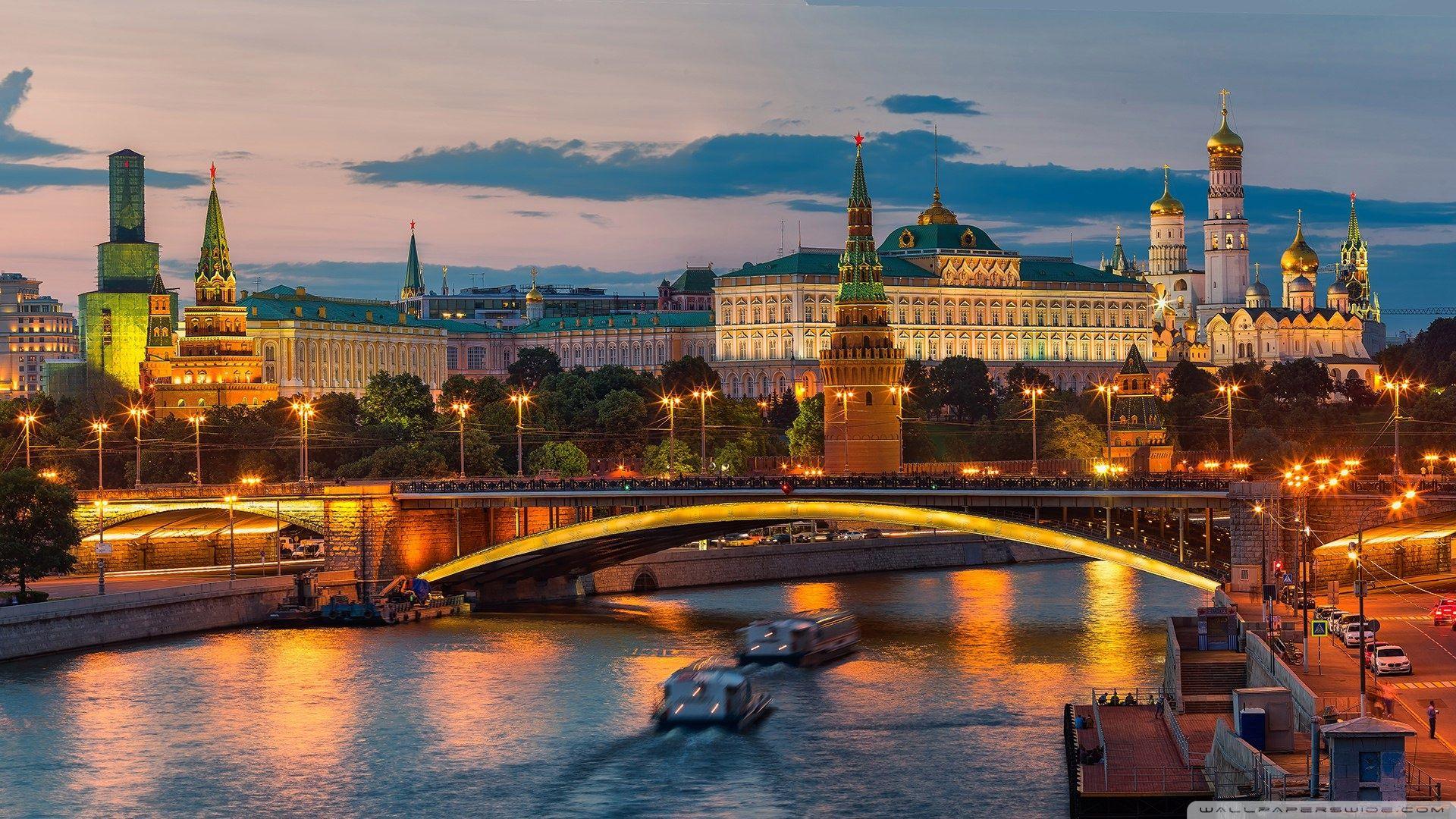
The sound hits you before the flash does. It is a low, persistent buzz, like a lawnmower operating three blocks away, or a massive, angry hornet trapped inside a windowpane. In the quiet hours before dawn in Moscow, that sound has become the most terrifying noise on earth. It is the acoustic signature of a changing world, a mechanical drone slicing through the dark, carrying with it the weight of an ongoing war.
For over two years, the conflict in Ukraine felt, to the average resident of the Russian capital, like something happening on a distant screen. It was a headline. It was a statistical report on evening television. It belonged to the borderlands, to the muddy trenches of the Donbas, to the shattered streets of Mariupol. Building on this topic, you can find more in: The Illusion of Enforcement and the Reality of the Iran Sanctions Gap.
Then came the morning the sky spoke back.
In one of the largest coordinated aerial assaults since the hostilities began, dozens of Ukrainian drones swarmed across Russian airspace. They bypassed sophisticated air defense grids, covered hundreds of miles of hostile territory, and struck at the very heart of Russia’s energy infrastructure, including the Kapotnya oil refinery right on Moscow's doorstep. Analysts at NPR have provided expertise on this trend.
This was not just a military operation. It was a psychological pivot. When the smoke rose over the Moscow refinery, it carried away the last illusions of distance. The frontline had traveled. It had ignored the maps, bypassed the trenches, and parked itself squarely in the view of high-rise apartment windows in the capital.
The Anatomy of the Buzz
To understand how a conflict transforms from a localized war into an atmospheric siege, one must look at the technology of asymmetry.
Historically, striking a target deep inside enemy territory required an air force. It required multi-million-dollar fighter jets, highly trained pilots, complex refueling logistics, and stealth capabilities that only global superpowers possessed. Ukraine, facing a military apparatus with vastly superior conventional numbers, had to reinvent the geometry of long-range strikes.
They did it with fiberglass, lawnmower engines, and GPS guidance systems.
Consider a hypothetical engineer in a covert workshop somewhere near Kyiv. Let us call him Roman. Roman does not have access to Lockheed Martin assembly lines. What he does have is a laptop, a 3D printer, and an urgent mandate. He designs a machine that is deliberately slow, intentionally cheap, and infuriatingly difficult to spot on conventional radar.
These drones do not fly at thirty thousand feet. They hug the treelines. They follow riverbeds. They move at the speed of a highway commuter, slipping under the radar beams that are angled upward to catch incoming ballistic missiles.
When forty, fifty, or more of these craft are launched simultaneously, they create a chaotic web of targets. Air defense systems, no matter how advanced, face a brutal mathematical problem. A Pantsir-S1 air defense missile costs hundreds of thousands of dollars to manufacture. The drone it is trying to shoot down might cost twenty thousand. Even if the defense system successfully intercepts nine out of ten targets, the tenth one gets through.
And in economic warfare, the tenth drone is all that matters.
The Spark at Kapotnya
The Kapotnya refinery is not an anonymous industrial outpost hidden away in the Siberian tundra. It sits within the Moscow ring road, responsible for producing a massive percentage of the fuel that keeps the capital moving. It is the literal engine of the metropolis.
When the drones struck, witnesses reported a fireball that illuminated the pre-dawn sky, turning night into an artificial, sickly orange noon.
For the people living in the adjacent residential districts, the experience was visceral. The shockwave rattled teacups in kitchen cabinets. It set off car alarms for miles. It forced ordinary citizens, wrapped in blankets, to step onto their balconies and watch thick, oily black smoke plume into the atmosphere.
The strategic objective here is twofold.
First, there is the immediate material damage. An oil refinery is not a warehouse; you cannot simply replace a cracked distillation column or a ruptured cracking unit overnight. These are highly specialized, custom-engineered pieces of heavy industrial equipment. Because of international sanctions, sourcing replacement parts for Western-designed refinery components becomes an logistical nightmare for Russian operators. Every successful strike acts as a tourniquet on Russia's economic lifeline, slowing down the production of the fuel that feeds both the civilian economy and the military logistics chain.
Second, and perhaps more importantly, is the shattering of the domestic narrative.
For months, the official messaging within Russia emphasized stability, control, and the inevitability of victory. The war was framed as a localized "special operation" that required little sacrifice from the urban elite of Moscow and St. Petersburg. The strike on Kapotnya ripped that script to shreds. It demonstrated that no one is insulated from the consequences of state policy. When the air raid sirens wail in Moscow, the abstract nature of geopolitics suddenly becomes a terrifyingly concrete reality.
The Invisible Network under Fire
The assault did not stop at the edges of the capital. The ripples of the drone swarm extended outward, touching power stations, storage depots, and infrastructure hubs across multiple regions, including Tula, Bryansk, and Belgorod.
This regional saturation tells us something critical about the evolution of the Ukrainian strategy. It is no longer about isolated, symbolic pinpricks meant to boost morale on social media. This is a systematic, calculated campaign aimed at paralyzing the adversary's internal nervous system.
Imagine the Russian energy grid as a massive, interconnected spiderweb. If you cut a single strand, the web holds. The spider can still navigate, and the structure remains viable. But if you cut ten strands simultaneously, in different corners, the tension changes. The web begins to sag. The system must divert energy from the center to repair the edges.
By striking refineries, power plants, and electrical substations all at once, Ukraine forces the Russian military into an agonizing dilemma regarding resource allocation.
Where do you deploy your limited air defense batteries? Do you keep them at the frontlines to protect your advancing troops from tactical bombers? Or do you pull them back to guard the civilian infrastructure, the power grids, and the oil facilities that keep the lights on in the Kremlin? Every missile battery moved back to protect an oil tank is one less battery protecting a trench line in the south.
It is a strategy of exhaustion, played out over thousands of square miles of sky.
The Human Frequency of War
Amid the geopolitical analysis and the technical breakdowns of drone payload capacities, it is easy to lose sight of the quiet, human terror that governs these nights.
War is a thief of routine. It alters the way people sleep, the way they look at the horizon, and the way they interpret the mundane sounds of daily life. In Moscow, a city known for its bustling energy and relentless pace, the introduction of aerial vulnerability creates a subtle, corrosive anxiety.
A delivery scooter accelerating down a quiet side street suddenly sounds like an incoming munition. A sudden flash of lightning during a summer storm triggers an instinctive glance toward the nearest industrial horizon. The collective psyche shifts. The realization settles in that safety is an illusion, that distance provides no immunity, and that the violence unleashed across the border can, at any moment, find its way back to the source.
Across the border in Ukraine, the perspective is entirely different, yet equally bound to the sky. For the citizens of Kyiv, Kharkiv, and Odesa, who have spent years enduring nightly bombardments of cruise missiles and Iranian-designed Shahed drones, the news of strikes inside Russia brings a grim, complicated sense of reciprocity. It is not necessarily celebrated as a joyful victory, but rather acknowledged as a necessary balancing of the scales.
There is a profound sadness in this realization. The conflict has entered a phase where the sky itself has been weaponized by both sides, turned into a highway for autonomous, unblinking killers that operate long after the creators have gone to sleep.
The Uncharted Horizon
We are witnessing the dawn of a new era of conflict, one where the traditional boundaries of geography are increasingly irrelevant.
The successful penetration of Moscow’s airspace by a swarm of low-cost drones proves that the nature of deterrence has permanently shifted. Large standing armies and vast nuclear arsenals cannot completely protect a nation’s vital infrastructure from the persistent, distributed threat of autonomous technology. The battlefield is everywhere now. It is in the clouds above the suburbs, it is in the software code driving the navigation systems, and it is in the economic calculations of oil traders watching the smoke rise from Kapotnya.
The smoke eventually clears, of course. The fires are extinguished by weary emergency crews, the burnt metal is cleared away, and the official statements are issued, promising that everything is under control and that the damage was minimal.
But the air remains changed.
The next evening, as darkness falls over the sprawling metropolis of Moscow, millions of people will lie down to sleep. They will turn off their lamps, close their eyes, and listen. And in the silence of the night, every distant engine, every low vibration from the street below, will carry the ghost of that persistent, mechanical buzz, reminding them that the sky is no longer empty, and it is no longer neutral.