Silence.
In a high-stakes political war room, silence is never peaceful; it is the heavy, suffocating sound of fifty people holding their breath while a spreadsheet updates on a glowing wall.
Picture a Tuesday night in late autumn, fluorescent lights humming above half-empty cardboard pizza boxes and lukewarm coffee cups. Campaign staffers, twenty-somethings running on adrenaline and muscle memory, stare at county-by-county returns from a battleground district. For months, the story had been written in stone. Red versus blue. Us versus them. The modern American midterm election has become a predictable theater of tribal loyalty, where the lines are drawn years in advance and nobody ever crosses the aisle—not even to nod.
Then, at 11:14 PM, a phone buzzes on a scarred folding table.
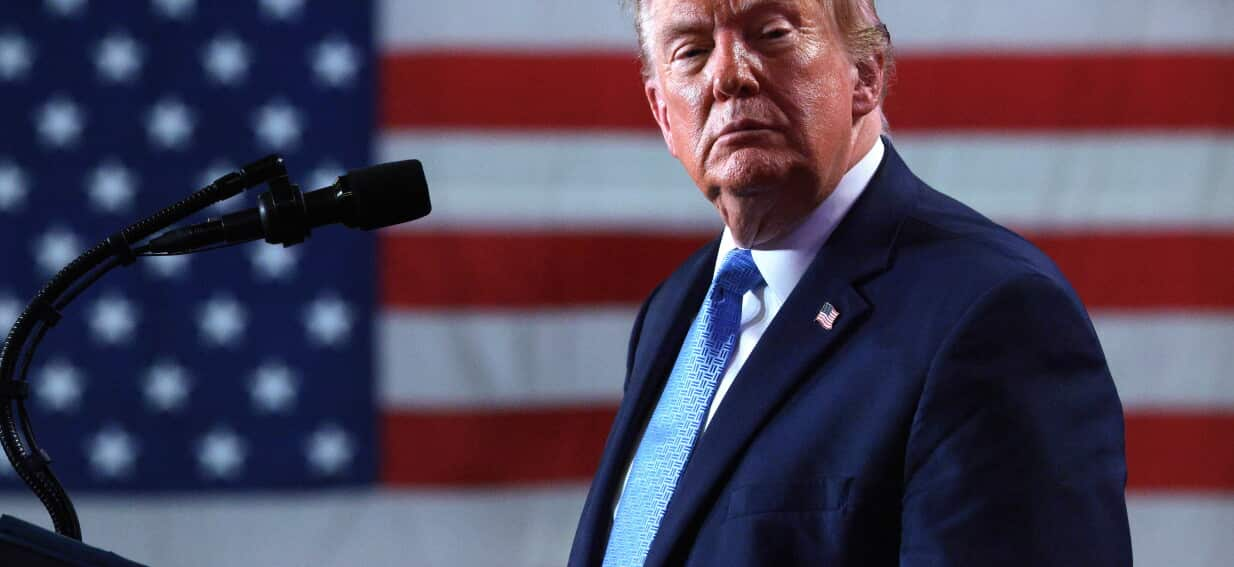
A strategist picks it up, reads a three-word social media post from Donald Trump, and drops his pen. "This is BIG," the former president had written, offering unexpected, public praise for a Democratic candidate right in the middle of an eleventh-hour twist in a pivotal U.S. midterm race.
To understand why that single moment sent shockwaves through cable news studios and kitchen tables alike, you have to step away from the pundits and look at what actually happens when the rigid rules of political gravity suddenly fail.
The Anatomy of an Eleventh-Hour Twist
Political campaigns are built like clockwork. Every dollar spent on television ads, every door knocked in suburban cul-de-sacs, and every carefully worded stump speech is designed to eliminate surprises. Strategists spend millions trying to turn human voters into predictable data points.
Yet American elections have a stubborn habit of refusing to follow the script.
When an eleventh-hour twist hits a key midterm race—whether triggered by a sudden third-party withdrawal, a local economic shock, a last-minute endorsement, or a rival campaign imploding under the weight of an unforced error—the mathematical models break instantly. In a razor-thin district where fifty-one percent means power and forty-nine percent means irrelevance, a shift of just three thousand votes changes the balance of Congress.
Consider a hypothetical voter, let us call him Arthur, a retired machinist living in a rust-belt county that has swung back and forth between parties for two decades. Arthur does not watch twenty-four-hour cable news. He cares about the price of groceries, the solvency of his pension, and whether the local plant stays open. For months, Arthur ignored the glossy mailers stuffing his mailbox because they all sounded like the same scripted noise.
Until the noise stopped being scripted.
When Donald Trump, a figure defined by fierce partisan loyalty and relentless battles against the Democratic Party, publicly praised a Democrat in the final hours of a tight race, it acted like a flare fired into a pitch-black sky. Voters like Arthur suddenly looked up. Why would a Republican leader praise a Democrat when control of Washington hung in the balance?
Why Partisan Praise Breaks the Brain
To grasp the mechanics of such a moment, think about how modern political tribalism operates. It functions much like a high-stakes sports rivalry where cheering for the opposing quarterback is treated as treason. Over the past twenty years, political scientists have documented a steep rise in "negative partisanship"—the phenomenon where voters are driven less by love for their own party and more by fear or anger toward the other side.
In that environment, praise across party lines is not just polite. It is disruptive.
Political observers and news outlets covering the eleventh-hour midterm development noted that Trump's remark immediately scrambled the messaging of both national parties. For Republican strategists, the comment created an instant dilemma: do you echo the leader of the party and risk depressing turnout among base voters who spent months campaigning against that very Democrat, or do you ignore the statement and look divided?
For Democrats, the trap was equally sharp. In a polarized midterm climate, receiving praise from Trump is a double-edged sword. In a conservative-leaning swing district, his words might give hesitant independent or right-leaning voters permission to split their ticket and back the Democrat. In a progressive stronghold, however, that same praise can spark suspicion among the party's base, leaving activists wondering what common ground exists behind closed doors.
I have watched local campaigns unravel over far less. Years ago, sitting in the back of a community center in Ohio during a contentious congressional race, I saw a candidate lose an entire room of union workers simply because he hesitated for three seconds before answering a question about trade tariffs. Voters have an uncanny radar for authenticity, and they have an even sharper radar for when the rules of the game have suddenly changed.
The Invisible Stakes Behind the Headlines
Cable news anchors love a dramatic headline because drama drives ratings. "This is BIG" fits neatly into a lower-third banner, accompanied by dramatic orchestral music and split-screen shouting matches.
But the real stakes of an eleventh-hour midterm twist are invisible on television. They live in the quiet calculations of congressional leadership and the long-term memory of voters.
Midterm elections are historically referendums on the party in power, often decided by thin margins in a few dozen competitive districts across states like Pennsylvania, Michigan, Arizona, and Georgia. When a late-breaking twist alters the trajectory of even one key race, the ripple effects touch everything that follows:
- Committee gavels and legislative agendas: A single seat can determine which party controls the House or Senate floor, dictating which bills get a vote and which investigations move forward.
- The limits of party discipline: When top figures break partisan ranks publicly, it signals to rank-and-file lawmakers that strict ideological conformity is no longer the only path to survival.
- Voter psychology: Perhaps most importantly, unexpected cross-party moments remind disillusioned citizens that politics is still driven by human beings making unpredictable choices, not just algorithms sorting zip codes.
It is easy to feel cynical when watching modern politics. The sheer volume of outrage, fundraising texts, and rehearsed talking points can make the entire system feel locked in amber, incapable of surprise or genuine human connection.
When Strategy Meets Instinct
What makes Donald Trump's intervention in a tight midterm race so fascinating to political analysts is how sharply it contrasts with traditional campaign discipline. Standard political consulting relies on caution—testing every phrase in focus groups before a candidate ever speaks it aloud.
Trump has rarely operated by that playbook. Throughout his political career, he has relied on instinct, transactional alliances, and the power of the unexpected statement to dominate the news cycle. Praising a Democrat at a critical juncture does several things at once: it seizes total control of the media narrative, forces opponents onto the defensive, and rewards specific alignment on a shared issue—whether trade, border policy, local industry, or opposition to a mutual political rival.
Consider what happens next when a narrative shifts that abruptly. Campaign managers who spent six months preparing their closing arguments have to tear up their scripts at midnight. Television ad buyers scramble to pull spots that suddenly feel outdated. Local reporters, exhausted from covering stump speeches they could recite in their sleep, suddenly find themselves chasing a real story with unpredictable consequences.
And what about the voters?
In the final hours before polls open, most undecided voters are not looking for a fifty-page policy white paper. They are looking for a signal—a reason to trust that someone in Washington sees the world the way they do. When the usual partisan labels are scrambled by an unexpected endorsement or a moment of cross-aisle praise, voters are forced to stop relying on autopilot and actually look at the person on the ballot.
The Morning After the Noise
There is a specific kind of quiet that settles over a campaign town the morning after Election Day.
The yard signs still stand along the highway shoulders, slightly damp from the morning dew, though nobody is looking at them anymore. The television screens in the local diner have moved on to weather forecasts and high school sports scores. The frantic urgency of the eleventh hour—the breathless breaking news alerts, the viral social media posts, the midnight strategy calls—evaporates into the mundane reality of governing.
Yet the lesson of those late-night twists lingers long after the ballots are counted.
For all the money poured into predictive analytics, voter micro-targeting, and rigid partisan messaging, American democracy remains stubbornly human. It is still vulnerable to a sudden change of heart, a sharp tactical pivot, or three unexpected words typed onto a screen just before midnight.
Back in that hypothetical war room, as the final precinct numbers trickle in and the sun begins to pale the horizon outside the blinds, the young staffers finally pack up their laptops. Nobody cheers, and nobody cries. They just stare at the map on the wall, realizing that the rules they memorized yesterday no longer apply tomorrow.