Rain on Merseyside smells different. It carries the weight of the Mersey, a thick, metallic tang of salt and ancient industry, smelling of a thousand Sundays spent shouting at freezing pitches. When autumn settles over the north of England, the floodlights at Anfield do not merely illuminate the grass; they create a cathedral of amber smoke and low-hanging cloud.
For months, the rumors had drifted through the pubs of Walton Breck Road like smoke from a dying fire. Whispers. Nods. The quiet speculation of men who have seen world-class talents arrive as kings and leave as ghosts.
Then came Bradley Barcola.
Movement. Pure, unadulterated acceleration.
To understand what it means for Liverpool to pry a twenty-three-year-old French international away from the glittering, oil-soaked fortress of Paris Saint-Germain, you have to understand the currency of the Kop. They do not care about price tags. They care about sweat. They care about a winger who tracks back in the eighty-ninth minute to slide-tackle a right-back near the corner flag.
Paris is a city of glass and velvet. Parc des Princes offers a stage where superstars walk like gods, cocooned in luxury, insulated by domestic dominance. But Barcola was always different. Even under the harsh, blinding lights of the French capital, where Kylian Mbappé cast a shadow long enough to swallow entire forward lines, Barcola played with the hunger of a boy who still remembered the gravel pitches of his youth.
He runs with a strange, hypnotic grace. Long strides. A low center of gravity that defies his height. When he faces a defender, he doesn't just dribble; he pauses. That tiny, terrifying fraction of a second where time stands still. The defender shifts his weight. A micro-adjustment of the hips. And then, electricity. Gone.
Liverpool needed that spark.
The transition from the Parisian Parc to the English amphitheater is rarely gentle. Ask anyone who has stood on the Main Stand when the wind comes howling off the estuary. It strips the romance right out of the game. It demands resilience.
When the deal was finalized, the dry press releases spoke of transfer fees, amortized costs, and multi-year contracts. Standard corporate machinery churning out data points for men in glass offices. But the reality on the ground was infinitely more visceral.
Imagine standing outside the player entrance at the AXA Training Centre in Kirkby. The wind is biting. A lone fan holds a fading Sharp-ie and a replica shirt from 2005. When the black SUV rolls through the gates, the air changes.
Barcola stepped out into the drizzle, pulling his coat tight against his collar. No entourage. No grand theatricality. Just a quiet nod to the security guard, a quick flash of a smile, and the unmistakable posture of a man who knows he has just walked into the lion's den.
Arne Slot had spent weeks analyzing the tactical puzzle. Liverpool’s left flank had been functional, diligent, even brilliant at times, but it lacked that unpredictable, searing blade that turns a tight 1-0 match into a comfortable rout. Modern football is chess played at ninety miles per hour. Every space is congested, every passing lane choked by meticulously drilled defensive blocks.
You cannot pass your way through a wall five hundred times and expect it to crumble. You need someone who can pick up the ball in a tight pocket of space, isolate a fullback, and turn him inside out before the defensive cover can even pivot.
Barcola is that crowbar.
During his breakout campaigns, analysts threw around numbers like expected goals and progressive carries, trying to quantify a player who defies simple metrics. But numbers fail to capture the psychological terror he inflicts on a fullback who has already run nine miles.
Consider the geometry of a counter-attack. The opponent loses possession on the edge of the Liverpool penalty area. Virgil van Dijk steps up, chests the ball down, and pokes it five yards into midfield to Alexis Mac Allister. One touch. Up.
That is the exact moment Barcola wakes up.
He doesn't jog. He explodes into the blind spot of the opposing right-back. By the time the ball reaches the center circle, the French winger is already three yards clear, his boots chewing up the turf. It is a terrifying visual for any defender who values his defensive rating and his hamstrings.
The deal itself was orchestrated in absolute silence. In an era where every WhatsApp message leaks within minutes and Fabrizio Romano tweets every heartbeat of a negotiation, sporting director Richard Hughes operated in the shadows. Paris Saint-Germain did not want to sell. Why would they? Young, explosive French talent with a ceiling that touches the stars is not something you casually part with.
Yet, the pull of the red shirt remains an anomalous, magnetic force in world football. There is a mythos attached to Liverpool that money cannot buy. It is forged in European nights under the lights, in the roar of a crowd that sings You'll Never Walk Alone with a defiance that borders on the religious.
Barcola felt that pull.
When the contract was finally signed behind closed doors, the young forward did not post a flashy video on social media immediately. He sat in an empty office overlooking the Melwood training pitches—now the club's sprawling Kirkby headquarters—and stared out at the rain.
He was thinking of Lyon. He was thinking of the Parc des Princes. He was thinking of the Champions League nights where the pressure can crush a man's ribs to dust.
And now, Anfield.
The physical demands of the Premier League are legendary. Players arrive from Spain, Italy, and France accustomed to tactical pauses, referees who blow their whistles at the slightest graze, and gentle recovery sessions. In England, the game is played at the velocity of a freight train derailment. Center-backs do not offer pleasantries; they leave studs on your ankles and dare the referee to punish them.
Adapting requires more than talent. It requires an internal iron core.
During his first tactical briefing at Kirkby, Slot did not show Barcola clips of his goals in Ligue 1. Instead, he showed him clips of defensive transitions. He showed him how the team presses as a single, breathing organism. If one gear slips, the whole engine stalls.
Barcola watched in silence, nodding slowly. He understood the language of work. Growing up in the Parisian banlieues, nothing was ever handed over on a silver platter. Every opportunity was contested. Every inch of grass was fought for.
Saturday afternoon arrived with the quiet, suffocating tension that only a Premier League matchday can produce. The air inside the stadium was thick with anticipation. When the team sheet dropped an hour before kickoff, a collective murmur rippled through the press box and the stands alike.
Number nine. Ready.
As the players emerged from the tunnel, the wall of sound hit like a physical blow. The Kop was a swirling vortex of red flags and raw vocal power. Barcola stood near the center circle, his eyes fixed on the turf, shoulders rolling as he loosened his muscles.
The whistle blew.
For the first twenty minutes, Liverpool probed cautiously. Chelsea—or whoever stood in the way—sat deep, compact, suffocating the central channels. The crowd began to murmur, an anxious hum of expectations waiting to be met.
Then came the shift.
Ryan Gravenhage collected a loose ball in midfield, absorbed a clumsy challenge, and slipped a disguised pass down the left touchline.
Time slowed down.
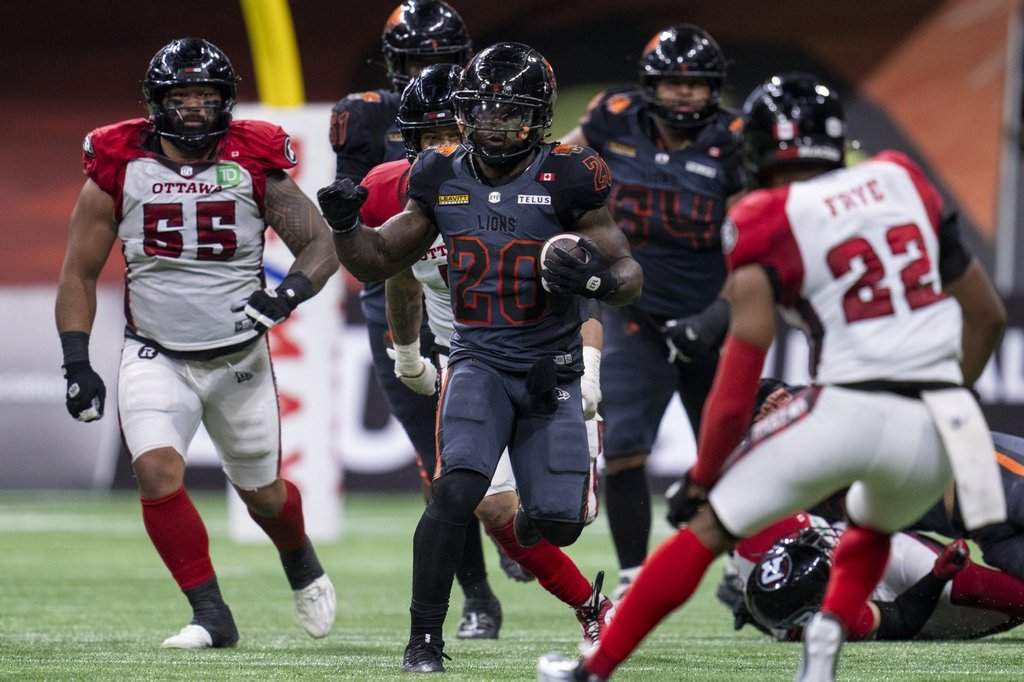
Barcola was there. He took the ball on the half-turn, his studs gliding over the rain-slicked grass. The opposing right-back lunged, desperate to cut off the angle. A drop of the shoulder. A lightning-fast shift of weight to the right.
And then he was gone, leaving a ghost in his wake, surging down the flank toward the gaping expanse of green grass with the entire stadium rising as one to catch its breath.