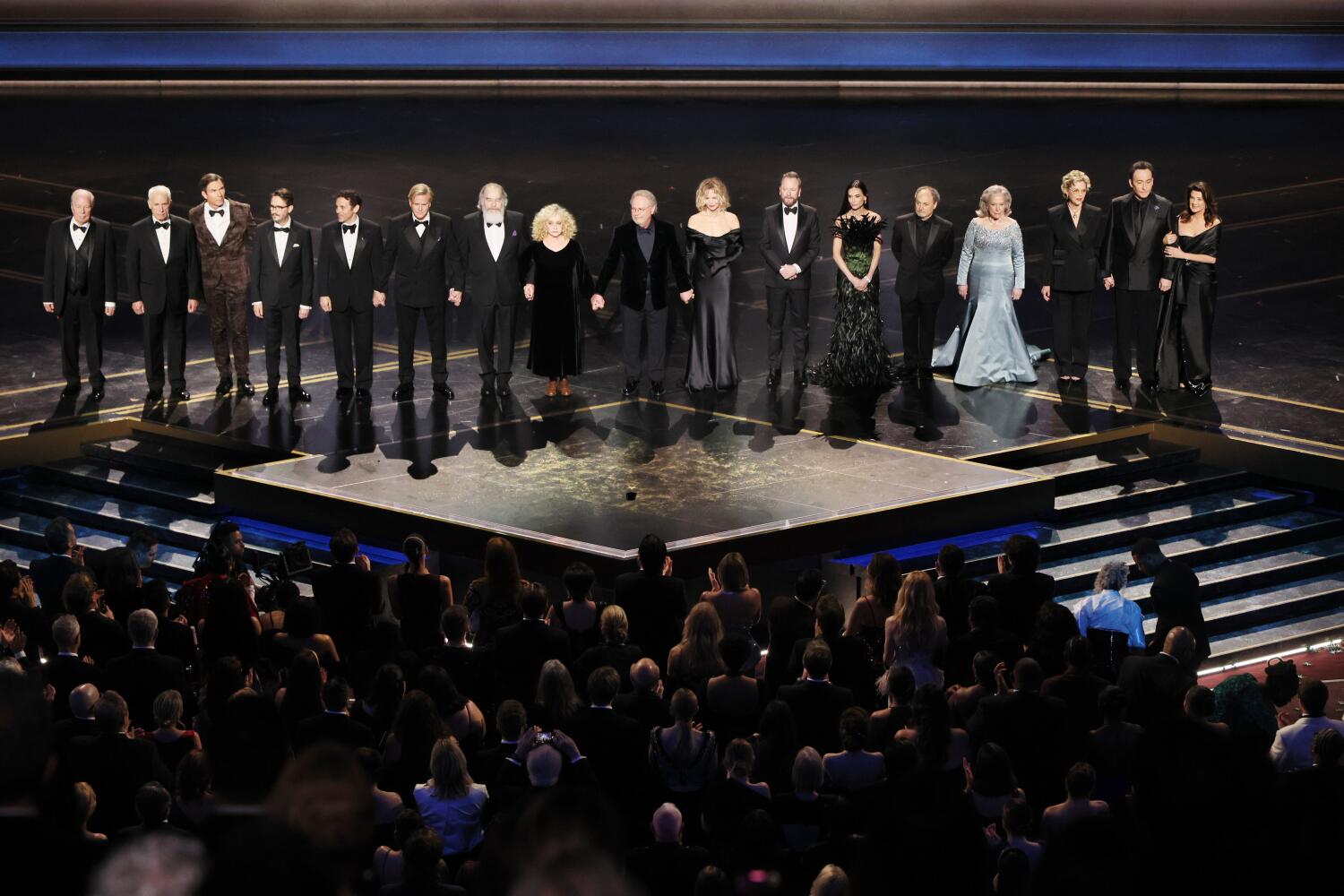
The Academy Awards have spent the better part of a decade dying a slow, self-inflicted death by a thousand tuxedos. Year after year, viewers watched a bloated, clinical celebration of an industry that seemed increasingly terrified of its own shadow. Then came the performance of "Sinners." It didn't just break the monotony. It set the stage on fire and forced a room full of cautious millionaires to remember that art is supposed to be dangerous.
This wasn't just another musical interlude squeezed between technical awards. The transformation of the Dolby Theatre into a sweating, breathing, visceral juke joint represented a radical departure from the "prestige" polish that usually kills the energy of the room. It was a calculated gamble by the producers to inject authentic grit into a ceremony that has long traded soul for sanitization. For those watching, it was the first time in recent memory that the Oscars felt like a live event rather than a televised funeral.
The Architecture of Authenticity
To understand why this moment landed with such force, you have to look at the mechanics of the stagecraft. Usually, Oscar performances are designed for the camera first and the room second. They are clean. They are framed. They are safe.
The "Sinners" set design threw that playbook out the window. By leaning into the aesthetic of a Mississippi Delta juke joint, the production team used heavy wood textures, low-hanging amber lights, and a floor plan that prioritized cramped, high-energy movement over wide-angle visibility. They didn't just build a set; they built an environment.
Breaking the Fourth Wall of Boredom
Traditional award show staging creates a massive gulf between the performer and the audience. There is the "Stage" and there is the "Seat." By extending the juke joint atmosphere into the front rows, the performers effectively dismantled that barrier. When the music started, the A-list crowd wasn't just watching a show. They were physically inside it. This forced a level of engagement that no amount of scripted banter could ever achieve.
The sound engineering played a massive role here as well. Instead of the polished, over-produced audio tracks that usually dominate these broadcasts, the mix for "Sinners" kept the raw edges. You could hear the stomp of boots on wood. You could hear the slight rasp of breath. It was human. In an industry currently obsessed with artificial perfection, that rawness acted as a much-needed shock to the system.
Why the Industry Needed This Wake Up Call
The film industry is currently wrestling with its own identity. Between the rise of streaming and the contraction of the traditional box office, there is a palpable sense of anxiety about what "cinema" actually means anymore. For too long, the Oscars have responded to this crisis by becoming more insular.
The "Sinners" performance offered a different path forward. It proved that the audience—both in the room and at home—is starving for something that feels unmanicured. The success of this segment reveals a fundamental truth that the Academy has ignored for years: you cannot manufacture "prestige" through boredom. True prestige comes from moments of undeniable cultural impact.
The Risk of the Raw
There was a significant risk involved in this approach. A juke joint aesthetic, by its very nature, flirts with chaos. There were moments where the camera work struggled to keep up with the frantic movement on stage. In a standard broadcast, that would be considered a failure. Here, it added to the urgency. It felt like something was actually happening, something that might spin out of control at any second.
That sense of danger is exactly what has been missing from the Oscars. When every speech is vetted by three publicists and every joke is focus-grouped into oblivion, the only way to find truth is through the music. By allowing "Sinners" to occupy that space without the usual corporate sanding of the edges, the producers finally gave the audience a reason to lean in.
The Ghost of Oscar Past
We have seen attempts at this before, but they usually feel like a costume party. A big name star tries to "get gritty" for four minutes before returning to their seat to fix their hair. What made this different was the commitment to the ensemble. The stage wasn't just a platform for a single ego; it was a collective explosion of talent that made the stars in the audience look like observers of a world they weren't cool enough to inhabit.
This flipped the power dynamic of the evening. Usually, the performers are there to serve the nominees. In this instance, the nominees were merely the backdrop for a piece of performance art that stood entirely on its own. It reminded the industry that while movies are the product, the spark behind them is often found in the messy, unpolished corners of culture that don't always make it to the red carpet.
Beyond the Spectacle
If the Academy is smart, they won't treat this as a one-off gimmick. The "Sinners" performance should serve as a blueprint for the future of the broadcast. The lesson isn't "add more music." The lesson is "add more life."
The industry spends billions of dollars trying to predict what people want, often settling on a middle-of-the-road average that satisfies no one. But the reaction to this juke joint transformation proves that people respond to conviction. They respond to a clear, uncompromising vision that isn't afraid to be loud, dark, or a little bit dirty.
The Cultural Weight of the Performance
We also have to acknowledge the specific cultural lineage being tapped into here. The juke joint isn't just a set piece; it is a historical site of resistance, joy, and raw expression. Bringing that energy into the Dolby Theatre—a temple of high-gloss artifice—created a friction that was impossible to ignore. It brought the roots of American storytelling into a room that usually only cares about the branches.
This wasn't just entertainment. It was a reminder of where the stories we tell actually come from. Long before there were green screens and digital color grading, there were rooms like this, where people told stories because they had to, not because they were chasing an opening weekend number.
A New Standard for Musical Numbers
The bar has been moved. Moving forward, the standard "stand at the mic and sing the ballad" approach is going to feel even more dated than it already does. The audience has seen that the stage can be a living, breathing entity. They have seen that the Oscars can, for a brief moment, stop being a trade show and start being a show.
The producers took a swing. It connected. Now the question is whether the rest of the industry has the courage to follow that lead, or if they will retreat back into the safety of the status quo once the smoke clears.
Next time you find yourself watching a room full of people in formal wear looking miserable, remember the night the juke joint came to Hollywood. It was proof that the pulse is still there; you just have to be willing to get your hands dirty to find it. Stop trying to make the Oscars "classy" and start making them matter again.