The grass was damp enough to ruin a good pair of sneakers, and the humidity was hovering somewhere around ninety percent. It was a Tuesday in mid-July. Under normal circumstances, everyone in that backyard would have been staring at a glowing five-inch screen, retreating into the quiet, isolated comfort of a digital feed.
Instead, a thirty-two-year-old accountant named Dave was crouched in a runner's stance, sweating through his polo shirt, glaring at a wooden block the size of a loaf of bread. Learn more on a related subject: this related article.
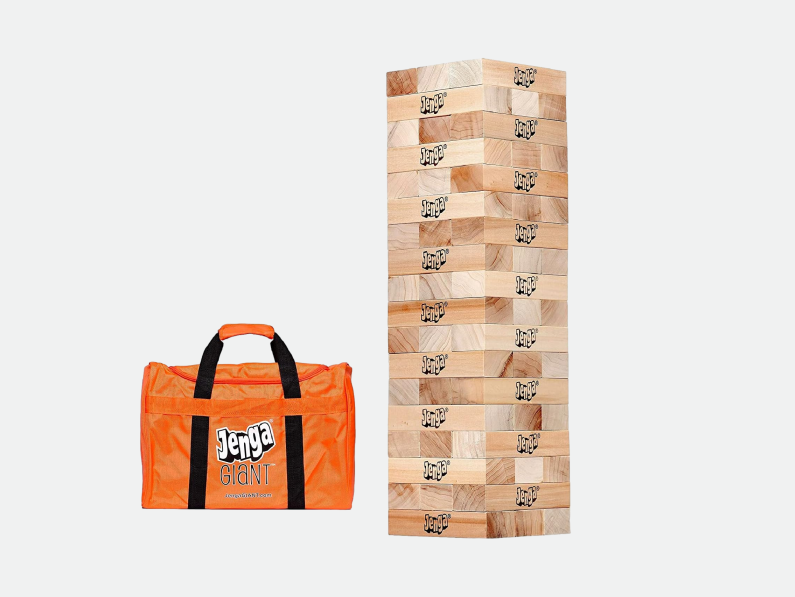
He was playing Jenga. But not the version that fits neatly on a coffee table. This tower stood four feet high on a sturdy wooden crate, its heavy pine timbers stacked with precarious intent. When Dave pulled the loose block from the bottom row, the friction generated a loud, satisfying rasp that echoed off the neighbor’s garage. The crowd—composed of six friends who usually communicated entirely through group chats—held its collective breath. The tower swayed. A collective groan rippled through the yard.
We are living in an era of micro-connections. We double-tap photos of people we haven’t seen in a decade. We send text messages to people sitting in the next room. Our entertainment has become hyper-efficient, compressed into algorithms designed to give us maximum dopamine with minimum physical effort. Further reporting by ELLE explores comparable views on this issue.
But something vital gets lost in the compression.
When you take a classic game—something woven into the fabric of our childhood memories—and scale it up to a ridiculous, giant proportion, something strange happens to the human psychology. It breaks the digital spell. You cannot ignore a Connect Four grid that stands as tall as a third-grader. You cannot passively play a game of chess when the rooks require two hands to lift. Giant backyard games are not just novelty items for suburban barbecues. They are low-tech tools for survival in a high-tech world.
The Weight of Tangible Gravity
To understand why scaling up a game changes our behavior, consider a hypothetical family gathering. Let's call them the Hendersons. Under ordinary circumstances, the teenage kids are upstairs scrolling through short-form videos. The parents are checking work emails on the patio. The grandparents are watching the news inside. They are physically co-located, but experientially miles apart.
Now, introduce a giant, wooden four-in-a-row set to the lawn.
It is constructed from polished cedar, standing nearly four feet wide. The plastic discs of the standard tabletop version are replaced by heavy, satisfyingly thick discs of painted birch wood. When the first disc drops down the track, it doesn't make a flimsy plastic click. It makes a resonant, wooden clack that demands attention.
Suddenly, the grandfather walks over. He remembers the game from thirty years ago, but he has never seen it like this. He challenges his granddaughter. The teenagers come downstairs to watch because the sheer scale of the setup makes it look like a spectacle, a piece of public art rather than a toy.
This is the power of physical scale. It creates a focal point. In architectural terms, it acts as an anchor for human interaction. Psychologists have long noted that shared physical experiences form stronger emotional bonds than passive ones. When you play a giant version of a game, your entire body gets involved. You walk. You bend down. You lift.
Consider the difference between playing a game of Yahtzee on a smartphone app versus rolling five massive wooden dice out of a literal bucket onto the grass. The digital app uses a random number generator. It is perfect, sterile, and instantaneous. The giant wooden dice, however, are subject to the chaotic reality of the physical world. They bounce off lawn chairs. They get caught in clumps of clover. They roll under the deck.
The game becomes unpredictable, and in that unpredictability, we find joy. We find something to laugh about together.
The Architecture of the Backyard Carnival
If you want to transform a standard summer afternoon into something memorable, you have to choose the right tools. Not every game translates perfectly to a larger format, but the ones that do share a specific trait: they are visually striking and simple to understand.
Here are the heavy hitters of the oversized gaming world, the ones that consistently pull people out of their shells.
The Tower of Peril
The giant wooden stacking tower is the undisputed king of backyard entertainment. Starting at around two or three feet tall, it can easily grow to over five feet during a tense match. The stakes are visually obvious to everyone in the yard. Every removed block alters the center of gravity. It forces players to move slowly, to communicate, and to physically support each other—sometimes literally holding a friend by the belt so they can reach a high block without tipping the structure.
The Lawn Grid
Oversized four-in-a-row sets serve a dual purpose. They are highly strategic, but they also act as a gorgeous piece of temporary lawn furniture. The visual contrast of bright red and blue discs against green grass naturally draws people toward it. It is the ultimate spectator game for a backyard party because onlookers can see the entire board from twenty feet away, allowing them to shout unsolicited advice and engage in good-natured heckling.
The Heavyweight Board
Giant chess and checkers sets turn a quiet, cerebral pastime into a theatrical performance. When the pieces are two feet tall, a move is no longer just a mental decision; it is a physical statement. Sliding a massive queen across a black-and-white nylon mat requires intent. It slows the game down, forcing players to truly contemplate the space and the geometry of the board.
The Toss and Score
Oversized dominoes and giant wooden dice games take traditional indoor parlor games and force them into the sunlight. A set of giant dominoes crafted from solid pine can be arranged across a patio or deck, turning a simple numbers game into a beautiful, sprawling mosaic. It invites younger children to participate because the pieces feel like building blocks, blending structured play with raw creativity.
Why Our Brains Crave the Uncompressed
There is a concept in media theory known as sensory deprivation, which happens when we rely too heavily on a single sense—usually our vision—while navigating digital environments. Our eyes strain against the glass of our devices, but our hands, our ears, and our spatial awareness are left understimulated.
Oversized games do the exact opposite. They flood our senses with rich, organic data.
You feel the rough grain of the wood. You smell the cut grass as you chase a stray die. You hear the deep thud of a heavy piece hitting the ground. This sensory richness anchors us in the present moment. It is a form of informal mindfulness. You cannot worry about tomorrow's budget meeting when you are actively trying to prevent forty pounds of pine blocks from crashing down onto your toes.
Back in that humid July backyard, Dave finally made his move. He tapped the block. It slid out. The tower swayed dangerously to the left, caught its balance, and stood still.
The entire yard erupted into cheers. It wasn’t a world-changing event. It didn’t solve any grand societal problems. But for three seconds, six adults forgot about their notifications, their unread emails, and the ambient anxiety of the modern world. They were entirely present, bound together by nothing more than gravity, wood, and a shared piece of summer.


:max_bytes(150000):strip_icc()/GettyImages-1134454893-ad4d4f8ecce646e0beb8059f256dfc5d.jpg)