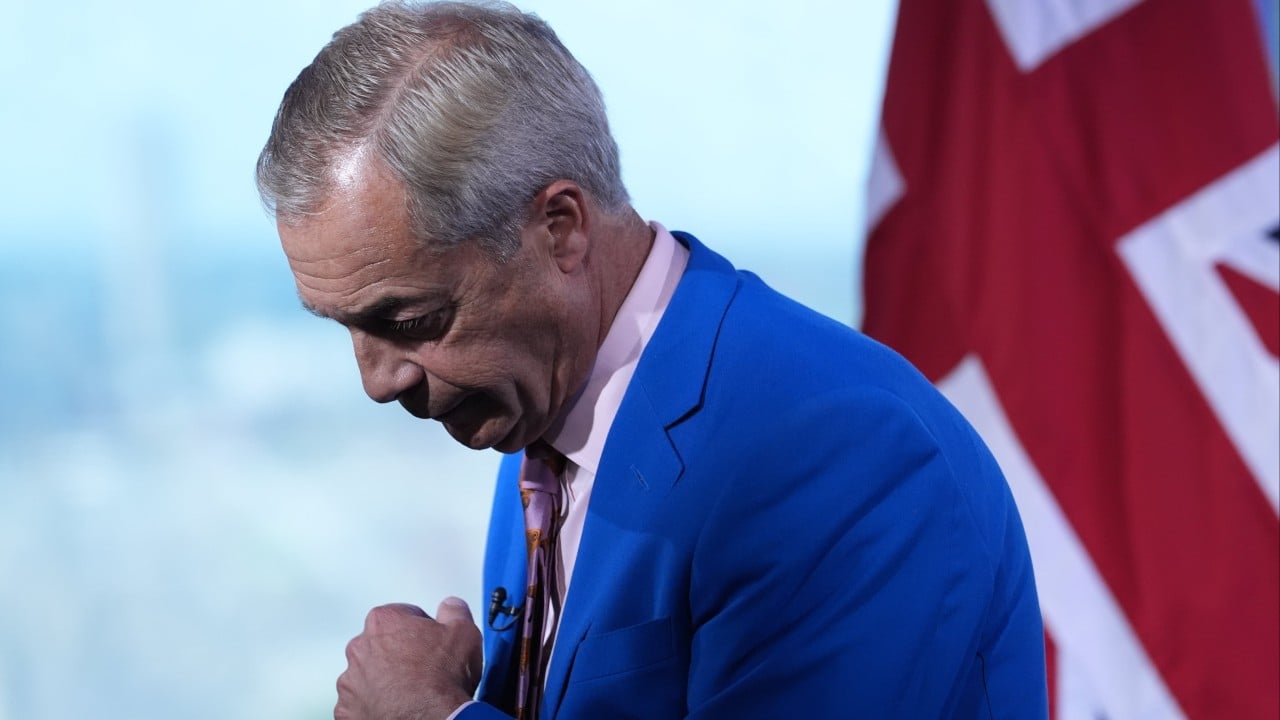
Nigel Farage just blew up the British political calendar again. By resigning his seat as the Member of Parliament for Clacton-on-Sea, the Reform UK leader hasn't walked away from power. He's trying to rewrite the rules of his own survival.
Faced with escalating pressure over millions in undeclared financial gifts, Farage chose to jump before he was pushed. It's a high-stakes move designed to bypass a looming parliamentary standards investigation that could have ended in his forced suspension or outright expulsion. Instead of letting a committee of bureaucrats decide his fate, he's turning his financial drama into a populist ballot-box battle.
The core of the issue involves a massive £5 million ($6.7 million) gift from Christopher Harborne, a Thailand-based cryptocurrency billionaire, received just before the 2024 general election. Parliamentary rules state that newly elected lawmakers must declare gifts worth more than £300 if they were received in the previous 12 months. Farage didn't declare it. He claimed the cash was an "unconditional gift" for personal security. He even boasted on LBC radio that he could spend it on "Ferraris" or "put it on the horses" if he felt like it.
The Parliamentary Commissioner for Standards, Daniel Greenberg, didn't see the joke. A formal investigation was launched. To make matters worse, a second inquiry emerged following reports in The Sunday Times detailing undeclared financial benefits and security staff provided by George Cottrell, a convicted fraudster and long-time Farage associate.
Inside the Clacton By-Election Strategy
By quitting his seat on Tuesday, Farage automatically pauses the active parliamentary investigations. Watchdog rules dictate that because he's no longer a sitting MP, the formal processes halt during the campaign. He's betting everything on a quick reset.
Nigel Farage's Clacton Performance (2024 General Election)
==========================================================
Nigel Farage (Reform UK):   46.2%
Conservative Party:         27.9%
Labour Party:               16.2%
He won Clacton comfortably in 2024 with a majority of over 8,400 votes. By triggering a snap by-election, he frames the entire financial scandal not as a question of rule-breaking, but as a "people versus the establishment" showdown. He wants to use a victory in Essex to claim a democratic mandate that washes away his disclosure failures.
Mainstream parties see right through the stunt. Kemi Badenoch, the Conservative leader, labeled the move an "ego by-election" and a "hissy fit." A spokesperson for Andy Burnham—the frontrunner to take over Downing Street following Keir Starmer's recent resignation announcement—dismissed it as a cheap gimmick designed to hide serious funding questions.
The Escape Hatch That Might Not Work
The tactical genius of this move is highly debatable. While Farage told his YouTube audience that he wants the voters to be his judges, a by-election victory won't actually wipe his slate clean.
According to official parliamentary protocols, if an MP resigns during an active inquiry and is subsequently re-elected, the standards commissioner has the explicit power to reactivate the probe. If Farage wins the seat back, he walks right back into the same room with Daniel Greenberg.
If the investigation resumes post-election and finds a severe breach, Farage could still face a House of Commons suspension of 10 days or more. Under UK law, that triggers a formal recall petition. If 10% of Clacton voters sign it, he will be forced into another by-election. Farage is running hard, but he's running in circles.
The Web of Crypto Cash and Hidden Backers
To understand why this scandal stuck, you have to look at the sheer scale of the money. A £5 million personal gift to an individual politician is practically unprecedented in modern British politics.
Farage's defense rests on safety. He argues that because the British state refused to provide him with official taxpayer-funded protection, he had to rely on private donors to stay alive. He calls himself the most physically attacked public figure in modern Britain.
The problem is the lack of transparency. Voters have a right to know who holds financial leverage over elected officials. When a politician receives millions from a crypto investor based in Thailand, or relies on resources linked to an individual convicted of wire fraud in the United States, it raises immediate national security and integrity questions.
What This Means for Reform UK
This crisis hits Reform UK at a delicate moment. The party scored major breakthroughs in local elections earlier this year, fueling speculation that Farage could genuinely contend for the premiership in the next general election cycles. But the momentum has slowed. Reform recently dropped three consecutive special elections they expected to win.
The establishment parties are fighting back with a strategy of intentional starvation. The Liberal Democrats called on other major parties to completely boycott the Clacton contest, attempting to deny Farage the media circus he thrives on. Labour and the Conservatives quickly confirmed they will not field candidates in this specific by-election, viewing it as a corrupt use of public resources. They prefer to wait for the official standards verdict before mounting a real challenge.
If you are trying to understand where British politics goes from here, stop looking at the rhetoric and watch the regulatory timeline. Farage wants a quick, noisy media victory to scare off his critics. But the unglamorous reality of parliamentary rules means his biggest fight won't happen on the campaign trail in Clacton. It will happen behind closed doors in Westminster once the ballots are counted.
Watch the standards commissioner's next move after the vote. If Greenberg reactivates the file, this desperate political gamble will have bought Farage nothing but a temporary delay.