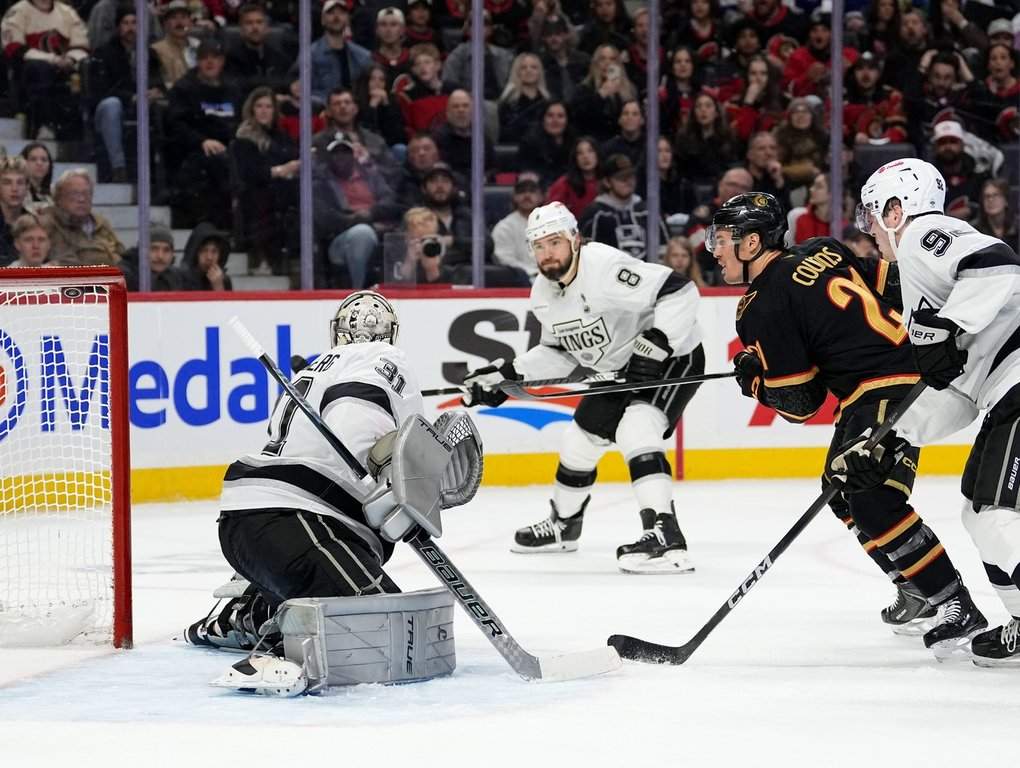
When Nick Cousins steps back onto the ice for the Ottawa Senators, the box score rarely tells the whole story. His immediate impact upon returning to the lineup comes down to three specific things: forechecking disruption, penalty drawing, and bottom-six structural stability. While casual observers look for goals and primary assists from a returning veteran, NHL coaching staffs watch how the opponent’s defensemen react when a relentless agitator enters the offensive zone. Cousins changes the emotional temperature of a hockey game within his first three shifts, forcing opposing top pairings to rush outlet passes and look over their shoulders instead of dictating play.
To understand why Ottawa management prioritized having Cousins in the fold—and why his absence leaves a noticeable void—you have to look past traditional offensive metrics. The Senators have spent years trying to graduate from a talented, loosely structured collection of young stars into a hardened, playoff-caliber roster. Talent was never the issue in Kanata. Accountability, situational awareness, and the willingness to play ugly hockey in the corners were the missing ingredients.
The Anatomy of a Modern NHL Agitator
Hockey has changed, and the role of the pest has evolved right along with it. Twenty years ago, an agitator’s primary job was to drop the gloves, take a five-minute major, and try to spark the bench through sheer physical intimidation. Today, taking yourself off the ice for five minutes—or worse, putting your team on the penalty kill—is a fast track to the press box.
The modern iteration of this archetype requires a much sharper scalpel. Players like Cousins operate in the gray areas of the NHL rulebook. They finish every check a fraction of a second before the whistle, linger in the crease just long enough to irritate a goaltender without drawing an interference call, and engage in constant verbal warfare between whistles.
It is an exhausting style to play against over a grueling 82-game schedule. When Cousins returns to the Senators' lineup, he immediately absorbs the physical and mental friction that would otherwise be directed at Ottawa’s top-six forwards. Instead of Tim Stützle or Brady Tkachuk getting tangled up in post-whistle scrums with third-pair defensemen, Cousins steps into that void. He willingly acts as the lightning rod.
The Mechanics of Drawing Penalties
One of the most undervalued skills in professional hockey is net penalty differential. Every team wants power-play opportunities, yet very few roster spots are evaluated specifically on a player's ability to bait opponents into taking bad minor penalties.
Cousins has built a decade-long NHL career on mastering this exact dark art. He understands body positioning along the boards. By leaning into contact at the exact moment an opposing defender reaches in with a stick, he turns routine puck battles into tripping or hooking infractions. Even more effective is his ability to goad frustrated opponents into retaliatory roughing calls after the play is dead.
For a Senators team whose power play is designed to be one of its primary offensive engines, adding a player who consistently tilts the special teams ledger is massive. A single drawn penalty in the second period of a tight divisional matchup can completely flip the momentum, giving Ottawa’s top unit two minutes of unobstructed zone time.
Fixing the Bottom-Six Identity Crisis
For several seasons, Ottawa’s bottom six was a revolving door of mismatched parts. You had developing prospects who weren't ready for heavy defensive minutes mixed with aging veterans who had lost a step. The result was predictable. Whenever the top two lines went to the bench for a breather, the Senators got hemmed into their own zone, bleeding high-danger scoring chances and forcing their goaltenders to stand on their heads.
A functional third or fourth line doesn't need to outscore the opponent every night. Its primary mandate is territorial survival. When that line hops over the boards, the puck needs to end up deep in the offensive zone, stay there for thirty to forty seconds, and allow the top lines to re-enter the game on an offensive zone faceoff.
Cousins brings predictable habits to that role. Coaches trust him because they know exactly what they are going to get on every shift.
- Chip-and-chase execution: He doesn't turn the puck over at the offensive blue line trying to make low-percentage cross-ice passes. He puts the puck into areas where defensemen have to turn their backs to the play.
- Wall play efficiency: He wins fifty-fifty puck battles not through overwhelming size, but through low center of gravity and active stick positioning.
- Line-change discipline: He understands when a shift is over, prioritizing getting fresh legs onto the ice over chasing a low-probability rush chance.
When Cousins is out of the lineup, someone else has to do that heavy lifting. Usually, that means overtaxing top-six wingers on the penalty kill or forcing young skill players into grinding roles that strip away their offensive creativity. His return restores the natural hierarchy of the roster. Everybody slots back into the chair they were actually meant to sit in.
The Championship Pedigree Factor
You cannot manufacture playoff experience in a practice facility. You either have players in the dressing room who have survived the meat grinder of a deep Stanley Cup run, or you don't.
Cousins brings the scars and the lessons from high-stakes spring hockey, including a championship run with the Florida Panthers. In a locker room that has spent the better part of a decade watching the postseason from home, that perspective carries immense weight. Young players naturally look to guys who have hoisted the trophy to see how they prepare, how they handle a three-game losing streak in January, and how they manage their emotions when the officiating tightens up.
Consider a hypothetical scenario late in a tied third period on the road. A young forward might feel the pressure to force a play through the neutral zone to be the hero, resulting in a turnover and an odd-man rush the other way. A veteran who has played in Stanley Cup Final games recognizes that a point on the road is gold, chips the puck off the glass, and lives to fight another shift.
That quiet, stabilizing influence doesn't show up on a highlight reel. You won't see it trending on social media after a Tuesday night game in November. Yet, over the course of a long winter, those micro-decisions are the exact difference between finishing two points out of a wild-card spot and clinching a playoff berth.
The Fine Line Between Spark and Liability
To give an honest assessment of Cousins’ impact, you have to acknowledge the inherent risk built into his game. Players who live on the edge occasionally fall off it.
The very traits that make him an effective disruptor can, on the wrong night, turn into a self-inflicted wound for the Senators. An ill-timed slashing penalty in the offensive zone or a borderline hit that draws the ire of the referees can put Ottawa’s penalty kill under unnecessary duress. Furthermore, reputation is a very real currency in the NHL. Referees know who Nick Cousins is. When a scrum breaks out and ten players are grabbing jerseys, the stripes are naturally predisposed to look at the guy with the longest rap sheet first.
Coaching staff have to manage that reality. It requires constant communication between the bench and the player to ensure the dial is turned up to nine, not ten. When Cousins strikes that balance—playing hard, annoying the opponent, and skating away from the extra punch—he is a massive net positive. When he crosses the line, the team pays the price.
Why His Return Shifts Opponent Matchups
Opposing coaches hate preparing for teams with legitimate depth agitators because it ruins their preferred defensive matchups.
Suppose an opposing coach wants to hard-match their top shutdown defense pair against Brady Tkachuk’s line all night. Normally, when Tkachuk goes to the bench, that top defense pair gets a brief respite against a softer checking line, or they stay out to exploit a weaker Ottawa unit.
With Cousins healthy and driving a forechecking line, there is no shift off for the opposing blue line. The physical toll compounds. By the time the third period rolls around, defensemen who have spent forty minutes getting bumped by Tkachuk on one shift and pestered by Cousins on the next start making mental errors. They rush passes into the skates of their wingers. They ice the puck unnecessarily. They lose footraces to loose pucks behind the net because their legs are heavy from absorbing constant contact.
This is how modern NHL games are actually won. Rarely does a team simply out-skill an opponent for sixty straight minutes. Instead, they apply relentless, multi-wave pressure until the opposing structure cracks. Cousins is a vital component of that second and third wave.
The Ripple Effect Through the Lineup
The clearest proof of a role player's value is what happens to the players flanking him. When Cousins returns to the ice, his linemates immediately become more effective.
Wingers playing alongside him know that if they drive the net, the puck is going to get there, either via a hard rim around the boards or a greasy battle won below the goal line. Centers playing with him know they have a reliable defensive conscience on their wing who won't cheat for offense and leave the middle of the ice wide open.
It also frees up the coaching staff to be more aggressive with their deployment. You can throw a Cousins-led line over the boards for a defensive zone draw against an opponent's top scoring line without holding your breath. You can deploy him in the final minute of a period to kill clock in the offensive corner. That kind of tactical flexibility is a luxury that coaches covet above almost anything else.
Looking Beyond the Box Score
If you judge Nick Cousins strictly by goals and assists, you are watching the wrong sport. A zero-point night where he logs twelve minutes of ice time, draws two minor penalties, finishes four hard checks, and helps hold an opponent's top line without a shot on goal is a masterpiece of bottom-six execution.
The Ottawa Senators didn't bring him in to carry the offense, and his return to the lineup won't suddenly turn him into a thirty-goal scorer. They brought him in to raise the floor of the team's competitiveness on a nightly basis. He brings edge to a roster that was previously too easy to play against, structure to a bottom six that desperately needed an identity, and battle-tested experience to a room learning how to win when the margins are razor-thin. Every genuine contender in the league employs someone who makes the opponent miserable for sixty minutes, and having Cousins back on the ice ensures Ottawa isn't bringing a butter knife to a fistfight anymore.