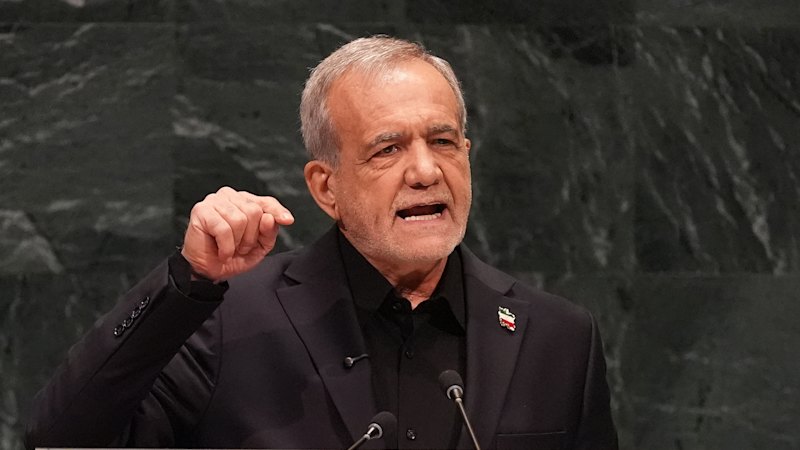
Every September, New York City turns into a massive security nightmare. World leaders descend on Manhattan, police close down half the East Side, and motorcades snarl traffic for blocks. But behind the glitzy diplomatic receptions and endless handshakes, the upcoming United Nations General Assembly faces an unprecedented collision of crises.
You hear the same canned statements every single year about cooperation, unity, and a shared future. Forget about all that diplomatic polish. Right now, international relations resemble a dumpster fire. Global superpowers are staring each other down over active military conflicts, the planet keeps breaking temperature records, and unregulated artificial intelligence threatens to destabilize global economies faster than lawmakers can even read a brief.
If you want to understand where the world is actually heading over the next decade, pay attention to the room where these leaders meet. They aren't going to fix everything. They might not even agree on a single major resolution. Yet the sheer friction of these debates will expose the fault lines shaping our near future.
The Nuclear Shadow Over Modern Diplomacy
Wars used to have clear battle lines and peace treaties signed on massive oak tables. Today, conflicts are messy, prolonged, and bleeding into the digital sphere. The war in Ukraine drags on with no clean diplomatic off-ramp in sight. Meanwhile, the Middle East sits on a razor edge, and proxy tensions simmer from the South China Sea to the Horn of Africa.
When diplomats take the podium at the General Assembly, they spend most of their time talking past each other. Nations trade accusations while civilian death tolls climb and supply chains fray. The UN Security Council remains paralyzed because its permanent members hold veto power that effectively neutralizes any decisive action.
You can feel the exhaustion in diplomatic circles. Smaller nations are sick of watching the big players treat international law like a buffet where they only pick what suits them. When sovereignty gets trampled in one region, it sets a terrifying precedent everywhere else. The speeches in New York matter less for their eloquence and more for what they reveal about shifting alliances. Watch who refuses to shake hands. Watch who abstains from key votes. That tells you the real story.
Climate Deadlines and Empty Promises
We are way past the point of subtle warnings about the environment. Extreme weather events are destroying infrastructure across the globe, yet international climate finance commitments remain a joke. Developed nations promised billions to help vulnerable countries adapt to rising seas and scorching heatwaves. Most of that cash is still stuck in bureaucratic limbo.
The friction at the UN usually boils down to a fundamental blame game. Developing economies point out that Western nations caused the vast majority of historical emissions, so they should foot the bill for the green transition. Western leaders complain that massive emerging economies refuse to curb their coal usage fast enough.
Both sides have a point. Neither side is backing down.
Meanwhile, actual emission trajectories keep ticking upward. Every climate summit feels like a high-stakes negotiation where everyone agrees the house is on fire while arguing over who gets to hold the garden hose. Real change isn't going to come from a UN resolution. It comes from market forces, falling solar costs, and local communities taking adaptation into their own hands because they cannot afford to wait for diplomats to finish arguing.
The Silicon Wild West
The newest and arguably most volatile item on the global agenda is artificial intelligence. For the first time in human history, we are building tools that can outthink, out-maneuver, and out-speed human decision-making across almost every domain.
Right now, military contractors are racing to build autonomous drone swarms. Intelligence agencies are deploying generative AI to flood social media with hyper-targeted propaganda. Economists are warning that algorithmic outsourcing will displace millions of white-collar workers before governments can even implement basic safety nets.
Individual countries are scrambling to draft local rules, but tech ignores borders. A startup in Silicon Valley or Shenzhen can release a model that disrupts labor markets or security protocols worldwide in an afternoon.
Global governance on AI is basically non-existent. The United States and China are locked in a tech cold war, terrified that any international restriction will hand the other side an advantage. That leaves the UN as the only messy arena where smaller countries can demand guardrails. They want data sovereignty, protection against algorithmic bias, and bans on fully autonomous lethal weapons.
Don't expect a comprehensive global treaty anytime soon. The technology moves too fast for slow-moving international bureaucracy. Instead, expect a fragmented landscape where regional blocs set their own digital borders and tech companies act more like sovereign states than corporate entities.
Navigating the Noise
You can easily tune out the endless stream of news coming out of global summits. It sounds distant, academic, and detached from your daily life. But the decisions made—or avoided—in those conference rooms trickle down directly to gas prices, food security, job markets, and digital safety.
Staying informed means looking past the press releases. Pay attention to supply chain disruptions, energy policy shifts, and cross-border tech regulations. The old post-World War II order is dying, and something much more unpredictable is taking its place. Keeping your eyes open is the best defense against a world that changes faster every single day.