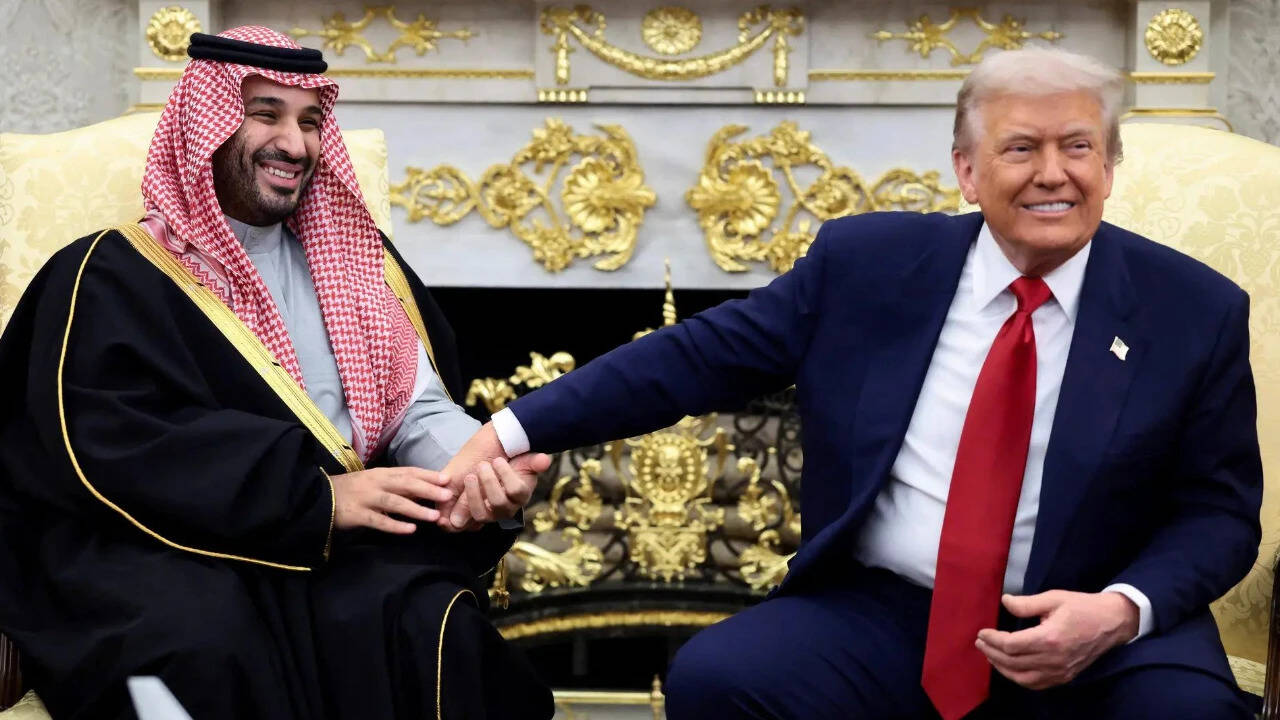
The White House just fired a major diplomatic shot by sending a proposed civil nuclear agreement with Saudi Arabia straight to Capitol Hill. But there is a massive catch attached. Donald Trump insists the multi-billion-dollar deal will stay frozen unless Riyadh formally normalizes relations with Israel.
If you are trying to track how geopolitics, energy, and Middle Eastern alliances are colliding right now, this 30-year pact is the blueprint. It sets up a high-stakes countdown in Washington.
The Mechanics of the Congressional Review
Under the Atomic Energy Act, Congress has a strict window of 90 session days to evaluate the proposed civil nuclear text. Unless lawmakers manage to pass a joint resolution rejecting the pact during that window, the agreement can automatically go into force without a final floor vote.
Energy Secretary Chris Wright and Saudi Energy Minister Prince Abdulaziz bin Salman signed the document in Washington, paving the way for American firms like Westinghouse to build advanced AP1000 reactors in the kingdom.
Yet, the legal text itself creates a dizzying contradiction. Officials note that the formal agreement signed last month did not explicitly enshrine the Abraham Accords condition in its core clauses. Trump added that mandate retroactively on Truth Social, declaring that the civil nuclear project remains entirely subject to Saudi Arabia joining the diplomatic pact with Israel.
The Stumbling Block of Palestinian Statehood
Why hasn't Riyadh already signed on? The math on the ground has changed drastically since the regional shifts of 2020.
Saudi leadership has held a firm line. They want a clear, irreversible pathway toward an independent Palestinian state before establishing formal diplomatic ties with Israel. Israeli Prime Minister Benjamin Netanyahu has rejected that demand completely, calling it a security threat.
Trump is trying to force a breakthrough by using high-value civilian nuclear technology as leverage. Riyadh wants the infrastructure to diversify its energy grid, but Washington wants regional alignment.
Non-Proliferation Fears and Congressional Pushback
Critics aren't just worried about regional diplomacy. They are worried about the split over uranium enrichment.
Unlike the stricter terms applied to the United Arab Emirates back in 2009—often called the gold standard, which barred local enrichment and reprocessing—this new framework has drawn heavy fire from Democratic lawmakers and non-proliferation watchdogs. Critics argue that failing to explicitly ban enrichment leaves an opening for a future weapons program.
The administration maintains that the pact satisfies all baseline requirements under US law. Even so, watch how committee members handle the next 90 days. Analysts point out that starting the clock forces lawmakers to either act or let the deal slip through, creating a pressure cooker environment in Washington.
Keep an eye on whether Capitol Hill attempts to block the package or if diplomatic backchannels can bridge the gap between Riyadh's demands for Palestine and Israel's refusal to budge.