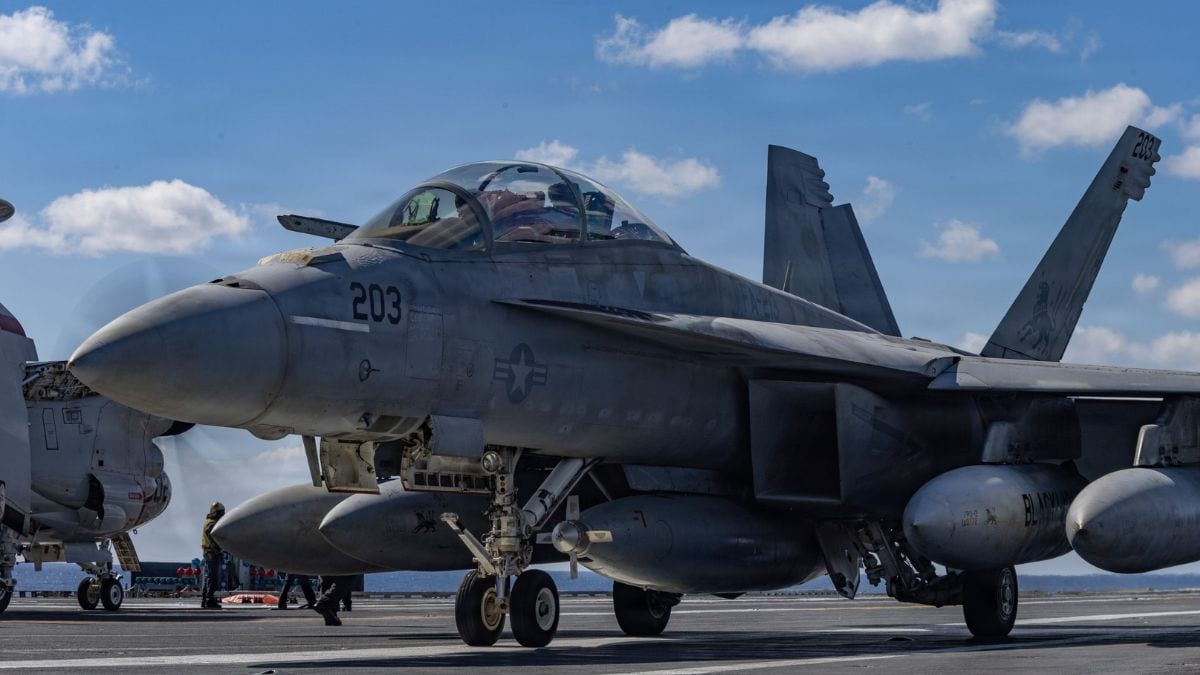
The headlines are screaming again. NATO jets are screaming over the Baltic. Radars are locking onto "unidentified ballistic signatures" originating from the Middle East. The narrative is set: we are one Iranian sensor glitch away from a global exchange. It is a terrifying story. It sells papers. It justifies procurement budgets.
It is also largely a fantasy designed for a public that doesn't understand the difference between a Kinetic Intercept and a Political Handshake. Meanwhile, you can find related stories here: The Cold Truth About Russias Crumbling Power Grid.
If you are reading about a "scramble" in the morning news, the danger has already passed. The real threats—the ones that actually shift the tectonic plates of global power—don't trigger sirens and press releases. They happen in the quiet degradation of satellite arrays and the slow, agonizing compromise of supply chains. By the time a Eurofighter is in the air, the "event" is already a prop in a much larger play.
The Myth of the Accidental Armageddon
The common consensus is that a "ballistic munition" launch from Iran represents an immediate, existential threat to European capitals that requires a hair-trigger response. This assumes that modern warfare is a game of reactive checkers. It isn't. To see the full picture, we recommend the excellent article by NBC News.
Military command structures are not fragile glass vases waiting to be shattered by a single rogue missile. We operate on a logic of Strategic Redundancy. When a launch is detected, the "scramble" isn't an act of desperation; it’s a calibration of the sensor net.
- The Signature Is the Message: Iran knows exactly what our early-warning satellites see. If they launch a single munition, they aren't trying to start a war they would lose in forty-eight hours. They are testing the latency of the NATO response loop.
- The Scramble Is a Data Collection Exercise: We don't send jets up just to "intercept." We send them to map the electronic warfare (EW) environment. Every time a radar turns on to track a threat, the "aggressor" learns something new about our frequency hopping and tracking logic.
- The Public Panic Is a Metric: Adversaries track Western media sentiment as closely as they track troop movements. If a single launch causes "erupting fear" in London or Brussels, the mission is a success before the missile even hits the water.
I have spent years looking at the telemetry data that never makes it to the evening news. The "scrambles" you hear about are the routine, boring mechanics of a permanent cold-standoff. The real scares—the ones that keep the Colonels awake at night—are the silent launches that we don't announce, because admitting we saw them would reveal too much about our own capabilities.
Deconstructing the Iran-NATO Friction
The lazy take is that Iran is a "rogue actor" behaving irrationally. This is a comfort blanket for the Western mind. In reality, Tehran is a hyper-rational actor playing a weak hand with master-level efficiency.
When a ballistic signature is detected, the media treats it as a technical failure of diplomacy. It isn't. It’s a highly sophisticated form of Non-Kinetic Signaling.
Think of it like this: If I want to tell you I have a gun, I don't have to shoot you. I just have to let you hear the click of the safety being disengaged. A ballistic launch that "triggers" a NATO response is that click. It informs the West that the regional balance of power in the Middle East cannot be ignored.
The "fear" being sold to you is a misunderstanding of Ballistic Trajectory Physics. A missile launched from the Iranian plateau toward Europe has to survive multiple layers of the Aegis Ballistic Missile Defense System. The probability of a single, conventional warhead making it through the mid-course interceptors and the terminal phase defenses is statistically negligible.
The threat isn't the explosion. The threat is the Economic Attrition.
It costs a few hundred thousand dollars to launch a mid-range test missile. It costs NATO millions in fuel, maintenance hours, and diplomatic capital to respond. We are being bled dry by our own necessity to look "ready" for a fight that isn't coming in the way we expect.
Stop Asking if We Are Safe and Start Asking Who Profits
When "fears erupt," follow the money.
The military-industrial complex thrives on the "scramble" narrative. It justifies the next generation of $100 million interceptors. It pushes the shift toward integrated air defense systems that require decades of subscription-based software updates.
If we admitted that these launches are mostly posturing, the urgency to buy "The Next Big Thing" would evaporate.
The "People Also Ask" section of your brain is likely wondering: Could this escalate? Brutally honest answer: Only if we let the political theater dictate the tactical response.
The real danger isn't a missile hitting a city. The danger is a Communication Cascading Failure. This happens when political leaders, terrified of appearing "weak" in the face of a media-driven panic, over-leverage their military assets.
The Hidden Risks of Modern Defense
While we watch the skies for missiles, we are ignoring the vulnerabilities on the ground.
- Subsea Cables: A single Russian or Iranian submersible cutting a cable in the North Sea does more damage than ten ballistic missiles.
- Grid Resilience: Why launch a munition when you can use a logic bomb to shut down the heating in a European winter?
- Satellite Blinding: The debris field from a single kinetic ASAT (Anti-Satellite) test can render orbital planes useless, effectively "blinding" the very NATO jets we are so proud of scrambling.
We are focused on the "ballistic munition" because it's a 20th-century threat we know how to film. It makes for great B-roll on the news. But it is a distraction from the Asymmetric Disruption that is actually dismantling Western hegemony.
The Professional’s Guide to Ignoring the Hype
If you want to understand the actual state of global security, stop looking at the "Breaking News" banners.
- Watch the Tanker Rates: If insurance premiums for shipping in the Strait of Hormuz aren't skyrocketing, the "ballistic threat" is a non-event. The markets are smarter than the pundits.
- Monitor the NOTAMs (Notice to Air Missions): If the military actually expects a fight, they clear the airspace days in advance. A "sudden scramble" is almost always a reactive training opportunity.
- Follow the Signal, Not the Noise: A missile launch is noise. A sudden, unexplained outage of a regional GPS network is a signal.
I’ve sat in the rooms where these decisions are made. I’ve seen the "panic" on the faces of junior analysts that turns into a bored shrug from the veterans. The veterans know that a scrambled jet is just a very expensive way of saying "I see you."
We are currently obsessed with the "launch" because it fits a comfortable narrative of "Good Guys vs. Bad Guys." We want a clear enemy with a clear weapon. But the world has moved on. The "ballistic munition" is a vintage weapon for a vintage mindset.
The next time you see a headline about NATO scrambling, remember: if the situation were actually dire, you wouldn't be reading about it on a website. You would be sitting in the dark, wondering why your phone stopped working.
Stop falling for the theater. The jets are in the air. The pilots are doing their jobs. The politicians are making their speeches. And the actual war—the one over data, energy, and cognitive influence—is happening right under your nose, completely silent, and totally ignored by the "scramble" enthusiasts.
The missile isn't the point. The "fear" that "erupted" is the entire goal of the exercise. By reacting with panic, you've already let the munition hit its target.
Turn off the news and watch the trade routes. That’s where the real power lies.