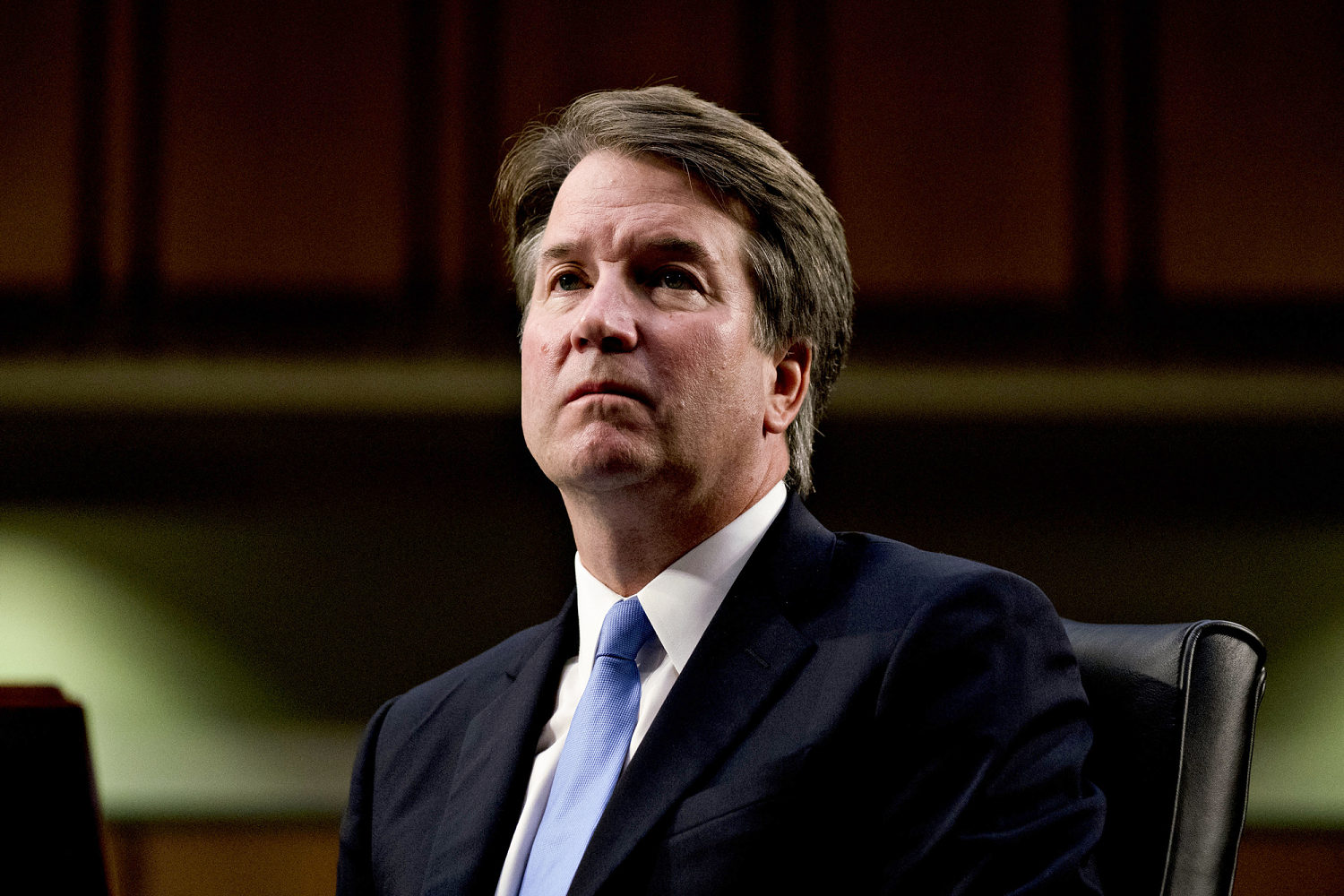
The media obsesses over a predictable script every election cycle. They take a highly localized, nuanced political race and force it into a nationalized, cinematic narrative. The competitor article argues that the ghost of the Brett Kavanaugh confirmation hearings is the single defining, make-or-break axis of Maine’s Senate race. They paint a picture where voters are merely proxies in a larger, Washington-scripted culture war.
They are completely wrong. You might also find this similar story interesting: The Bradford Protest Illusion Why Diaspora Activism Fails to Change the Reality in Kashmir.
This lazy consensus assumes voters are mindless ideological drones who vote based on cable news talking points rather than regional self-interest. Having spent nearly two decades analyzing electoral data and running ground campaigns in supposedly "swing" states, I have seen national strategists blow millions of dollars operating on this exact flaw. They fly in DC consultants, buy up million-dollar ad slots screaming about Supreme Court nominations, and completely miss the fact that local voters care infinitely more about tangible, material realities like logging regulations, fishing quotas, and rural healthcare access.
Forcing national controversies onto independent-minded electorates is not a masterstroke. It is a desperate, failing strategy. As discussed in latest articles by The Washington Post, the effects are worth noting.
The Myth of the Single-Issue Swing Voter
Pundits love the Kavanaugh angle because it is easy to write about. It has built-in drama, national name recognition, and clear partisan battle lines. But real political mechanics do not operate like a political thriller.
When you look at states with high rates of independent and split-ticket voters—like Maine—the national narrative crumbles. The competitor's logic dictates that an unpopular Supreme Court vote automatically dooms a moderate incumbent. This ignores a fundamental law of political survival: constituent service trumps national noise.
Consider the structural reality of rural and semi-rural electorates. Voters in these regions routinely demonstrate a high tolerance for cognitive dissonance. They might despise a senator's high-profile Washington votes while simultaneously re-electing them because that same senator consistently delivers federal funding for local infrastructure, intervenes in regulatory disputes for small businesses, and maintains a highly accessible network of regional offices.
Nationalizing a race is actually a defensive maneuver used by campaigns that lack a compelling local narrative. When a challenger has nothing to say about state-specific economic challenges, they resort to national boogeymen. It is cheap. It is lazy. And historically, it yields an incredibly poor return on investment.
Dismantling the "People Also Ask" Assumptions
If you look at search trends surrounding these highly watched Senate races, the questions people ask betray a deep misunderstanding of how voters actually behave.
Does a Supreme Court confirmation vote definitively flip a Senate seat?
No. The premise itself is fundamentally flawed. Political science literature, including extensive longitudinal studies by organizations like the Pew Research Center, consistently shows that single legislative or confirmation votes rarely shift entrenched voter behavior on their own. A controversial vote might energize the base of the opposing party, but it rarely converts independents who are focused on economic survival. Hyper-focusing on one vote assumes the electorate has no memory of the preceding six years of constituent advocacy.
Why do national PACs pour money into local cultural issues?
Because national political action committees (PACs) do not care about winning the specific state long-term; they care about their own fundraising metrics. It is incredibly easy to raise small-dollar donations nationwide by putting Brett Kavanaugh’s face on a digital ad. It is incredibly difficult to raise money by explaining the complexities of the Jones Act or rural hospital Medicare reimbursement rates. The money flows to the drama, not to the strategy that actually secures the seat.
The High Cost of Ideological Purity
Let’s look at the mechanics of why this nationalized strategy backfires. I have watched campaigns flush capital down the toilet trying to force a localized electorate to care about a national purity test.
Nationalized Strategy vs. Localized Reality
+-----------------------------------+-----------------------------------+
| Nationalized Approach (The Media) | Localized Approach (The Reality)  |
+-----------------------------------+-----------------------------------+
| Focuses on Supreme Court fights   | Focuses on local job preservation |
| Relies on out-of-state donors     | Relies on local town halls        |
| Drives up negative polarization   | Builds cross-partisan coalitions  |
| Mobilizes the unpersuadable base  | Wins the crucial 15% independent  |
+-----------------------------------+-----------------------------------+
When you turn a Senate race into a referendum on a national figure, you instantly alienate the moderate middle. You force voters who might lean toward a candidate on economic grounds to vote strictly on party lines. In a state with a heavy independent registration, triggering hyper-partisanship is electoral suicide for a challenger.
The downside to my contrarian view? It requires actual work. It forces campaigns to abandon the comfort of ready-made national press releases and actually learn the micro-politics of specific counties. It means admitting that a voter can care deeply about judicial appointments but still vote for the candidate who promises to protect their local shipyard.
The Actionable Pivot for Political Survival
Stop treating local elections like a cable news debate. If you want to accurately predict or influence the outcome of a critical Senate race, ignore the national talking heads entirely and execute a localized audit:
- Track the Capital, Not the Noise: Look at where the campaign is spending money on the ground. If an incumbent is spending heavily on hyper-local radio ads discussing regional infrastructure while the challenger is relying solely on national TV spots about Washington corruption, the incumbent is winning the actual war.
- Analyze Split-Ticket History: Look at the historical delta between presidential voting percentages and senatorial voting percentages in that specific state. States with a wide delta cannot be modeled using national polarization metrics.
- De-escalate the Culture War: If you are advising a campaign, refuse to take the bait. When the opposition tries to make the race about a Supreme Court Justice, pivot violently back to the state's top employer. Force the opponent to debate local economics, a topic they are usually utterly unprepared to handle because they spent their entire prep time reading national polling.
The media will continue to run the same tired playbook. They will frame every local race as a proxy war for the soul of America because it drives clicks and satisfies their own provincial, Washington-centric view of the world. But elections are won and lost in the quiet, unglamorous margins of local utility bills, regional job growth, and generational trust.
Keep screaming about national proxies while the ground game eats your lunch.